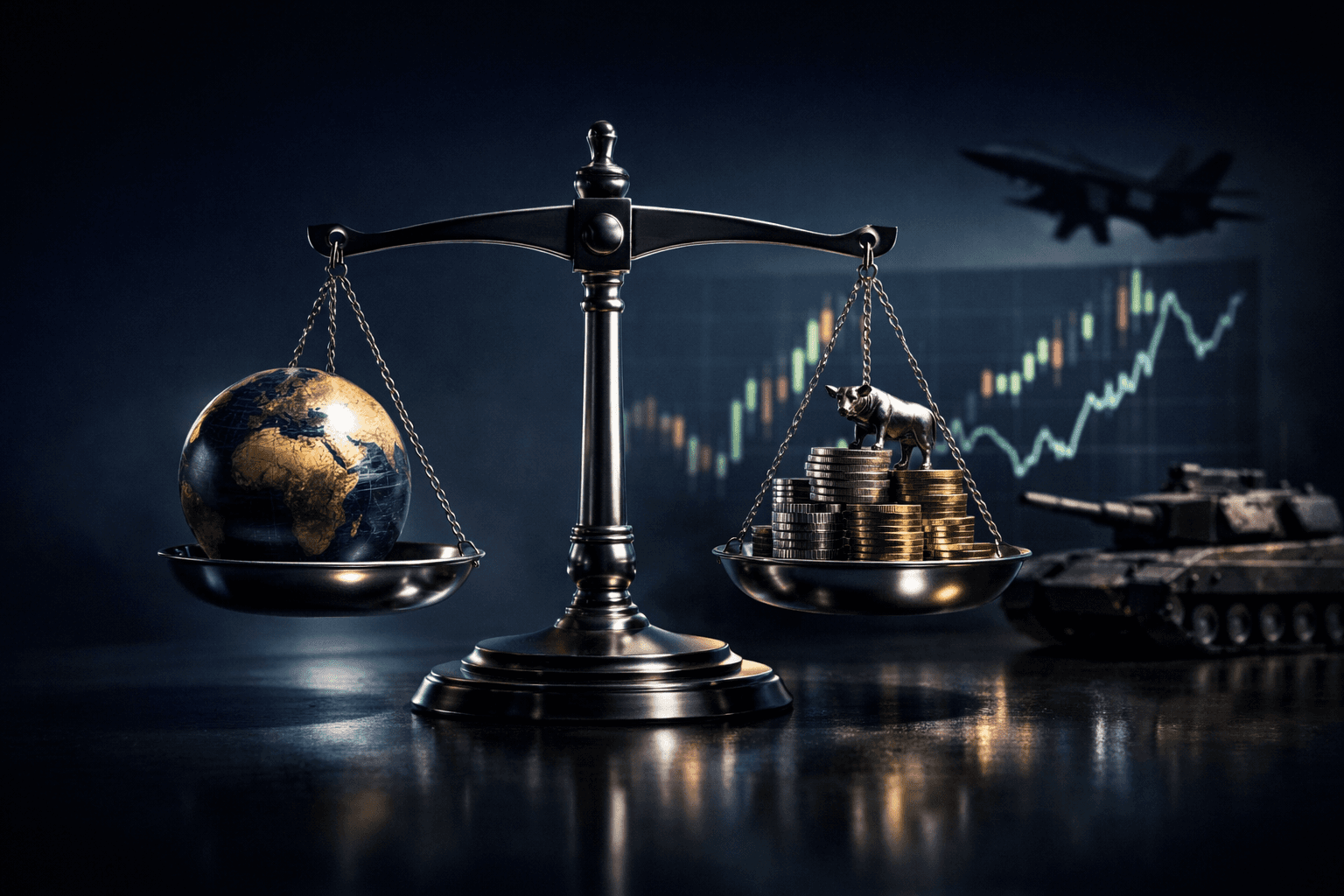
- Geopolitical events create market-moving shocks through channels: trade, supply chains, commodity prices, and policy shifts.
- Assess risk by separating probability (how likely) from severity (how damaging); use scenario planning and position sizing.
- Tools include asset diversification, currency hedges, commodity exposure, options, and cash/liquidity management, not one-size-fits-all hedges.
- Different sectors react differently: energy and defense often rise on conflict, exporters and travel-related stocks fall, and safe-haven assets like gold and the USD may strengthen.
- Have a written playbook: triggers, time horizon, liquidity rules, and pre-defined hedging steps to avoid emotional trading during crises.
Geopolitical events, wars, trade tensions, elections, and sudden policy shifts, can move markets suddenly and persistently. These events affect valuations through multiple channels: direct disruption of trade and supply chains, commodity price shocks, changes to regulatory or sanction regimes, and shifts in investor sentiment.
Investors who treat geopolitics as random noise risk both missed opportunities and outsized losses. This article gives an actionable framework to identify, assess, and respond to geopolitical risks, with practical tools and real-world examples so you can convert uncertainty into disciplined portfolio action.
How geopolitical events move markets
Geopolitical events influence markets through clear economic channels. Major ones include trade barriers (tariffs, sanctions), physical disruptions (ports, pipelines), policy uncertainty (taxes, subsidies), and investor sentiment (flight to safety).
Each channel alters asset prices differently. Commodity markets often react fastest, oil and gas prices spike when a major producer is threatened, while agricultural prices rise if export routes close. Currency markets adjust to perceived safe-haven demand and to changes in current-account expectations.
Sectors and asset classes: typical reactions
- Energy and commodities: Often rise on supply risks; e.g., oil spikes during Middle East conflicts.
- Defense and cybersecurity: Can outperform as spending expectations rise during conflicts or heightened tensions.
- Exporters and travel-related companies: Vulnerable to tariffs, travel bans, and tourism drops, airlines and cruise lines are sensitive.
- Safe-haven assets: Gold, the Swiss franc, and U.S. Treasuries typically strengthen in acute crises.
A practical framework to assess geopolitical risk
Start with a structured assessment: identify the event, estimate probability, estimate severity, and map the transmission channels to your portfolio. Do this before markets move; reaction time matters.
1) Identify: Is the event a one-off (sudden border clash) or a persistent shift (trade war, regime change)? One-off shocks may produce short-term volatility, while persistent shifts require strategic portfolio adjustments.
2) Probability vs. severity: Use a simple matrix. Low-probability/high-severity events (black swans) warrant contingency planning but not necessarily large persistent hedges. High-probability/high-severity events justify more immediate, larger adjustments.
Scenario planning and triggers
Write 2, 4 scenarios: base, adverse, severe, and tail. For each scenario define market triggers (e.g., imposition of tariffs over 10%, a major port closure, election outcome). Assign estimated probabilities and expected market moves to help size responses.
Predefine action triggers tied to observable metrics, oil > $100/bbl, a currency move >5% in 10 days, or an agreed list of sanctions, to avoid emotional decision-making during volatility.
Portfolio responses and tools
Your response depends on your time horizon and role of the portfolio (growth vs. income, short-term trading vs. long-term investing). Tools range from simple rebalancing to derivatives and commodity exposure for targeted hedging.
- Rebalance and de-risk: Reduce concentrated positions if an event raises idiosyncratic risk materially. Maintain alignment with your risk tolerance rather than reacting to headlines.
- Increase liquidity: Short-term cash or high-quality T-bills provide optionality and reduce forced selling in stress.
- Use sector rotation: Shift limited exposure from cyclical, export-sensitive sectors into relatively defensive sectors like utilities or consumer staples when appropriate.
- Hedging with derivatives: Put options on indices, FX forwards, or commodity futures can provide targeted protection but require cost-management (premiums, margin).
Currency and commodity hedges
If you hold assets in emerging-market equities, consider currency risk: a central-bank policy divergence or capital flight can lead to sharp currency depreciation. FX forwards, options, or ETFs that hedge currency exposure are tools for mitigation.
Commodities can be both the source of risk and the hedge. For example, if an event threatens oil supply, owning oil futures or equity exposure to integrated energy companies (e.g., $XOM, $BP) can serve as a partial hedge for an otherwise global equity portfolio.
Real-world examples: what happened and why
Concrete cases show how these mechanisms work and which instruments moved. Below are three concise examples with market channels and outcomes.
1) U.S., China trade tensions (2018, 2019)
Tariff announcements and escalation hit export-heavy and supply-chain-dependent stocks. Semiconductor equipment makers and electronics manufacturers experienced supply-chain repricing. For example, exporters with thin margins and large China revenue saw downward revisions to earnings estimates.
Market response: Chinese exporters and industrials underperformed; defensive sectors outperformed; volatility rose. Currency moves: CNY depreciation at times increased forex losses for dollar-denominated investors in Chinese assets.
2) Russia’s 2022 invasion of Ukraine
That conflict produced an immediate spike in oil and natural gas prices due to Russia’s role in global energy supply, and European natural gas prices rose dramatically. Agricultural commodities also jumped because Ukraine and Russia are major grain exporters.
Market response: Energy stocks and commodity producers outperformed near-term. European equities underperformed relative to U.S. indices because of regional exposure to gas and trade disruption. Sanctions created idiosyncratic risks for companies operating in or tied to Russia.
3) Brexit (2016 referendum and subsequent years)
Brexit created prolonged policy uncertainty, affecting financials, autos, and exporters in the UK. The pound weakened significantly following the referendum, boosting some multi-nationals' UK-reported earnings but raising inflation risks via higher import costs.
Market response: Short-term volatility and a multi-year re-rating for UK assets occurred. Investors with currency-sensitive positions who hedged GBP risk reduced drawdowns compared with unhedged peers.
Practical portfolio playbook: step-by-step
Below is a concise, practical sequence you can adapt into a written playbook. The key is preparation and pre-defined rules, not reacting impulsively to headlines.
- Monitor: Set news and data alerts for geopolitically sensitive items relevant to holdings (e.g., supply country, export markets, commodity exposure).
- Assess: For any new event, run a quick checklist, type of event, duration expectation, affected channels, and exposure mapping to portfolio holdings.
- Decide: Based on your scenario matrix, choose from pre-approved actions: rebalance, add liquidity, hedge with options/futures, or hold and monitor. Include size limits to avoid over-hedging.
- Execute: Use limit orders where possible to avoid volatility-driven slippage. If using derivatives, confirm margin and worst-case scenarios before entering.
- Review: Post-event, log what happened, what worked, and update probabilities and triggers for future events.
Common Mistakes to Avoid
- Reacting emotionally to headlines: Panic selling often locks in losses. Avoid unsystematic changes without a predefined plan.
- Over-hedging long-term positions: Continual hedging for low-probability events can erode returns via fees and premiums.
- Ignoring liquidity and margin risk: Hedging with futures or options without margin planning can force liquidations during higher volatility.
- Confusing correlation with causation: Not every sell-off after a geopolitical event is caused by it, distinguish macro drivers from company-specific news.
- Failing to update scenarios: Geopolitics evolves; fixed assumptions become stale. Reassess probabilities and impacts regularly.
FAQ
Q: How quickly should I react to a geopolitical shock?
A: Reaction speed depends on your time horizon and exposure. Short-term traders may act within hours; long-term investors should first map exposure and consider whether the event alters fundamentals. Use pre-defined triggers to avoid ad-hoc decisions.
Q: Are gold and U.S. Treasuries always good hedges?
A: They are common safe-havens, but not guaranteed. Gold often rises when real yields fall. Treasuries can sell off if geopolitical risk is paired with inflation concerns or fiscal stress. Evaluate the specific event and correlations at that time.
Q: Should I sell stocks in my portfolio if a war starts?
A: Avoid blanket selling. Assess which holdings are exposed via supply chains, revenue sources, or sanctions risk. Consider rebalancing and targeted hedges rather than universal liquidation, and maintain liquidity to meet possible margin calls or opportunities.
Q: How much of my portfolio should be in defensive assets?
A: There’s no one-size-fits-all allocation. Base defense levels on risk tolerance, investment horizon, and existing exposures. Use scenario analysis to determine defensive allocation that balances protection with long-term return objectives.
Bottom Line
Geopolitical events are an inevitable source of market volatility, but they are also analyzable risks. Use a structured framework, identify, assess probability and severity, scenario-plan, and predefine triggers, to respond consistently rather than emotionally.
Practical tools include rebalancing, liquidity management, targeted hedges (FX, commodities, options), and sector rotation. Keep a written playbook, update it regularly, and treat hedging costs and margin requirements as part of the decision process.
With preparation and disciplined execution, investors can reduce downside risk from geopolitical shocks while preserving the ability to capture long-term opportunities created by market dislocations.