Introduction
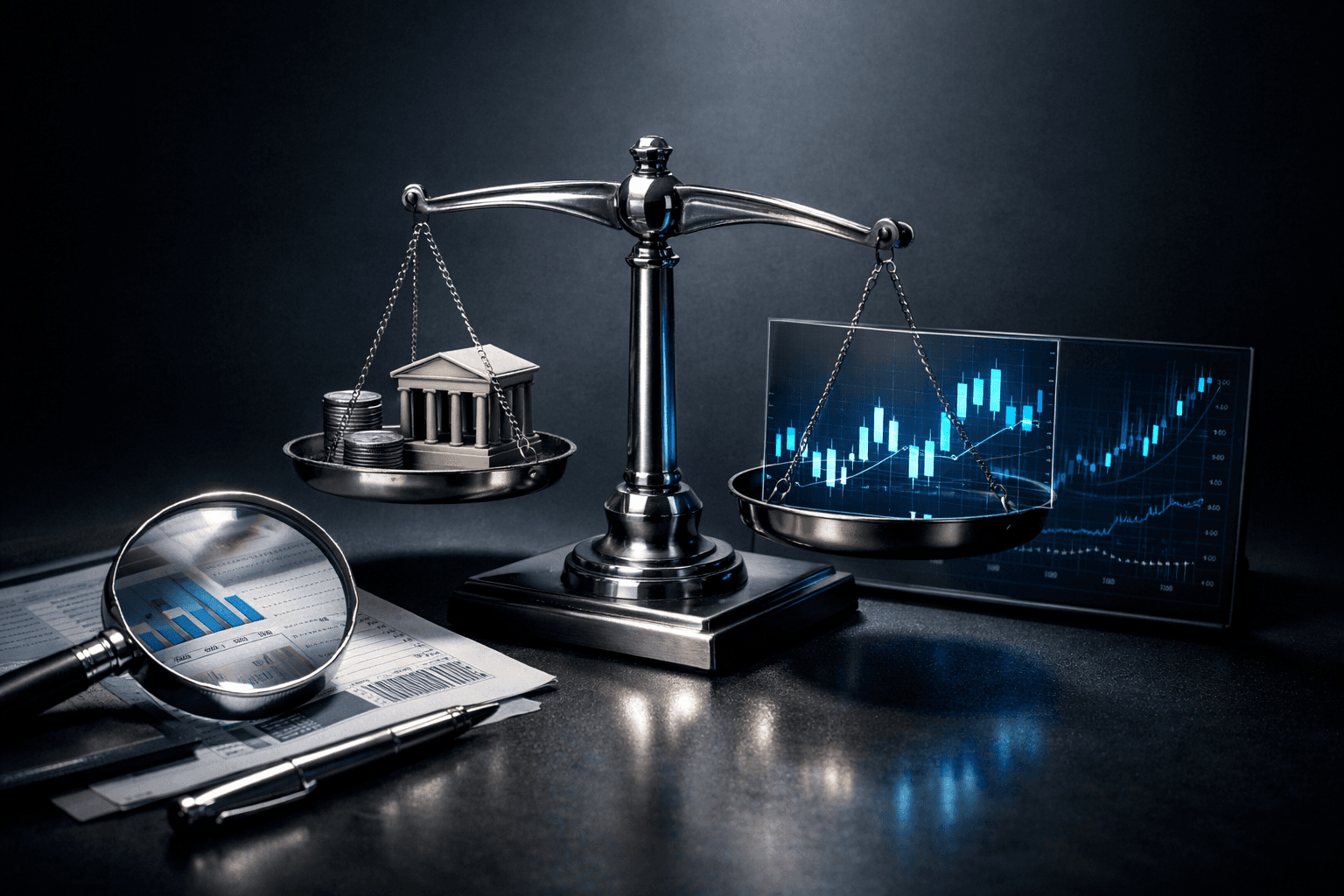
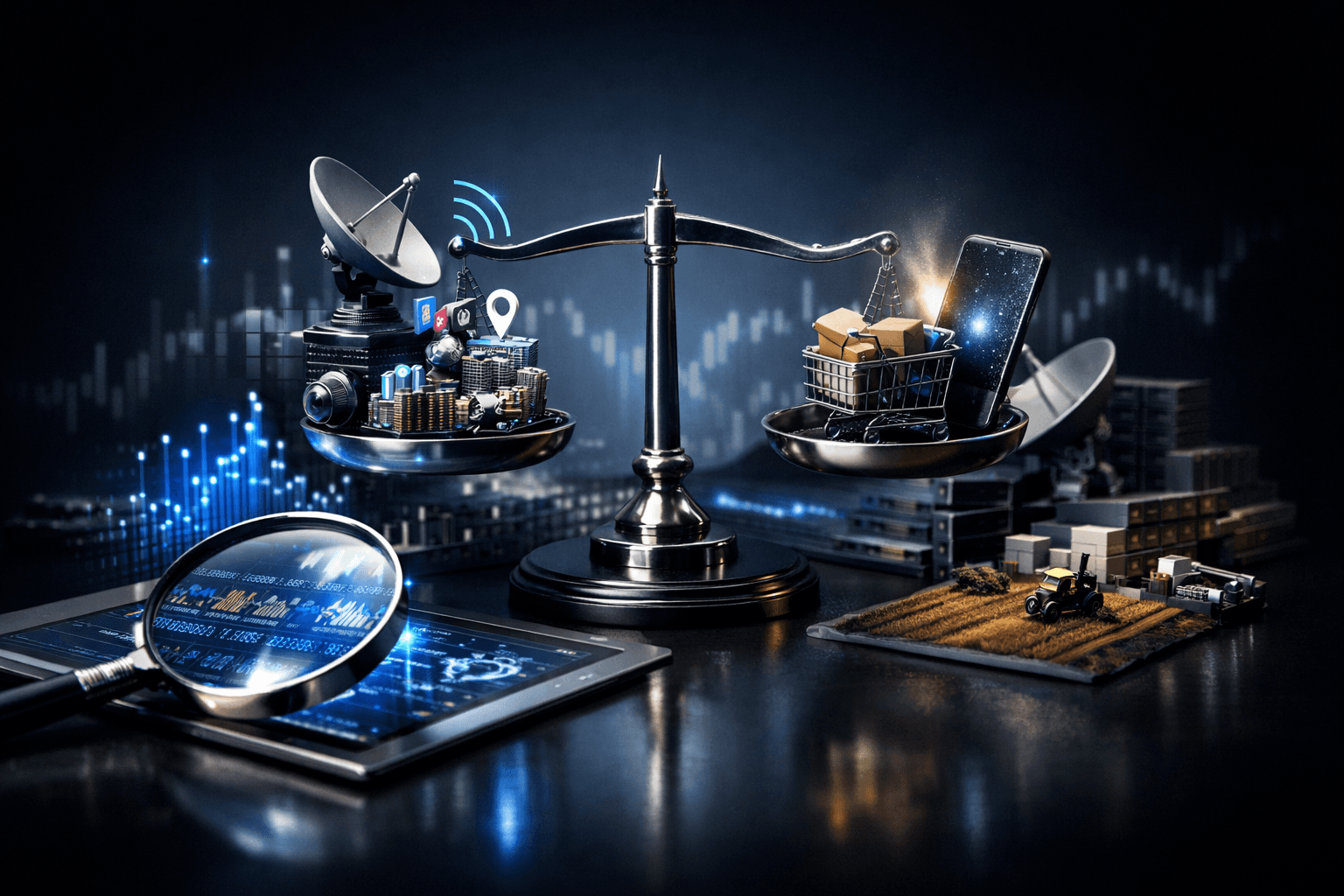
Alternative data refers to non-traditional datasets that sit outside standard financial filings and market feeds. Examples include satellite imagery, social media sentiment, web traffic logs, aggregated credit-card transactions, and ESG telemetry.
For advanced investors, these unconventional signals can provide early indicators of company performance or macro shifts that traditional data misses. How can you separate useful signals from noise, and which datasets deserve your attention?
- Satellite, web traffic, social sentiment, transaction and ESG data each have different predictive horizons and noise profiles.
- Alternative data requires rigorous preprocessing, normalization, and careful hypothesis testing before you trade on it.
- AI tools like computer vision and natural language processing scale analysis, but they also introduce modeling risks and opacity.
- Cost, legal constraints, and data bias are practical hurdles; start with pilot use-cases and backtests that mirror your holding periods.
- Combine alternative signals with fundamentals and price-based technicals to reduce false positives and improve timing.
What Is Alternative Data and Why It Matters
Alternative data is any non-conventional dataset that can inform investment decisions. It matters because it can reveal real-world activity ahead of earnings reports, allowing you to anticipate revenue, inventory changes, or consumer behavior.
You should treat alternative data as hypothesis-driven: each dataset is noisy and may only be predictive for a subset of companies or sectors. Ask what causal link could connect the dataset to the economic outcome you care about.
Types of Alternative Data and Signals
Different data types suit different strategies and timeframes. Below are common categories, how they generate signals, and when they are most useful.
Satellite Imagery
Satellite images let you measure on-the-ground activity, such as parking lot counts, storage tank levels, mining throughput, and agricultural health. These signals are especially relevant for retail, energy, and commodity-exposed companies.
Example signal: weekly vehicle counts in a retailer parking lot correlated with store sales trends. You can derive counts with object-detection models and then normalize for weather, holidays, and store opening hours.
Social Media and News Sentiment
Social feeds and news headlines are text-rich and provide near-real-time sentiment and attention metrics. These datasets help detect rapid changes in consumer sentiment or PR crises, which can affect short-term price action.
Natural language processing, sentiment lexicons, and topic modeling convert raw text into features like sentiment score, attention volume, and rumor propagation velocity.
Web Traffic and App Analytics
Web visits, app downloads, session lengths, and user retention metrics are strong proxies for consumer demand in digital-first businesses. These signals often lead reported revenue by a quarter or more.
Third-party panel providers and crawlers supply aggregated web metrics. For e-commerce or digital subscription businesses, trends in unique visitors and conversion rates can map to GMV and bookings.
Card Transactions and Point-of-Sale Data
Aggregated, anonymized card-level transaction data is directly tied to spend. It is often more precise than proxies but can be expensive and may not cover all payment types or geographies.
Transaction datasets are valuable for retail, restaurants, travel, and any consumer-facing vertical where spend is the primary driver of revenue.
ESG and Supply Chain Telemetry
Environmental sensors, emissions disclosures, and supplier shipment data inform operational risk and capital expenditure trends. These feeds help quantify sustainability claims and detect supply disruptions early.
Supply chain signals such as port throughput, carrier schedules, and bill-of-lading activity are especially useful for manufacturers and retailers with complex global footprints.
Integrating Alternative Data into Investment Processes
Don't treat alternative data as magic. Integration requires architecture for acquisition, cleaning, feature engineering, backtesting, and ongoing monitoring. You need reproducible pipelines and clear hypotheses.
Data Acquisition and Legal Considerations
Data can be licensed from vendors, scraped, or purchased from panels and aggregators. Always verify usage rights, compliance with privacy laws, and vendor data provenance. You should document contracts and data lineage before you build models.
Cleaning and Normalization
Raw alternative datasets are messy. Common preprocessing steps include de-duplicating observations, imputing missing values, normalizing for seasonality, and geospatial alignment. For imagery, you must handle cloud cover, angle, and resolution differences.
Normalization also means mapping raw counts into economically meaningful units, for example converting vehicle counts into estimated store transactions using a calibration period.
Feature Engineering and Hypothesis Testing
Convert raw feeds into features aligned with your investment horizon. Examples include week-over-week change, rolling averages, and anomalies relative to expected seasonal baselines. Each feature should be tied to a testable hypothesis about how it affects revenue, margins, or inventory.
Run rigorous out-of-sample backtests that mirror your intended holding period and execution costs. Use walk-forward testing to avoid look-ahead bias.
Modeling and Ensemble Approaches
Use a mix of statistical models and machine learning. Time series models capture trend and seasonality, while tree-based models and neural nets can learn nonlinear relationships. Ensembles that combine fundamental, price, and alternative features often perform better than single-source models.
Always track model degradation and set alerts for distribution shifts. Re-training cadence should match how fast the underlying signal changes.
Real-World Examples
Retail foot traffic via satellite, hypothetical calibration: For a chain like $MCD, imagine weekly satellite-derived parking lot vehicle counts for 200 stores. During a 12-week calibration period, average vehicles per week per store rose from 120 to 150, while reported same-store sales rose 2.8 percent. You could estimate a sensitivity coefficient that maps a one percent change in vehicle counts to a 0.06 percent change in sales, then apply that coefficient when counts diverge from baseline.
Oil storage using tank imagery: Satellite observations of crude storage tanks at major hubs can estimate inventory builds ahead of official reports. If imagery shows a 5 percent enlargement of surface-level tank coverage and historical analysis links that to a 3 million barrel inventory build, traders with validated models can anticipate price pressure before weekly inventory releases.
Social sentiment and short-term volatility: For a high-attention stock like $TSLA, a sudden spike in negative sentiment and volume-weighted mentions following a product incident can predict elevated intraday volatility. An NLP pipeline that scores sentiment and measures propagation speed can be used to adjust intraday risk limits.
Web traffic and subscription revenue: A streaming company similar to $NFLX may show a 12 percent decline in new user sign-ups on web and app dashboards across primary markets. If historical conversion rates convert sign-ups into paid subscribers at a known rate, the web traffic drop can be translated into an expected shortfall in quarterly additions.
Challenges and Limitations
Alternative data offers potential alpha but it is far from plug-and-play. You must account for limitations in coverage, latency, and representativeness. Many datasets are biased toward specific regions, demographics, or payment types.
Other challenges include high vendor costs, operational complexity, and regulatory scrutiny, especially for personally identifiable information. Models trained on one regime may not generalize to another, so robustness testing is essential.
How AI Helps Process Alternative Data
AI technologies make alternative data actionable at scale. Computer vision turns pixels into counts and classifications. NLP converts raw text into sentiment and topics. Time series deep learning models capture nonlinear temporal relationships.
But AI also increases the need for explainability and monitoring. Complex models can fit noise, and opaque pipelines make it harder to audit decisions. Use interpretable model layers and feature-importance tools so you and your compliance team understand why a signal moved the model.
Common Mistakes to Avoid
Confusing correlation with causation: Correlated patterns do not prove a causal link. Avoid deploying strategies without a plausible economic mechanism. How to avoid it: build simple causal hypotheses and test them with intervention-style backtests.
Data snooping and overfitting: Tuning models to historical quirks produces fragile strategies. How to avoid it: use strict out-of-sample validation, cross-validation that respects time ordering, and penalize model complexity.
Ignoring costs and execution: Signals that look predictive may vanish once you include latency and transaction costs. How to avoid it: simulate realistic execution, slippage, and the time it takes to acquire and process the data.
Neglecting legal and privacy constraints: Using improperly sourced personal data creates legal risk. How to avoid it: validate vendor contracts, ensure data is anonymized and aggregated, and consult legal before using consumer-level feeds.
Failure to monitor model drift: The predictive power of a dataset can degrade. How to avoid it: set performance thresholds, monitor feature distributions, and retrain on fresh data when necessary.
FAQ
Q: Is alternative data legal to use for trading?
A: Legality depends on how the data was collected and the terms of the license. Aggregated and anonymized datasets from reputable vendors are generally safe, but scraped or personally identifiable data can create legal exposure. Always verify provenance and consult legal counsel.
Q: How do you validate that an alternative dataset is predictive?
A: Start with a clear hypothesis, then run out-of-sample and walk-forward backtests that match your holding period. Use statistical tests for significance and check robustness across subperiods and cohorts.
Q: Can retail investors realistically use alternative data, or is it only for funds?
A: Retail investors can use many low-cost or public alternative signals, such as web traffic dashboards and public satellite imagery. Start with simple, interpretable signals and small pilot studies before scaling to costly vendor data.
Q: How do I combine alternative data with traditional analysis?
A: Treat alternative features as complementary signals that inform estimates of revenue, margin, or risk. Combine them in ensemble models or use them as filters to adjust conviction and position sizing, while keeping fundamentals and valuation in your decision framework.
Bottom Line
Alternative data provides a powerful set of tools to see real-world activity ahead of traditional reports. When you handle it with rigorous preprocessing, hypothesis-driven testing, and realistic backtests, it can materially improve timing and forecasts.
Start with a narrow pilot, focus on causal links, and use AI to scale signal extraction while maintaining explainability. At the end of the day, alternative data is an augment to your analysis toolbox, not a substitute for sound investment judgment.