Introduction
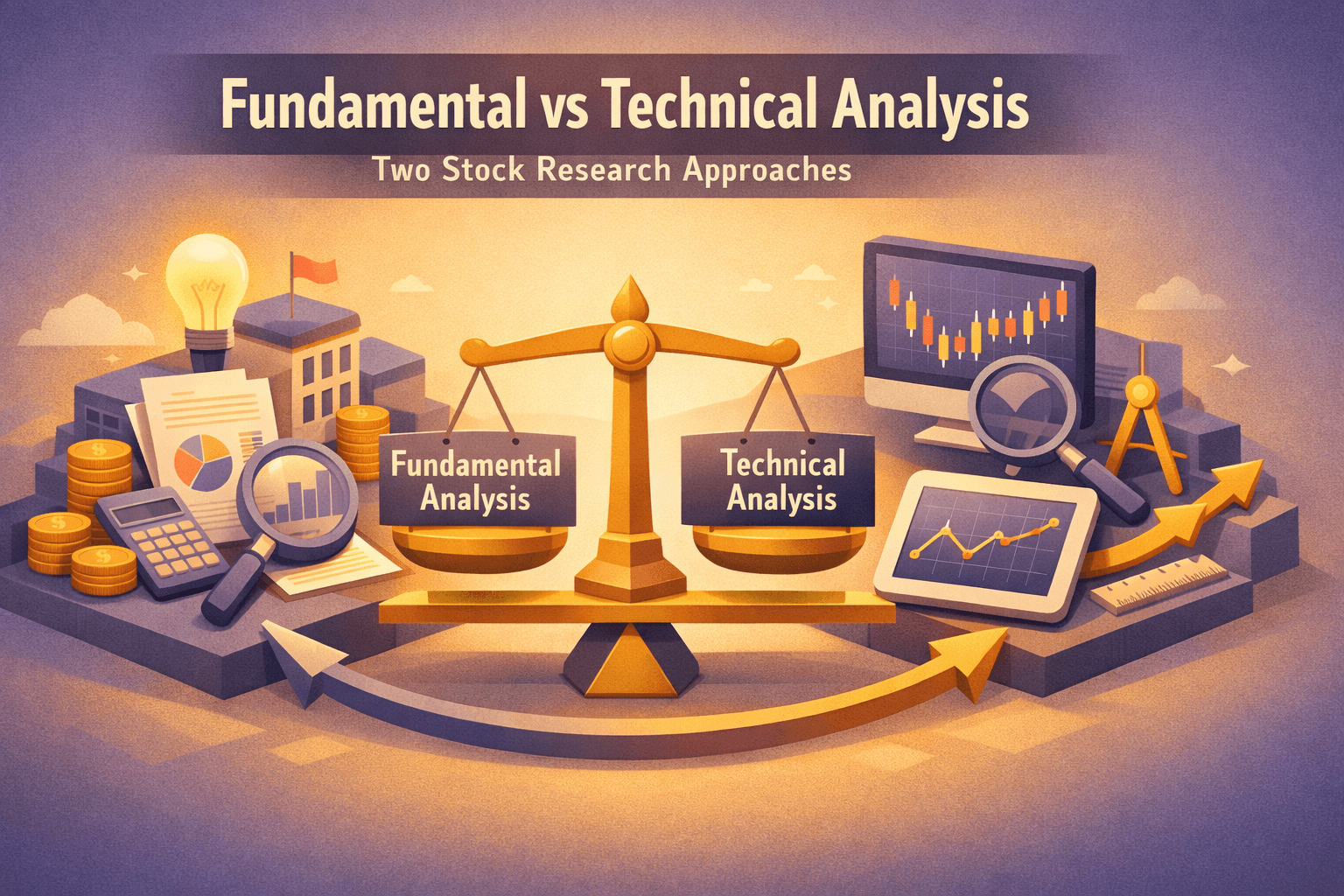
Fundamental analysis is the process of evaluating a company's financial health, competitive position, and long-term prospects to decide whether it fits an investor's objectives. For long-term investors, fundamentals reveal whether a business can generate sustainable cash flow, grow earnings, and survive economic cycles.
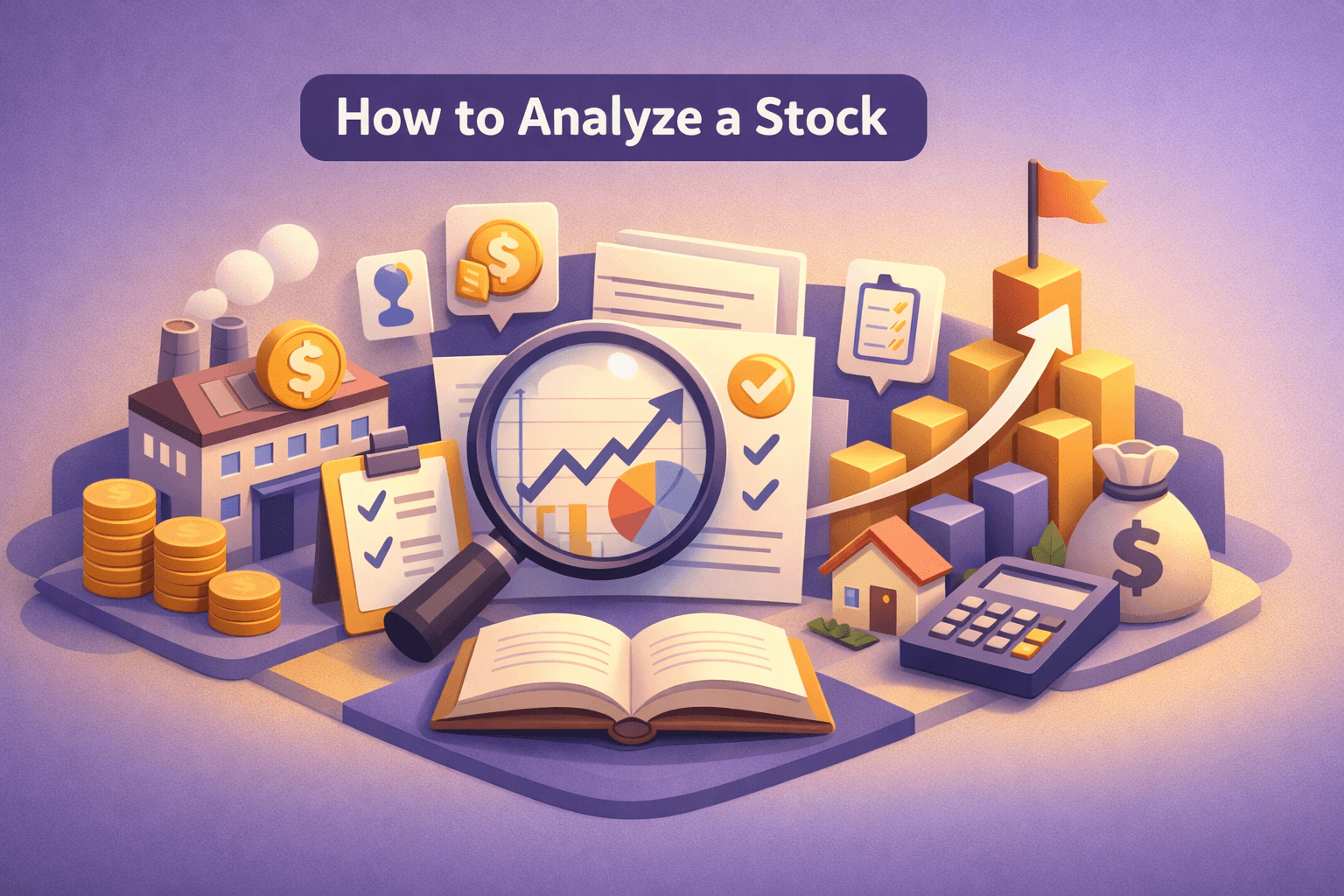
This guide focuses on the key fundamentals every intermediate investor should check: business model, revenue growth and quality, profit margins and efficiency, balance sheet and debt, and valuation ratios. You will get practical checklists, example calculations, and guidance for interpreting the metrics.
Key Takeaways
- Start with the business model: know how the company makes money and the durability of its competitive advantages.
- Measure revenue growth and quality: look for consistent top-line growth and recurring revenue when possible.
- Evaluate profitability with margins and returns: gross, operating, net margins, and return on invested capital (ROIC) show efficiency and capital allocation skill.
- Scrutinize the balance sheet: assess liquidity, leverage (debt/EBITDA), and interest coverage to gauge financial resilience.
- Use valuation ratios (P/E, EV/EBITDA, P/B) together with growth and profitability to judge price versus fundamentals.
- A checklist and examples help turn metrics into an investment framework without relying on a single number.
1. Understand the Business Model
Before diving into numbers, describe in plain terms how the company earns money, who its customers are, and what differentiates it from peers. A clear business model anchors your entire analysis and influences which metrics matter most.
What to look for
Ask whether revenue is transactional (one-off sales), recurring (subscriptions, service contracts), or platform-driven (marketplaces). Recurring revenue is generally more predictable and valuable for long-term investors.
Also identify competitive advantages, brand, network effects, scale, regulatory barriers, or proprietary technology. The stronger the moat, the more durable the company’s cash flows and the wider the margin for valuation mistakes.
Example: Comparing models
$AAPL earns revenue from device sales, services, and accessories; its model mixes transactional and high-margin recurring services. By contrast, $KO (a beverage company) relies on high-volume, lower-margin consumer goods with global distribution scale. Which model you prefer depends on risk tolerance and the valuation you attach to predictability versus high growth.
2. Revenue Growth and Quality
Revenue growth shows demand for the company’s products or services and is the engine behind future earnings expansion. But growth alone isn't enough, quality matters. Growth driven by price increases or one-time events is less sustainable than growth from expanding customer counts or higher product penetration.
Quantitative checks
- Calculate year-over-year (YoY) and compound annual growth rate (CAGR) for 3-5 years to see trends.
- Segment growth: check revenue by geography or product to identify concentration risk.
- Recurring revenue percentage: higher is generally better for predictability.
Example calculation: if $AMZN revenue was $280B two years ago and grew to $350B, CAGR = ((350/280)^(1/2)-1) ≈ 11.8%.
Quality signals
Look for rising average revenue per user (ARPU), improving retention, and expanding margins in growth segments. Also watch cash collection: accounts receivable increasing faster than revenue can signal collection problems.
3. Profitability and Margins
Margins translate revenue into profit and reveal operating leverage and cost discipline. Key margins to review are gross margin, operating margin, and net margin. Also examine return measures like ROIC and return on equity (ROE).
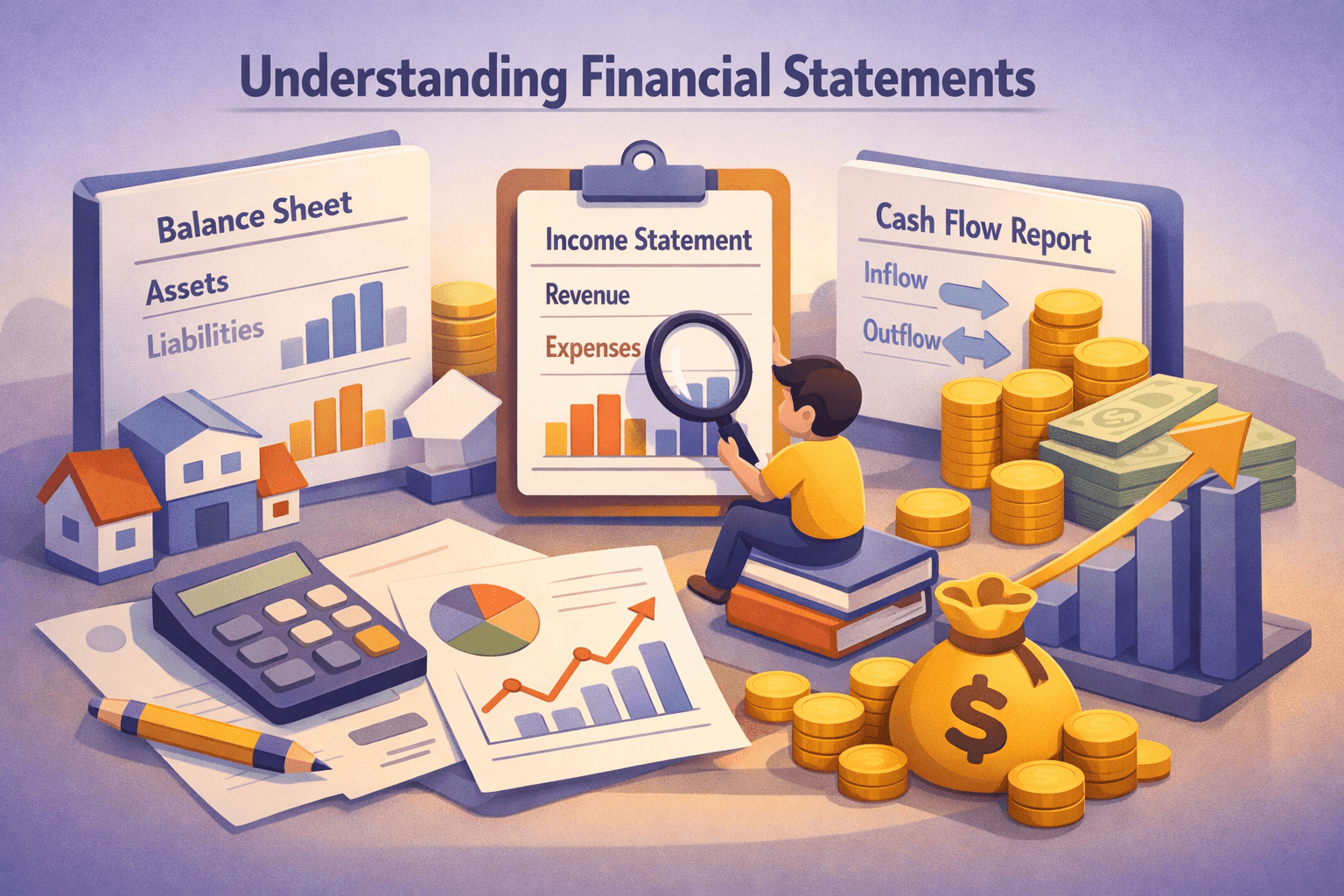
Key metrics explained
- Gross margin = (Revenue - Cost of Goods Sold) / Revenue. It shows product-level profitability.
- Operating margin = Operating Income / Revenue. It reflects core business profitability after SG&A and R&D.
- Net margin = Net Income / Revenue. It accounts for interest, taxes, and non-operating items.
- ROIC = NOPAT / Invested Capital. A ROIC consistently above the company’s cost of capital indicates value creation.
Benchmarks: for many durable businesses, an operating margin above 15% and ROIC above 10% are signs of strong profitability, though thresholds vary by industry.
Example: Interpreting margins
$MSFT historically exhibits high gross and operating margins in the mid-to-high 20s or above, which reflects software scalability. A manufacturing firm with single-digit operating margins might be fine if it has stable cash flows and low capital requirements, but expect lower valuation multiples for such businesses.
4. Balance Sheet, Cash Flow, and Debt
A healthy balance sheet and reliable cash flow are critical for long-term survival and flexibility. Debt amplifies returns in good times and risk in downturns, so assess leverage carefully.
What to examine
- Cash and short-term investments vs. short-term liabilities for liquidity.
- Net debt = Total debt - cash. Compare net debt to EBITDA to measure leverage; a common healthy range is net debt/EBITDA below 3 for many industries, though capital-intensive sectors tolerate higher ratios.
- Interest coverage ratio = EBIT / Interest expense. Values above 4-5 suggest comfortable coverage; under 2 is risky.
- Free cash flow (FCF) = Operating cash flow - Capital expenditures. Positive and growing FCF is a powerful sign of financial health.
Also check the maturity schedule of debt and any covenants that could trigger refinancing risk during stress periods.
Example calculation
If $TICKER has $10B total debt and $3B cash, net debt = $7B. If trailing EBITDA = $2.5B, net debt/EBITDA = 2.8x, which many investors consider moderate leverage. Always compare to peers and industry norms.
5. Valuation Ratios and What They Mean
Valuation places a price on future expected cash flows. Common ratios include price-to-earnings (P/E), enterprise value to EBITDA (EV/EBITDA), and price-to-book (P/B). Use multiple ratios and adjust for growth and profitability.
Common ratios
- P/E = Price per share / Earnings per share. High P/E implies high growth expectations or overvaluation; low P/E could signal value or structural issues.
- EV/EBITDA accounts for capital structure and is useful for cross-industry comparisons.
- P/B is relevant for financials or asset-heavy companies where the balance sheet drives value.
Valuation is meaningful only when compared to peers, historical company multiples, and expected growth rates. The PEG ratio (P/E divided by earnings growth rate) is a simple way to relate price to growth; a PEG near 1 suggests price roughly equals growth expectations.
Putting valuation in context
High-growth companies often trade at high P/E or EV/EBITDA because investors expect future cash flow expansion. For steady, low-growth firms, lower multiples reflect limited upside unless the company can improve returns or buy back shares.
Real-World Example: A Checklist Walkthrough
Consider an investor evaluating $AAPL (example used for demonstration, not a recommendation). The checklist approach ties the metrics to a decision framework.
- Business model: Device sales plus services provides diversified revenue and high customer stickiness.
- Revenue growth: Evaluate 3-5 year CAGR and services growth rate; services typically grow faster and have higher margins.
- Profitability: Check gross and operating margins. A stable or expanding operating margin suggests improving unit economics.
- Balance sheet: Confirm net cash or manageable net debt, strong free cash flow, and reasonable dividend/share buyback policy.
- Valuation: Compare P/E and EV/EBITDA to historical averages and peers; adjust for growth outlook and cash return policies.
Using numbers: if services revenue grew 15% YoY while total revenue grew 8% and operating margin expanded from 24% to 26%, these signs point to improving quality of earnings.
Common Mistakes to Avoid
- Focusing on a single metric. Relying only on P/E or revenue growth ignores profitability, leverage, and cash generation. Use a balanced checklist.
- Ignoring industry context. A 10% margin may be excellent in retail but poor for software. Always compare to peers and industry norms.
- Confusing accounting earnings with cash flow. Non-cash items and working capital swings can distort net income; check operating cash flow and FCF.
- Overreacting to short-term noise. Quarterly volatility can hide long-term trends; prioritize multi-year patterns for long-term investing.
- Neglecting the balance sheet. High growth without sustainable capital structure or with excessive leverage can lead to value destruction during downturns.
FAQ
Q: How many metrics should I use when analyzing a stock?
A: Use a balanced set: business model assessment, revenue growth, margins/returns, cash flow, balance sheet/leverage, and valuation. A checklist of 6, 10 metrics is practical; depth matters more than breadth.
Q: When is a high P/E ratio justified?
A: A high P/E can be justified when earnings are expected to grow rapidly and sustainably, the company has high margins or strong ROIC, and cash flow conversion is reliable. Always compare to growth-adjusted benchmarks like PEG.
Q: Should I prefer companies with recurring revenue?
A: Recurring revenue tends to be more predictable and supports higher valuations, but it is not universally better. Assess margins, customer churn, and the cost to acquire/retain customers.
Q: How do I factor macroeconomic risk into fundamental analysis?
A: Consider sensitivity of revenue and margins to economic cycles, interest rate exposure (debt), and foreign currency risks. Stress-test forecasts under recession scenarios to see if the company can sustain capex and service debt.
Bottom Line
Analyzing a stock for long-term investing is a structured exercise that starts with understanding the business model and proceeds through revenue quality, profitability, balance sheet strength, and valuation. No single metric is decisive; value comes from assembling evidence across these dimensions.
Actionable next steps: build a checklist tailored to industries you follow, track 3-5 years of historical metrics, and practice with a few real tickers using the methods here. Over time you will refine which indicators matter most for the types of businesses you prefer.