The Big Picture
Ørsted's Revolution Wind reached full commercial operation on Nov 5, a clear signal that large-scale offshore wind is moving from construction to steady power delivery. The 704 MW project, tied into the New England grid, stands out as the most consequential development of the day for reliability and renewable supply in the Northeast.
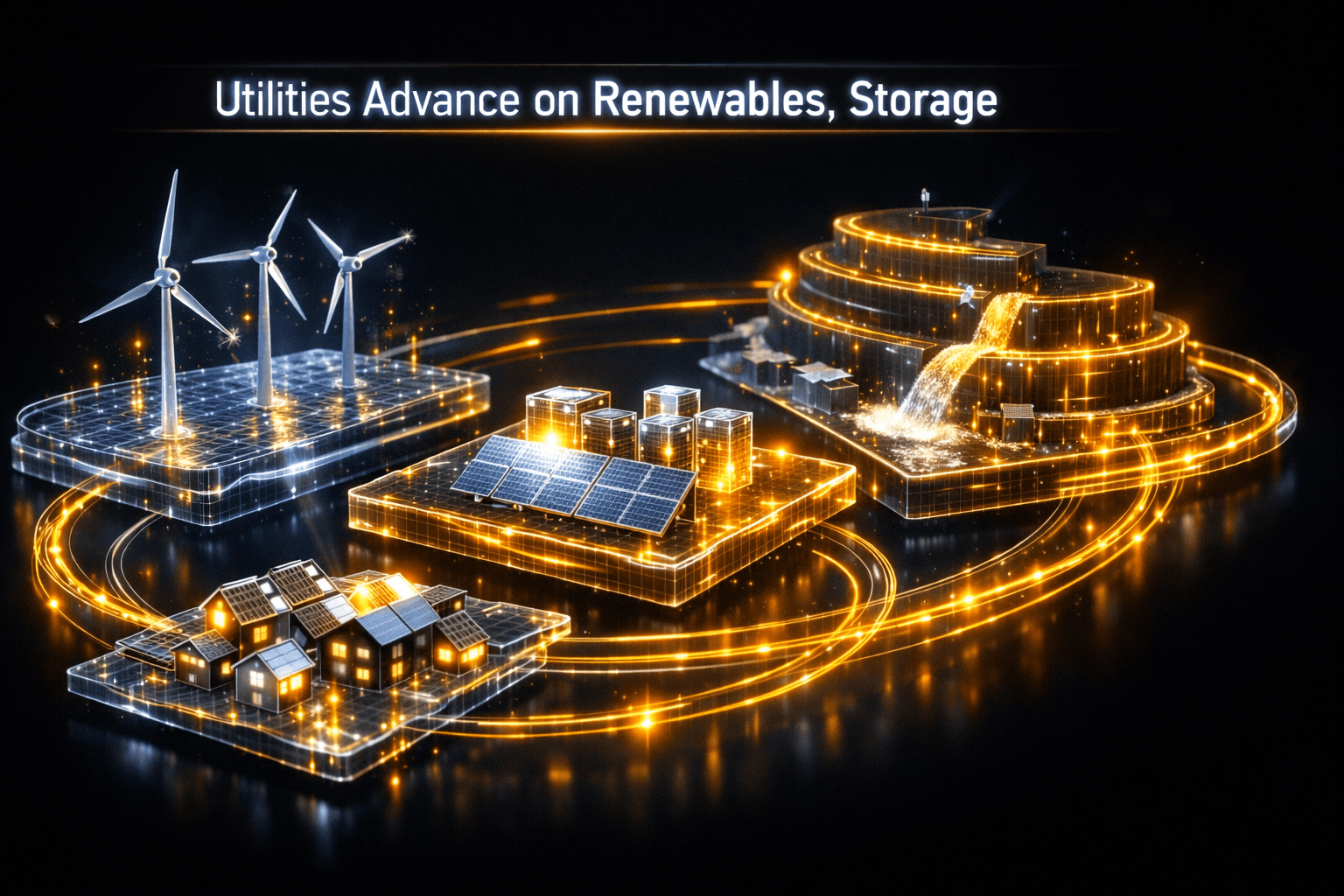
Today's headlines amplify a broader theme: scale and integration. From rising co-located solar-plus-storage shares in new builds to acquisitions that add nearly 1,400 MW of hydro and pumped storage capacity, the sector is adding firming resources and grid-facing technologies that matter to you as an investor and as an electricity user.
Market Highlights
- Revolution Wind, operated by $ORSTED, reached commercial operation with 704 MW now supplying the New England grid, marking a milestone for offshore wind in U.S. waters.
- The U.S. EIA reports co-located solar and storage now account for 16% of solar installations, up from 2% in 2017, and projects the share will pass 30% within two years based on planned additions.
- Hull Street Energy completed its acquisition of FirstLight's pumped storage and hydro platform, adding nearly 1,400 MW of generation capacity to its roster, which strengthens seasonal and peaking flexibility for the grid.
- Faropoint started construction on the first of 16 community solar rooftops in New Jersey, a 1.6 MW installation that kicks off a >10 MW pipeline of local projects.
- Distributed projects continued to pop up: a 322 kW solar carport project completed at Irvine Heritage Medical Plaza demonstrates distributed generation solving billing and demand issues at the facility level.
- Eaton Corporation (ETN)'s CEO flagged the growing case for AC-to-DC migration in data centers and Eaton is investing in solid-state transformers to capture that potential market, though the company warned timing is uncertain.
- Entergy (ETR) reported strong Q3 sales and noted progress on an Arkansas data center deal while also arranging firm pipeline gas contracts sufficient to support 10 new combined-cycle plants, underscoring the continuing role of gas-fired capacity.
Key Developments
Revolution Wind Goes Commercial
Orsted's announcement that the 704 MW Revolution Wind project is in full commercial operation moves a major U.S. offshore development from testing and ramp-up into steady-state generation. For you, that means more predictable clean energy supply into New England and a real example of offshore wind feeding regional capacity needs.
Solar Plus Storage Hits a Tipping Point
The EIA's data showing co-located solar and storage grew to 16% of installations, with a projection above 30% soon, underscores a structural shift in how new solar is built. Why does that matter to you? Projects with storage support peak demand, improve capacity value, and make renewable output more bankable for utilities and developers.
Pumped Storage and Hydro Consolidation
Hull Street's close on FirstLight's assets brings nearly 1,400 MW of long-duration hydropower and pumped storage under private ownership, increasing the pool of dispatchable resources that can balance variable wind and solar. Analysts note that acquisitions like this reduce technology risk for grid operators while increasing optionality for capacity planning.
What to Watch
Tomorrow and the coming weeks will test whether today's momentum translates into durable earnings and procurement signals. You should focus on a few near-term catalysts and risks as the sector digests these developments.
- Earnings and guidance: Watch upcoming utility and energy-equipment quarterly reports for updates on project revenue recognition, capital spending, and margins, especially from firms exposed to offshore wind supply chains and storage deployments.
- Regulatory and interconnection timelines: Offshore wind completions raise questions about transmission upgrades and queue management in New England. Can transmission keep pace with new generation additions?
- Technology adoption timing: $ETN's remarks on AC-to-DC migration show upside for equipment vendors, but the CEO stressed timing isn't under their control. Keep an eye on pilot projects and large data center announcements that could accelerate adoption.
- Commodity and fuel risk: Entergy's gas pipeline contracts to back combined-cycle plants highlight that gas remains central to reliability. Monitor natural gas price moves, since they can affect merchant plant economics and utility dispatch.
- Project execution and permitting: Community solar rollouts and distributed projects are scaling, but rooftop and carport projects still face local permitting and billing challenges. Those will determine how fast small-scale capacity adds up for you and your community.
Bottom Line
- Major milestone: Revolution Wind coming online adds 704 MW of offshore capacity and demonstrates offshore project delivery in the U.S.
- Integration trend: Solar-plus-storage is rapidly rising, with EIA data pointing to a quick move past 30% of new solar builds, improving system flexibility.
- Firming assets matter: Hull Street's pumped storage deal adds nearly 1,400 MW of dispatchable capacity that supports the variable renewables buildout.
- Technology watch: Eaton is positioning for AC-to-DC transitions, but timing remains uncertain, so watch pilots and data center announcements.
- Stay selective: You should track how regulatory and interconnection processes, and fuel markets, shape real investment returns and operational reliability.
FAQ Section
Q: How significant is Revolution Wind's commercial operation for regional supply? A: Very significant, it adds 704 MW of offshore generation to New England and provides a new source of large-scale renewable capacity on the grid.
Q: What does the EIA data on solar-plus-storage mean for project economics? A: The rise from 2% to 16% of co-located projects since 2017, with projections above 30%, suggests storage is increasingly built-in to improve capacity value and firming, which can enhance revenue stability for solar projects.
Q: Should you expect rapid adoption of AC-to-DC in data centers after Eaton's comments? A: Eaton and others see a clear case for migration, but timing is uncertain; pilot deployments and major data center announcements will be the triggers to watch.