The Big Picture
Today brought a string of developments that push the energy landscape forward, from a potentially paradigm-shifting fusion model to tangible gains in oil and gas supply and corporate balance sheet repair. If you follow energy markets, these stories matter because they touch the long-term technology outlook, immediate supply flows, and the financial stability of major providers.
Taken together, the headlines suggest momentum for traditional producers and for long-term decarbonization innovation. But there's mixed evidence on demand and consumer adoption, so you should weigh near-term volatility against longer-term secular trends.
Market Highlights
Quick takeaways you can scan in seconds.
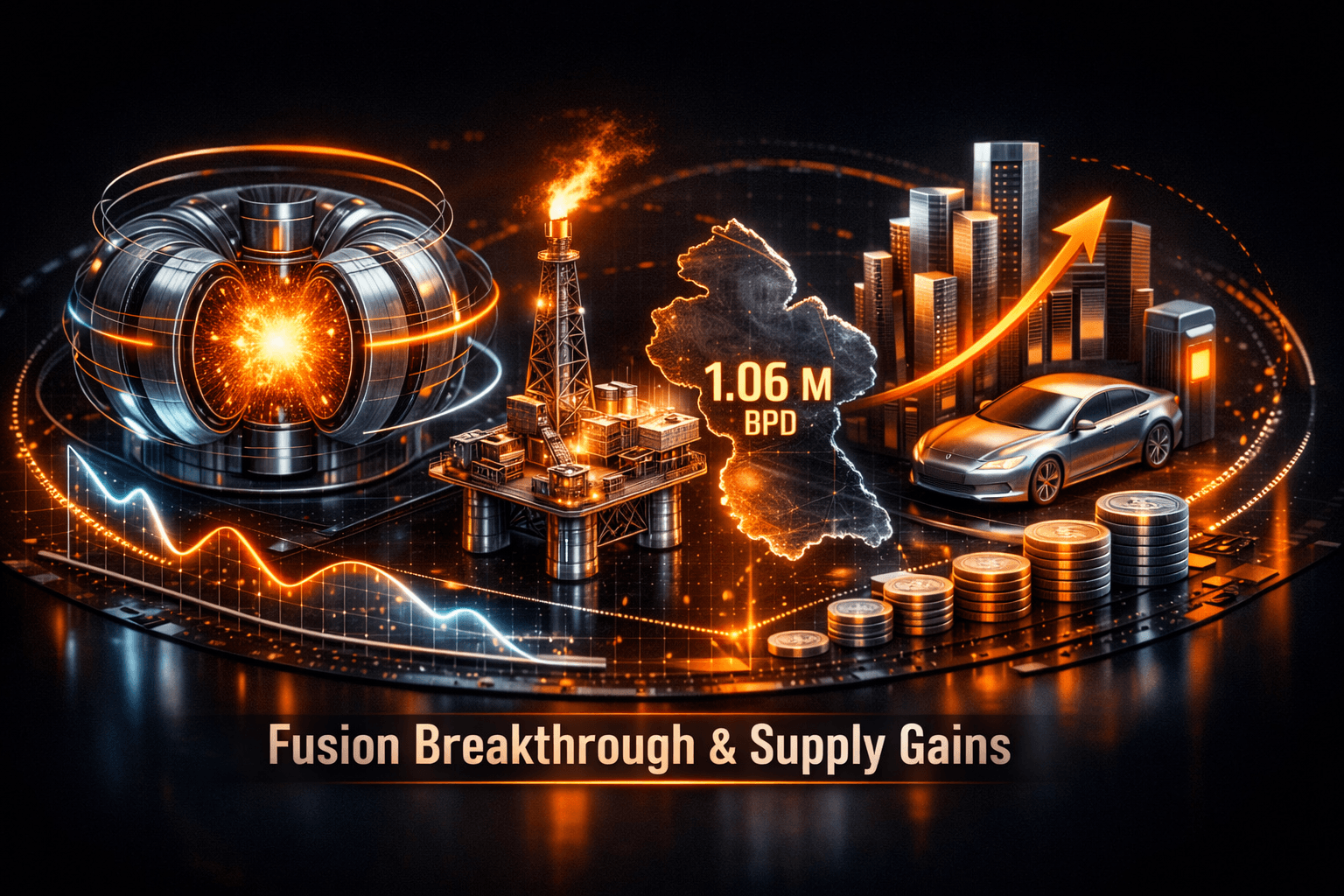
- Princeton fusion model, reported by OilPrice, proposes a lower-energy route to ignition, flipping the traditional compress-then-heat sequence and raising research momentum for fusion technology.
- Guyana set to exceed 1 million barrels per day, with December preliminary loading at about 33 million barrels, roughly 1.06 million bpd, a milestone for new export supply.
- Corporate finance and contracts: Uniper secured $3.4 billion in new financing coordinated by ING and UniCredit, while BP expects a net debt reduction of as much as $7.8 billion through Q3.
- European gas deals continue, as Equinor signs another supply agreement to the Netherlands and Germany, marking its third pact with Eneco this year.
- EV market signals were mixed: overall new EV prices remain below last year's averages, but September showed higher prices and smaller discounts, and the 2027 Chevy Blazer EV now starts above $45,000.
Key Developments
Princeton Model Reframes Fusion Research
Researchers modelling a new pathway to fusion ignition say a lower-energy route could be possible, reversing the usual sequence of compress then heat. The finding is early stage and model based, but it could shift where research dollars and private capital flow in the years ahead.
What does this mean for you as an investor? It doesn't change the near-term power mix, but it could accelerate investment interest in fusion startups and research partnerships. Could lower-cost fusion become a real game changer for the sector down the road?
Guyana, BP and Equinor Strengthen Supply and Balance Sheets
Guyana's oil sector is scaling rapidly, with December export schedules implying about 1.06 million bpd. That adds meaningful supply to a tight global market and raises regional export revenues.
At the same time, $BP announced an expected net debt reduction of up to $7.8 billion for Q3, which improves its financial flexibility. Equinor's new gas contract for Dutch supply continues a pattern of firming gas ties in Europe. Taken together, these items improve the outlook for supply reliability and industry solvency.
Uniper Financing Eases European Energy Stress
Uniper's $3.4 billion package, coordinated by ING and UniCredit, was presented as recognition of the company's role in European supply. The financing should ease near-term funding pressure and reduce a tail risk that could have rippled through utilities and gas markets.
For your portfolio exposure, analysts note this reduces immediate contagion risk in European energy markets, though you'll want to keep an eye on policy and gas-price volatility.
What to Watch
Here are the catalysts and risks that could swing markets tomorrow and in coming weeks.
- Fusion research updates and funding moves. Watch for follow-up studies, DOE commentary, or private capital announcements that would signal faster commercialization timelines.
- Guyana export flows and shipping schedules. Vessel loadings in December are pivotal. More barrels entering global markets can pressure prices if demand softens.
- European gas demand and contract rollovers. Equinor's deals reduce near-term supply uncertainty, but winter demand and geopolitics can still push volatility higher.
- Corporate balance-sheet markers. BP's reported $7.8 billion debt reduction and Uniper's $3.4 billion financing will be monitored in Q3 reporting cycles and credit markets. Analysts note these improve credit profiles.
- EV pricing and incentives. September's price and discount downturn and the Chevy Blazer EV price hike above $45,000 raise questions about demand elasticity and consumer subsidy impacts. Will policy or incentive changes alter the sales trajectory?
Risks to monitor include lingering geopolitical roadblocks for regional infrastructure projects, notably the Middle Corridor delays tied to external actors, and rooftop solar policy impacts on residential power prices as researchers at MIT found correlations with higher rates.
Bottom Line
- Fusion research from Princeton could be a long-term positive for decarbonization, though it remains model based and not an immediate market mover.
- Guyana reaching roughly 1.06 million bpd is a near-term supply story that could weigh on oil prices if demand falters.
- Uniper's $3.4 billion financing and BP's expected $7.8 billion debt reduction strengthen corporate credit conditions in energy.
- Equinor's new gas deals improve European supply resilience ahead of winter, reducing a key tail risk.
- EV pricing signals are mixed, so you should watch sales data and incentive policies to judge demand momentum.
FAQ Section
Q: Will the Princeton fusion model cut energy costs soon? A: The model suggests a lower-energy route, but it's early stage. You should expect years of research and validation before it affects energy costs.
Q: How material is Guyana hitting 1 million bpd for oil markets? A: Guyana adding about 1.06 million bpd increases global supply and could cap near-term price upside if demand weakens, but impact depends on broader OPEC supply and global demand trends.
Q: Does Uniper's financing and BP's debt reduction remove market risk? A: They materially lower near-term financing and credit risk, but you'll still want to monitor winter gas demand, geopolitics, and company execution as ongoing risks.