The Big Picture
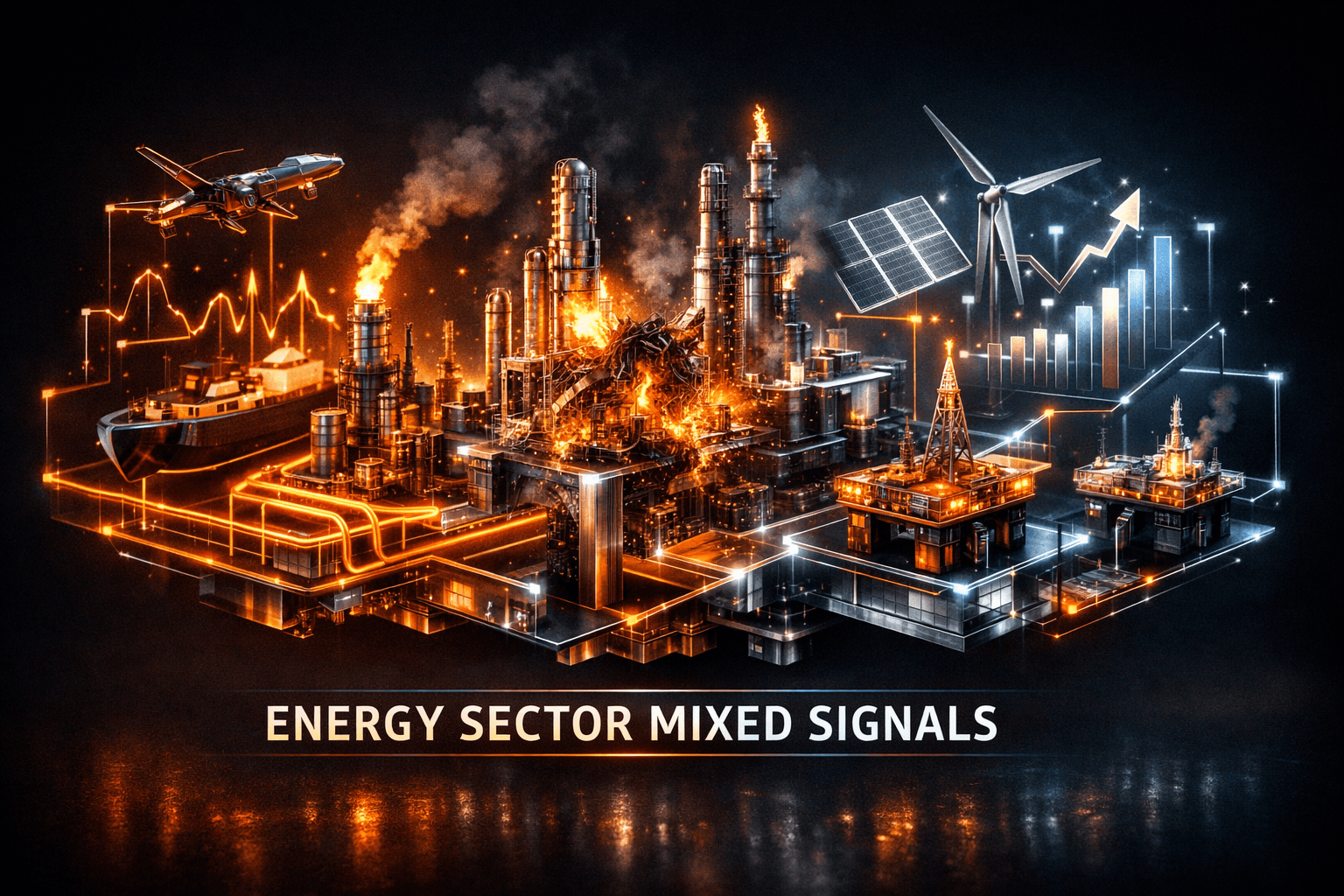
Today the energy complex served up mixed signals, with supply and technology wins offset by renewed geopolitical risk in the Gulf. BP and Petrobras reported production and capacity gains, while renewables and industrial tech developments point to steady structural growth.
At the same time, a deteriorating security picture around the Strait of Hormuz and reports of an LNG vessel struck kept upside risk for prices alive, and Russia's search for refinery capacity in Kazakhstan signals persistent logistical pressure. What does that mean for you as a market participant? It means selectivity matters and near-term volatility could remain elevated.
Market Highlights
Key data points and company moves you should note from today's headlines.
- BP ($BP) increased output at the Atlantis deepwater field, adding about 10,000 barrels of oil equivalent per day after the start up of a Gulf expansion project.
- Petrobras ($PBR) said it is producing above the designed capacities on several mega platforms, squeezing more oil out of fields like Buzios.
- China's trade with Kazakhstan and Uzbekistan rose 6.5 percent year on year to $52.94 billion in H1 2026, a demand signal for regional hydrocarbons and materials.
- Türkiye added roughly 2.1 GW of solar in H1, bringing total capacity to about 26.9 GW, underlining ongoing renewables momentum.
- Jackery's HomePower deals cut prices by as much as $1,450, with new lows at $1,349 and $849 for large home power stations, highlighting consumer interest in backup energy solutions.
- Tensions around the Strait of Hormuz and reports of an LNG vessel strike injected security risk into export flows, while Russia seeks Kazakh refining capacity, raising logistical pressure on regional fuel supplies.
Key Developments
Gulf Security and Export Risks
Shipping through the Strait of Hormuz showed a slight uptick in traffic even as the security environment worsened after a new round of US strikes on Iran following attacks on US forces in Jordan. Reports that a US-owned LNG vessel was struck amplify supply disruption risk for seaborne natural gas and associated markets.
For you, that means near-term price sensitivity to headlines will likely remain high. How much will Gulf risk matter for prices this week? That will depend on whether damage to vessels or terminals tightens seaborne flows.
Supply and Production Gains
On the supply side, BP started up an expansion in the US Gulf, boosting Atlantis capacity by about 10,000 boe per day, and Petrobras reported output above design levels on major Brazilian platforms. Those developments add physical supply and point to operational resilience among major producers.
Investors will want to watch output sustainability and any maintenance schedules that could reverse these gains. You should also note that incremental barrels can offset some geopolitical premium in oil prices if they persist.
Refining Strain and Regional Shifts
Russia's apparent shortage of undamaged refining capacity and talks to process Russian crude in Kazakhstan expose downstream strain. Kazakhstan said decisions on processed volumes will be left to market participants, but no firm volumes or commercial terms were disclosed.
That arrangement could keep product flows fragmented in Eurasia and raise complexity for traders and refiners. It also shows how infrastructure damage can translate into cross-border dependencies you need to monitor.
Clean Energy and Technology Momentum
Renewables and energy-tech stories offered a counterweight. Türkiye's 2.1 GW of new solar capacity in H1 and Eni's move to open supercomputing capabilities to an innovation ecosystem both signal steady structural investment in low-carbon tech and operational analytics.
Meanwhile, consumer and EV sector signals were mixed. Jackery's steep product discounts indicate robust retail activity in backup power markets, while early demand for the BMW i3 and the ongoing narrative around Tesla ($TSLA) governance and PR show EV interest is alive but scrutinized.
What to Watch
Look ahead to near-term catalysts that could move markets and your positions. You won't want to ignore these items.
- Geopolitical updates from the Gulf. Any escalation or disruption to LNG and crude shipping will quickly affect forward curves and regional spot markets.
- Operational reports from producers. Watch BP and Petrobras releases for sustained output trends and maintenance plans that could change supply balances.
- Russia-Kazakhstan refining talks. Monitor official terms, named refineries, and expected volumes to understand downstream relief or continued bottlenecks.
- Renewables deployment data and tech partnerships. Eni's supercomputing access and Türkiye's solar growth offer clues about the pace of energy transition investment.
- Macro risk events and demand indicators. China's trade links to Central Asia and broader global demand data will influence oil and gas demand assumptions.
Bottom Line
- Sector sentiment today is neutral, with supply-side gains balanced by geopolitical and downstream stress, analysts note.
- Production additions from BP and Petrobras ease some supply concerns, but Gulf security events and refinery damage in Russia keep price upside possible.
- Renewables and tech initiatives are steady positives, suggesting long-term structural demand for low-carbon solutions continues.
- You should stay alert to headline risk and upcoming operational disclosures, because volatility will likely remain elevated in the near term.
- Data suggests a selective approach is warranted, as pockets of opportunity exist amid ongoing geopolitical and logistical uncertainty.
FAQ Section
Q: How could Gulf security developments affect global energy prices? A: Disruptions to shipping or damage to LNG and crude vessels typically tightens near-term supply and lifts spot and futures prices until flows normalize.
Q: Will BP's and Petrobras's output gains offset geopolitical risk? A: They can blunt short-term tightness by adding barrels, but sustained offset depends on production persistence and absence of further shipping or refinery disruptions.
Q: What data should you watch next trading day? A: Monitor official output and maintenance updates from major producers, Gulf security bulletins, and any announcements on Russia-Kazakhstan refining arrangements.