The Big Picture
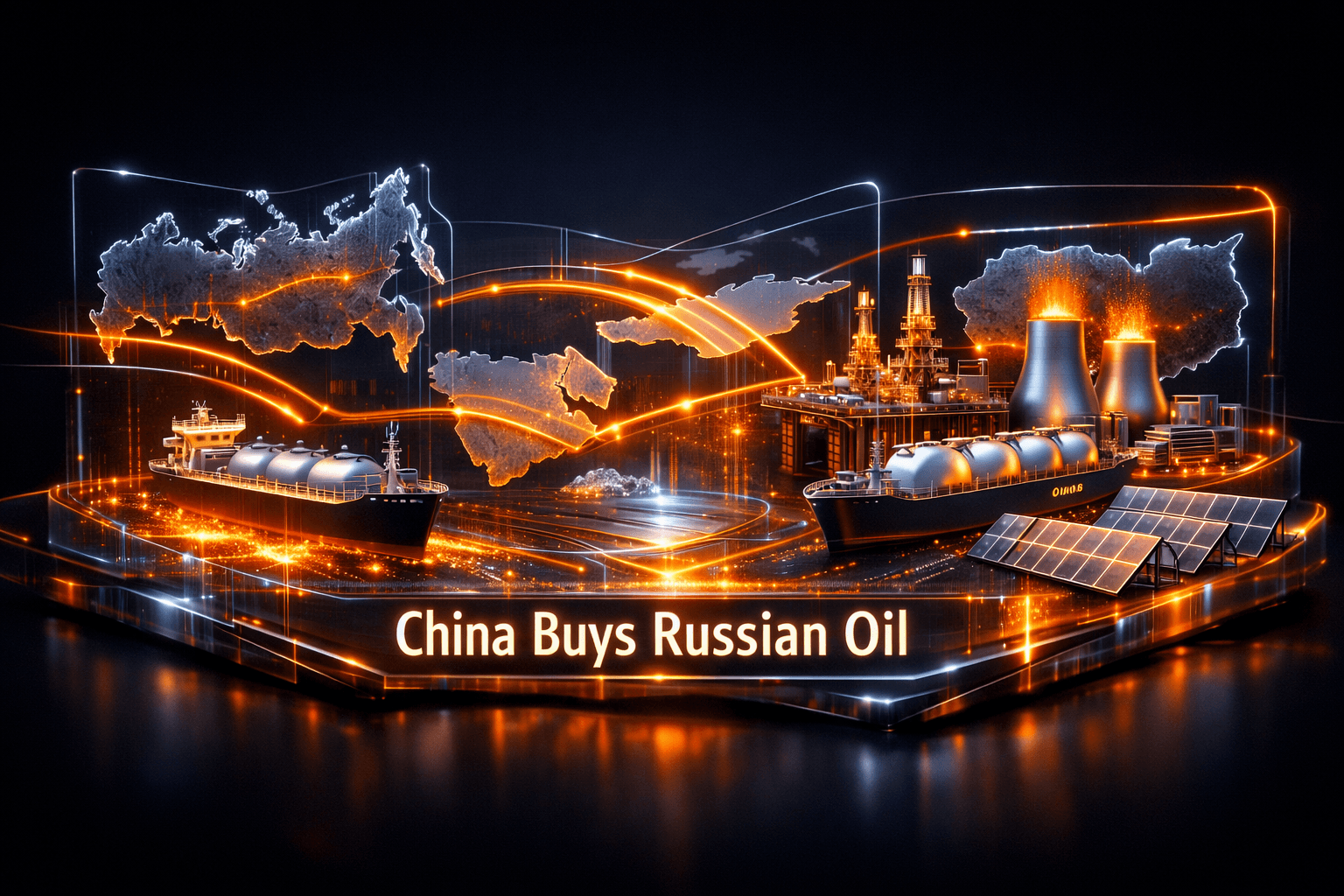
China's refiners snapped up Russian Far East ESPO barrels weeks earlier than usual, tightening global crude flows after Red Sea tanker attacks raised Middle East supply risks. That move, combined with new gas export agreements and renewed U.S. push on small modular reactors, has tilted the energy story toward tighter supply and stronger demand signals this morning.
Why does this matter to you as an investor? Short term, shipping disruptions and strategic buying are supporting crude spreads and headline risk, and medium term, new gas and nuclear deals point to sustained demand for hydrocarbons and alternative baseload sources. At the same time, solar manufacturers face oversupply and price pressure, so the picture is selective rather than uniform.
Market Highlights
Quick facts and moves to watch from overnight and pre-market news.
- China buys ESPO crude early, narrowing the ESPO discount to ICE Brent to about $1 per barrel, from a $3 to $4 discount two weeks ago.
- Aphrodite consortium, led by Chevron $CVX, signed an MOU to export 100 percent of Aphrodite field output to Egypt by pipeline.
- LNG demand signals: global exporters including Shell $SHEL, ExxonMobil $XOM, and BP $BP are eyeing Cambodia as it builds its first LNG‑fired plant; Cambodia currently gets about 63% of its electricity from renewables.
- U.S. foreign policy is prioritizing small modular reactors in Southeast Asia, a development that could lift long‑term demand for nuclear equipment and engineering exports.
- Solar sector shows mixed signals: Japanese research points to renewed interest in cylindrical BIPV designs, while China TOPCon cell prices continued to decline on weak demand and oversupply.
- Smaller items to note: a 2 MW solar tender at South Africa's King Shaka Airport, and a modular 18‑in‑1 EV platform launched by ENVO in Canada.
Key Developments
China rushes to secure Russian crude
Chinese refiners bought up cargoes from Kozmino for August loading earlier than usual after this week's attacks on tankers in the Red Sea raised supply concerns. Traders say the ESPO blend's discount to Brent tightened to roughly $1 per barrel, signaling sharper competition for barrels that normally trade cheaper.
Implication for investors: headline risk around shipping lanes is supporting crude spreads and could keep upward pressure on spot Brent and regional benchmarks until security stabilizes. What does that mean for oil names and commodity exposure on your watch list?
Aphrodite gas MOU and rising LNG demand in Southeast Asia
The Chevron‑led Aphrodite consortium and Egyptian partners signed an MOU to pipe 100 percent of Aphrodite's production to Egypt. Separately, global LNG exporters are courting Cambodia as it readies LNG capacity.
Implication for investors: these deals show buyers and producers are arranging regional gas flows to secure baseload fuel, supporting development timelines for pipeline and LNG projects. Project sponsors and regional utilities will be the ones you want to watch for contract and FID updates.
U.S. push for SMRs, and mixed signals in solar
The U.S. identified small modular reactors as a diplomatic and export priority across Southeast Asia, with talks ongoing after recent ASEAN engagements. That could accelerate SMR siting and technology export opportunities for U.S. suppliers.
At the same time, PV markets are polarized. Japanese researchers suggest cylindrical modules may find niche roles in building integrated PV, yet China TOPCon cell prices extended declines amid oversupply and weak demand. It's a classic case of innovation meeting short‑term cycle pain, a sign of the times in solar development.
What to Watch
Keep an eye on several near term catalysts and evolving risks that will shape energy sector returns and sentiment.
- Shipping security updates and Red Sea incident follow ups, they will influence Brent and regional freight rates and could keep crude volatility elevated.
- Progress on the Aphrodite to Egypt pipeline and any formal sales contracts, which will affect project timelines and cash flow expectations for partners such as Chevron $CVX.
- Announcements on Cambodia LNG supply deals and potential offtake agreements from $SHEL, $XOM, or $BP, because committed volumes would underpin near term LNG demand in Southeast Asia.
- Any formal SMR agreements or financing packages from the U.S. side, which can accelerate long term nuclear equipment exports and services demand.
- Solar pricing data, especially TOPCon cell costs and module ASPs, plus the outcome of the South African 2 MW tender, as these will indicate whether the PV oversupply trend is easing or worsening.
You should watch cash flow timelines and contract details closely, because headline deals do not always translate to near term production. Which of these risks is priced into stocks you follow?
Bottom Line
- China's early buying of ESPO crude and Red Sea disruptions are tightening near term oil balances and supporting crude spreads.
- New gas pathways, including the Aphrodite to Egypt MOU and Cambodia LNG interest, point to durable regional demand for gas infrastructure.
- U.S. emphasis on SMRs could create long horizon demand for nuclear equipment and services in Southeast Asia.
- Solar shows mixed signals, with promising BIPV research offset by TOPCon price declines from oversupply.
- Monitor shipping security, contract confirmations, and PV pricing for clear signals on where energy sector momentum is headed.
FAQ Section
Q: How will China's buying of ESPO crude affect global oil prices? A: Increased demand for ESPO narrows discounts to Brent and can lift regional price spreads, which often translates into upward pressure on spot Brent and nearby benchmarks while disruptions last.
Q: What does the Aphrodite MOU mean for regional gas markets? A: The MOU to send 100 percent of Aphrodite output to Egypt signals strengthened regional gas ties and could accelerate pipeline and processing projects if final contracts are signed.
Q: Should I be worried about falling TOPCon prices? A: Price declines point to oversupply and weak demand in the PV manufacturing chain, they may pressure module maker margins until demand or capacity adjustments restore balance.