The Big Picture
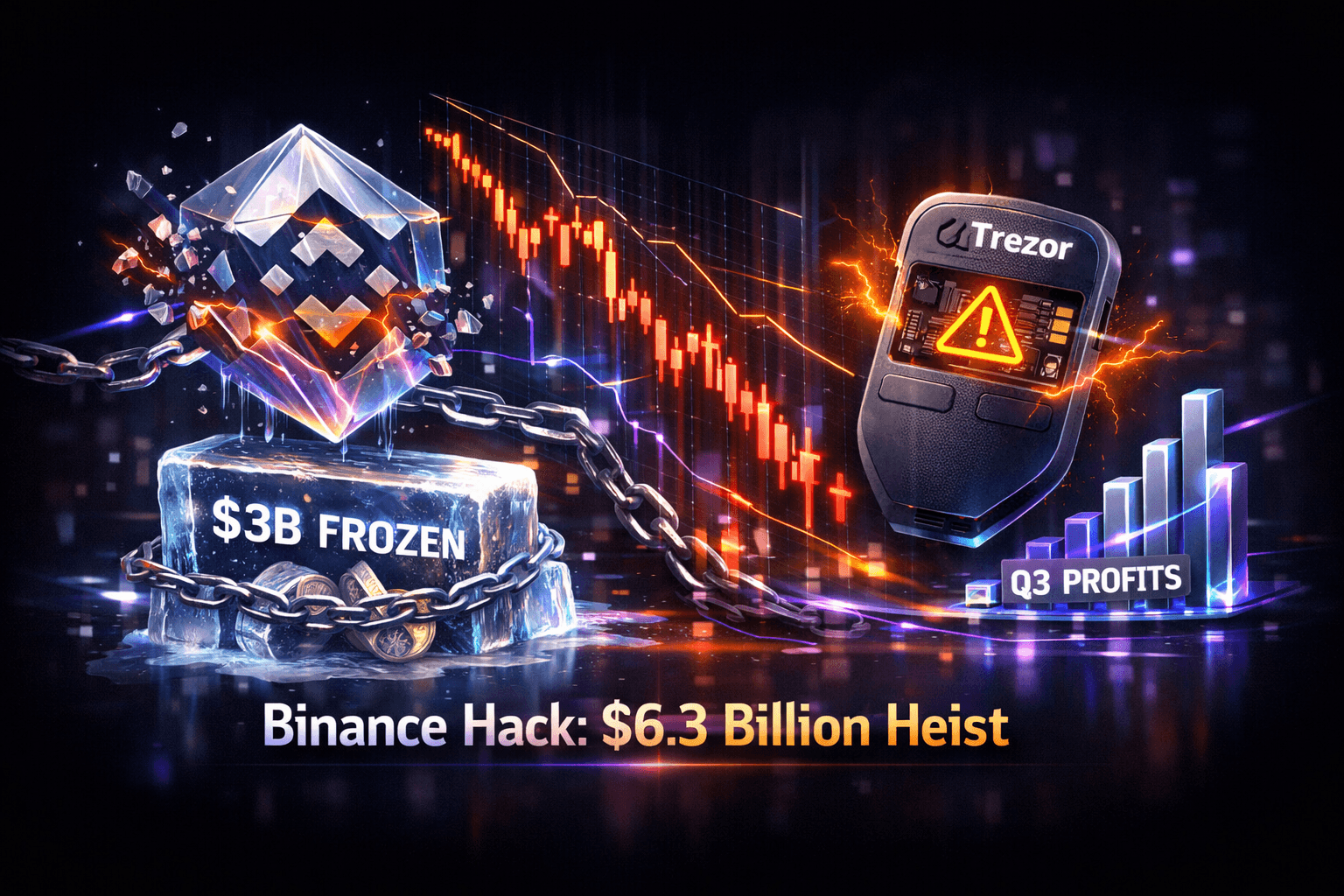
Overnight, the cryptocurrency sector was shaken by a single, large story, Binance confirming a $6.3 billion hack that has left markets on edge. About $3 billion of the stolen funds have been frozen onchain, but the scale and multiple breach points reported by the exchange are drawing intense scrutiny.
This security shock is bleeding into other parts of the market. Hardware wallet concerns from Trezor and aggressive token dumping by the attacker compounded volatility, while corporate results from Coinbase and MicroStrategy delivered mixed signals. What does this mean for your crypto holdings and the broader ecosystem?
Market Highlights
Here are the quick facts you need to know this morning.
- Binance hack estimated at $6.3 billion, roughly $3 billion of stolen assets frozen onchain, according to Binance statements and multiple live reports.
- $RUNE jumped about 13% after reports that North Korean-linked actors used THORChain to move funds previously stolen from Bybit and Bitget.
- MicroStrategy (MSTR) stock fell about 6% after Strategy's CFO resigned despite the company reporting what it called $21 billion in quarterly operating income and holdings of 848,517 BTC.
- Coinbase Global (COIN) reported net income up 66% in Q3, with analysts noting growth in prediction markets and derivatives offset weaker spot trading.
- Smaller tokens dumped by the hacker included FUN, which plunged roughly 90% after being sold into illiquid markets.
Key Developments
Binance Hack and Investigation
Binance confirmed the attacker gained wide access and uncovered "additional points of breach," noting the attack was not a single action, according to CEO Richard Teng. About $3 billion of assets traced to the exploit have been frozen onchain, but analysts say the complexity of the attack raises questions about operational security at centralized venues.
For you, that means counterparty risk is back in focus. Tracking stolen funds and recovering assets is underway, but history shows recovery is slow and partial. Will exchanges step up audits and insurance disclosures? That will be a crucial follow up.
Hardware Wallet Alert From Trezor
Trezor warned buyers who purchased devices from reseller CryptoBilis since March to move funds after receiving a credible report of a suspected hardware implant in the Safe 5. The Block and Cointelegraph both reported the alert this morning.
Hardware compromises are among the most serious security failures because they can bypass software protections. If you own affected devices you should follow vendor guidance and move funds to uncompromised keys, experts note. This is a reminder that custody choices matter as much as ever.
Market and Corporate Responses
On the corporate front, Coinbase posted a 66% rise in Q3 net income, helped by growth in prediction markets and derivatives, according to Bernstein analysts cited by The Block. The strength there offered a counterpoint to sector-wide jitters, but it wasn't enough to offset the seismic effect of the Binance hack on prices and sentiment.
Separately, a CFO resignation at Strategy coincided with a 6% drop in $MSTR even as the firm reported large quarterly operating income and 848,517 BTC holdings. That shows how governance moves can unsettle stocks even after strong financial prints.
What to Watch
Expect heightened scrutiny and a busy news calendar over the next 48 to 72 hours. Here are the specific catalysts and risks to follow.
- Binance updates, law enforcement coordination, and onchain tracing reports. Confirmations about breach vectors and frozen funds will move prices and sentiment.
- Trezor and CryptoBilis disclosures, any independent hardware audits, and resale tracking. Device integrity issues could affect hardware wallet demand and secondary market confidence.
- Regulatory reaction. Large hacks often prompt questions from regulators about custody standards and exchange oversight. Watch statements from US and EU agencies.
- Market spillovers. Token dumps like the FUN crash show how illiquid coins are vulnerable. Watch for contagion into mid-cap tokens and perpetual futures funding pressure.
- Corporate earnings cadence. $COIN follow up commentary and $MSTR investor calls may clarify business resilience versus security and governance concerns.
How you position will depend on your time horizon and risk tolerance. Are you leaning toward defensive allocations or taking advantage of dislocations? Make sure you know why you hold each asset and where custody risks sit.
Bottom Line
- Security shock dominates today: Binance's $6.3B breach and about $3B frozen are the primary market drivers.
- Hardware wallet alert from Trezor raises custodial risk across retail users, prompting urgent fund migrations for some buyers.
- Corporate fundamentals are mixed, with $COIN showing strong Q3 net income growth while $MSTR reacts to executive turnover despite large BTC holdings.
- Smaller tokens remain highly vulnerable to dumps and illiquidity, as seen with a roughly 90% decline in FUN after hacker selling.
- Data suggests elevated volatility and headline-driven price moves, so analysts note risk management and custody checks should be front of mind.
FAQ Section
Q: What happened at Binance and how much was stolen? A: Binance reported a hack estimated at $6.3 billion, with about $3 billion of the stolen assets frozen onchain.
Q: Should I be worried about my hardware wallet? A: Trezor warned buyers of devices sold by CryptoBilis to move funds after a credible report of a suspected implant, so follow vendor guidance if you purchased from that reseller.
Q: Do strong earnings at Coinbase change the market outlook? A: Coinbase's Q3 net income jump of 66% demonstrates business resilience, but security incidents and liquidity shocks are the near term drivers for price volatility.