The Big Picture
The dominant story today was the ongoing fallout from the $387.5 million Bitget breach, with the attacker now moving roughly $3.8 million into Zcash's Ironwood privacy pool. That operation underscores two simultaneous realities for you as a crypto observer: innovation keeps expanding utility and token issuance, and security plus regulatory scrutiny remain front and center.
Developments from Base, DogeOS and pro-crypto political endorsements offered clear upside for network activity and adoption. At the same time the CFTC pushed new rule proposals around event contracts, a move that raises fresh questions about oversight for prediction markets. What should you watch first, security or growth?
Market Highlights
Quick facts from today's headlines to keep on your radar.
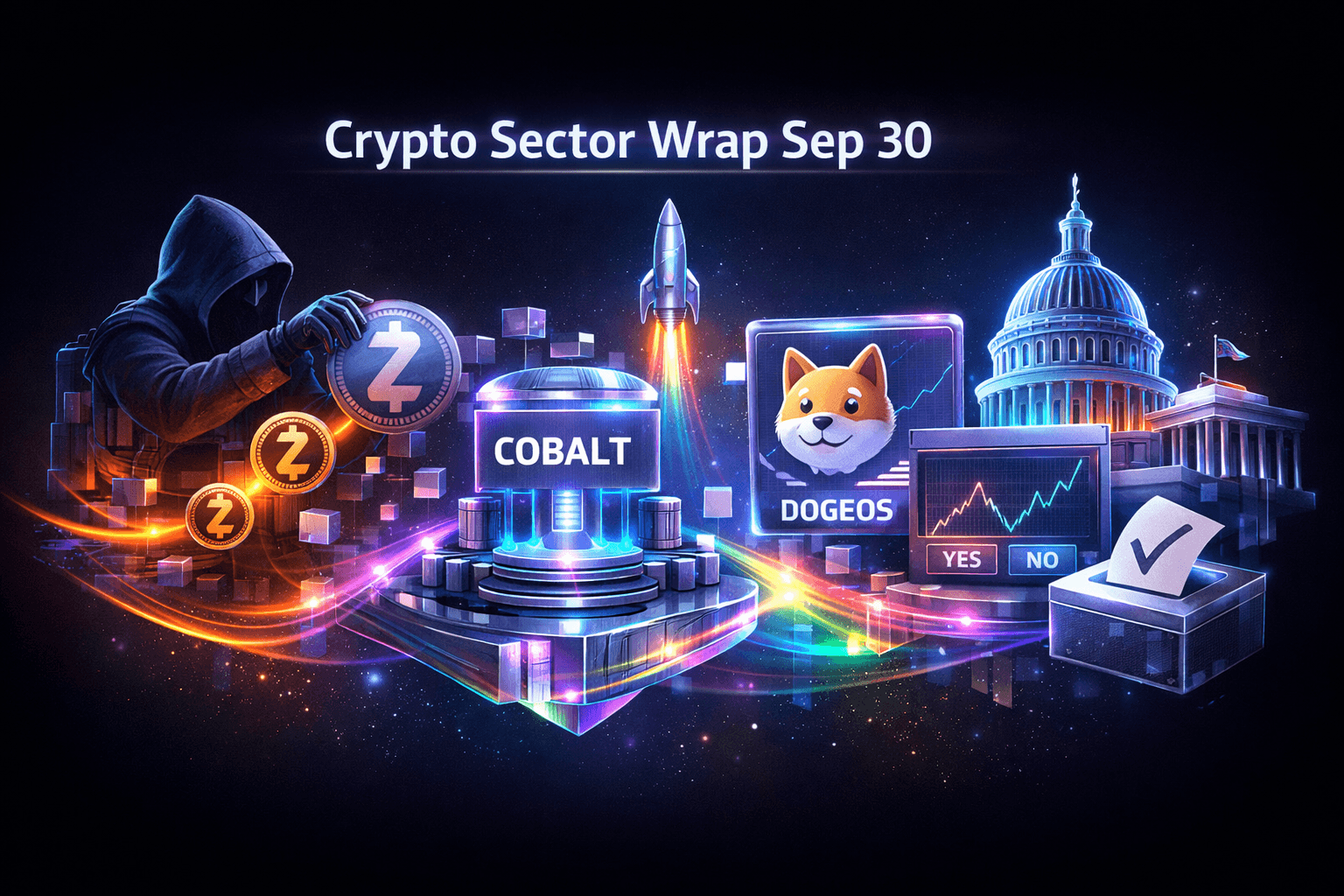
- Bitget heist: attacker stole $387.5 million, and about $3.8 million in ZEC was routed into Zcash's Ironwood privacy pool after Near Intents rejected swaps.
- Base upgrade: Base launched the Cobalt upgrade adding conditional transactions and new B20 asset functions for tokenized finance.
- DogeOS: public testnet launched for a zero-knowledge rollup bringing EVM smart contracts to Dogecoin, with $DOGE used for gas fees.
- Regulation: the CFTC sent two rule proposals to the White House that would define event contracts as swaps, aiming to assert agency jurisdiction over prediction markets.
- Politics and advocacy: a crypto advocacy group announced congressional endorsements ahead of the midterms, signaling continued political mobilization for the sector.
- Institutional dialogue: TD Cowen framed $BTC as more than an asset, noting institutional interest in its role for capital markets.
Key Developments
Bitget Heist and Privacy Pool Laundering
The attacker behind the $387.5 million Bitget breach has moved to hide approximately $3.8 million in ZEC via Zcash's Ironwood privacy pool after Near rejected swaps. This shows bad actors are pivoting to privacy-preserving rails when conventional bridges turn them away.
For you that means chain-level tracing will remain critical and exchanges will keep hardening controls. Expect law enforcement and blockchain analytics firms to stay active in tracing flows, and expect exchanges to tighten routing and swap filters.
CFTC Pushes for Control of Prediction Markets
The CFTC has forwarded two proposals to the White House to define event contracts as swaps while excluding casino-style gambling products. The move aims to cement the agency's jurisdiction amid state-level legal fights over prediction-market operators.
That regulatory clarification could reshape DeFi products that offer event-driven contracts. Developers and platforms will need to reassess legal frameworks and compliance, and you should monitor which projects adjust protocols or pause services in response.
Base Cobalt Upgrade and DogeOS Testnet
Base rolled out Cobalt, a material upgrade that introduces conditional transactions and expanded B20 asset functions for tokenized issuance and compliance checks. Issuers can now set transaction conditions and perform operations like forced transfers and splits.
At the same time DogeOS launched a public testnet for a ZK rollup that brings EVM smart contract capability to Dogecoin, using $DOGE for gas. These product moves point to continued infrastructure maturation and new use cases for tokenized finance and consumer-facing networks.
What to Watch
Here are the catalysts and risks that could move markets and project roadmaps in the coming days.
- White House decision on the CFTC proposals, and any guidance from the Office of Management and Budget, could change the regulatory landscape for prediction markets quickly.
- Ongoing tracing and recovery efforts related to the Bitget breach. Watch public blockchain analytics updates and any exchange policy changes on routing or swap rejections.
- Adoption metrics for Base Cobalt features and developer activity on the DogeOS testnet. Are issuers adopting conditional transactions? Is the DogeOS ZK stack attracting dApps?
- Political developments from midterm-related endorsements. Will the endorsed candidates gain traction and does that alter legislative appetite for crypto-friendly policy?
- Liquidity and compliance moves from major custodians and market makers as regulators and exchanges respond to these stories. Can they keep pace with both product innovation and compliance demands?
Bottom Line
- Security remains a top sector risk, illustrated by continued laundering attempts after the Bitget breach; tracing and enforcement will be crucial.
- Regulatory pressure is rising for prediction markets, with the CFTC seeking clearer control; legal exposure for DeFi projects could increase.
- Infrastructure upgrades and protocol launches, like Base's Cobalt and DogeOS testnet, show innovation is still moving fast and creating new token use cases for you to follow.
- Political advocacy is active ahead of the midterms, which could influence legislative outcomes in 2027 and the regulatory tone you face as a participant in the space.
- Expect a mixed near-term environment where growth and product adoption compete with security incidents and regulatory tightening.
FAQ
Q: How much was moved into Zcash after the Bitget breach? A: About $3.8 million in ZEC was reportedly routed into Zcash's Ironwood privacy pool after other swap routes were rejected.
Q: What do the CFTC proposals mean for decentralized prediction markets? A: The proposals would treat many event contracts as swaps, which could bring them under federal oversight and require new compliance steps for operators.
Q: Will Base Cobalt and DogeOS materially affect tokenized finance? A: Cobalt adds conditional transactions and B20 tools that are useful for token issuance, and DogeOS testnet brings EVM to $DOGE, but adoption will depend on developer traction and regulatory clarity.