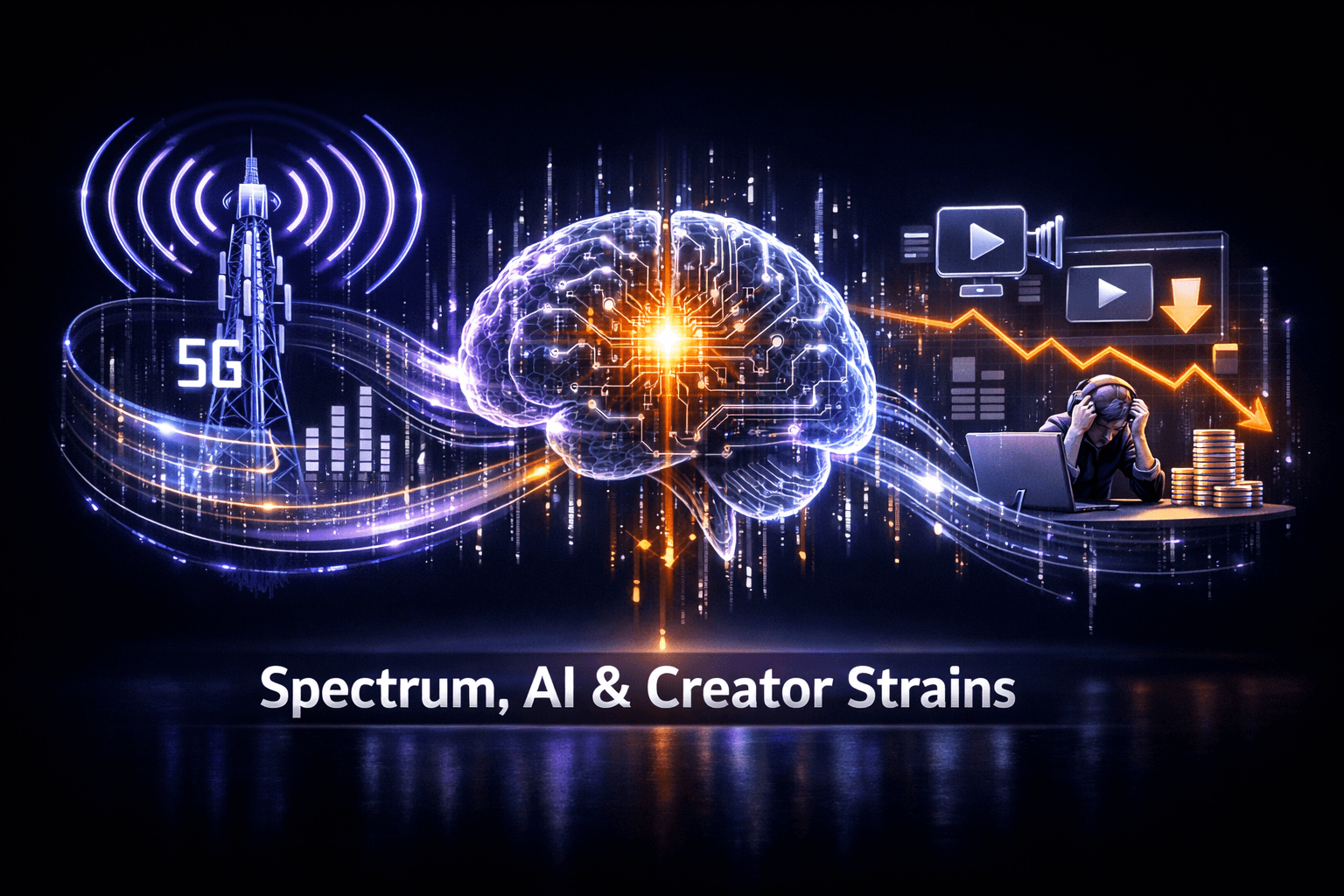
The Big Picture
The FCC’s move to formalize upper C-band auction rules and its gaze toward a 2.7GHz auction is the day’s biggest development, setting a multi-year roadmap for wireless spectrum that matters to carriers and equipment makers. At the same time, AI-driven traffic pressures on optical networks and regional 5G buildouts are creating demand signals for network suppliers.
That momentum is balanced by a pullback in on-location production in Los Angeles and fresh pain in the creator economy, with Patreon cutting 20% of staff. You’ll want to weigh infrastructure-led upside against content and creator headwinds when you review names in this sector.
Market Highlights
Quick facts and market movers to note from today’s headlines.
- FCC spectrum progress: The FCC approved upper C-band auction rules and signaled a 2.7GHz auction in 2028, a major catalyst for carriers and tower and equipment vendors, keep an eye on companies like $CIEN, $ERIC, and $NOK.
- Network demand: Ciena executives said AI-related traffic is stressing metro optical networks first, highlighting capital intensity and opportunity for optical vendors $CIEN and related suppliers.
- Regional network expansion: Alaska operator GCI announced expanded LTE and 5G coverage along key roadways, underscoring continued regional carrier investments.
- Creator and production strain: Patreon will lay off 20% of staff as it restructures and L.A. shoot days fell 12% year over year for April through June, pressure points for the creator economy and studio production pipelines.
- Content cues: Karina Longworth’s new podcast season "The Bisexuals" is set for Sept 15, and a new batch of Destiny’s Child material may arrive within weeks, keeping consumer attention and licensing opportunities alive.
Key Developments
FCC spectrum rules and the 2.7GHz roadmap
The FCC’s approval of upper C-band auction rules lays groundwork for a so-called Super Band approach that blends lower and upper C-band assets. A 2.7GHz auction penciled in for 2028 gives carriers a timetable for future capacity planning and spectrum acquisition strategies.
What does this mean for you, the investor watching communications names? Spectrum clarity typically spurs carrier planning and vendor sales cycles, and it can influence long-term capex forecasts for $VZ, $T, and equipment suppliers such as $CIEN.
AI is reshaping network demand
Ciena flagged that AI-related traffic is driving the most immediate pressure on metro optical networks, rather than long-haul or access layers. That suggests near-term demand for metro optical upgrades and routing capacity, which could benefit equipment makers and optical component suppliers.
Which vendors and segments win will depend on execution speed and supply chain readiness, so pay attention to commentary from company management and capex guidance in upcoming reports.
Content and creator-economy headwinds
On the content side, Los Angeles reported a 12 percent drop in shoot days from April to June year over year, despite California incentive programs. The decline raises questions about production location economics and potential shifts in studio sourcing.
Meanwhile Patreon’s 20 percent workforce reduction is a stark reminder that creator monetization platforms are still refining sustainable revenue models. That hit could ripple into creator sentiment and smaller-scale content spending, at least near term.
What to Watch
Focus on the following catalysts and risks as you parse sector moves heading into tomorrow.
- Spectrum auction timeline and rule tweaks: Monitor FCC filings and operator filings for clues on auction participation and estimated spend. The 2.7GHz target of 2028 gives you a multi-year planning horizon.
- Network vendor commentary and orders: Listen for revenue recognition and backlog updates from optical and routing vendors in earnings calls. Data suggests metro capacity is the first bottleneck driven by AI loads.
- Production metrics and incentive programs: LA shoot days and state-level incentive outcomes will affect studio capex and content pipelines. Watch studio commentary and production services firms for early signs of recovery or deeper contraction.
- Creator-platform restructurings: Track follow-on moves from other creator platforms after Patreon’s cuts. Could pricing, product changes, or partnership deals alter monetization dynamics?
- Regulatory and macro risks: Auction outcomes, interest rates, and advertising demand all remain meaningful unknowns that can change sector fundamentals quickly.
Bottom Line
- Spectrum clarity and AI-driven network demand provide tangible, longer-term catalysts for carriers and equipment suppliers, but benefits will be phased over multiple years.
- Content production softness in L.A. and layoffs at a major creator platform are near-term headwinds for studios and creator-monetization businesses.
- Look for management commentary and capex guidance from network vendors to confirm demand intensity and timing.
- Be selective across the communications and media universe, since infrastructure and content franchises face different cycles and risk profiles.
- Analysts note the mix of regulatory, technological, and content developments creates both opportunities and risks, so keep a clear watch list in your portfolio work.
FAQ Section
Q: How will the FCC’s upper C-band rules affect carriers and vendors? A: The rules create a clearer timeline for spectrum availability and auctions, encouraging carriers to plan for capacity investments and vendors to anticipate multiyear equipment demand.
Q: Does the drop in L.A. shoot days mean streaming content will slow? A: A short-term drop in shoot days can tighten near-term content supply, but release slates and global production locations can offset localized declines over time.
Q: Should I worry about the Patreon layoffs for the creator economy? A: The layoffs highlight structural pressures in creator monetization, and you should monitor platform business-model shifts and revenue diversification across the creator ecosystem.