Key Takeaways
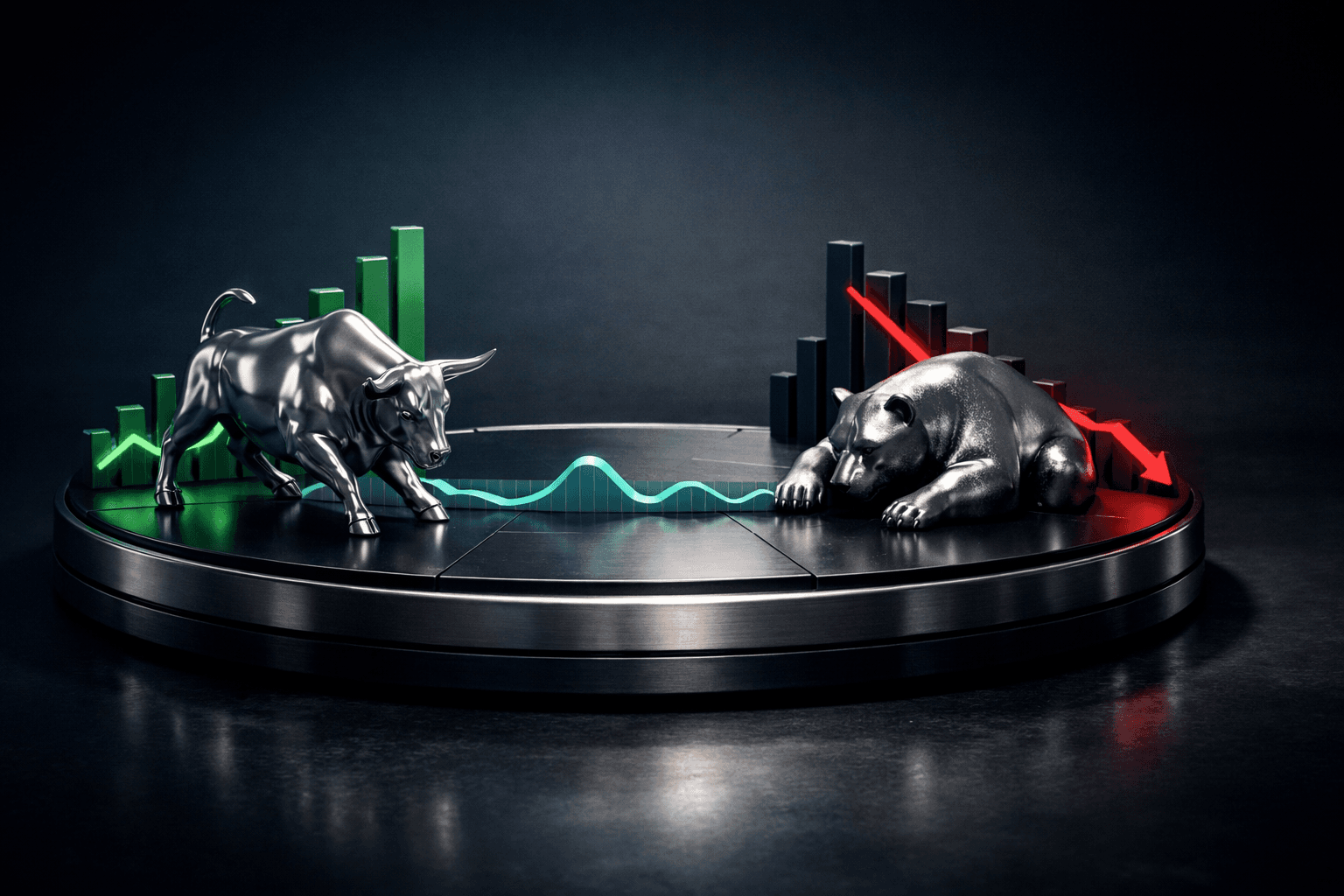
- Bull markets are sustained rising trends (often 20%+ from a trough) and can last years; bear markets are declines of 20%+ from recent highs and are usually shorter.
- Sideways (range-bound) markets show no clear uptrend or downtrend and can last months to years, making stock selection and patience important.
- Use objective rules (trend lines, 20% threshold, moving averages) plus economic context to identify cycles, but expect lag and false signals.
- Diversification, rebalancing, dollar-cost averaging, and focusing on time horizon reduce the risk of emotional decisions during any cycle.
- Historical examples (2009, 2020 bull, 2007, 2009 bear, 2000, 2002 tech bear, Feb, Mar 2020 sharp bear) illustrate that durations and magnitudes vary widely.
Introduction
Market cycles are the repeating patterns of rises, falls, and periods of little net movement in financial markets. In plain terms, they are the ups, downs, and sideways stretches investors experience across years and decades.
Understanding market cycles matters because it sets realistic expectations, reduces emotional reactions, and helps you choose appropriate strategies for your goals and time horizon. This guide explains the three common phases, bull, bear, and sideways, shows how to recognize them, gives historical context, and offers practical steps beginners can use in each phase.
We'll cover clear definitions, simple technical and economic signals to watch, real-world examples using well-known tickers, common investor mistakes, and concise FAQs you can refer to later.
What Is a Bull Market?
A bull market is a sustained period of rising prices in a market or asset class. Most investors and analysts use a 20% rise from a recent low as a conventional threshold to label a market 'bull.'
Characteristics of a bull market include higher highs and higher lows, rising investor optimism, improving economic indicators (like GDP and employment), and healthy corporate earnings growth. Strong sectors often include technology, consumer discretionary, and financials during extended bulls.
Simple ways to spot a bull market
- Price is consistently above long-term moving averages (for example, the 200-day moving average).
- Indices form higher highs and higher lows over months.
- Economic data (employment, consumer spending) and corporate profits are generally improving.
Real-world examples
The U.S. equity market rally from the 2009 low to early 2020 is a well-known bull market that lasted about 11 years and included substantial gains for broad-market funds such as $SPY (S&P 500 ETF) and $VTI (total market ETF). Individual growth leaders in that period included $AAPL and $MSFT.
What Is a Bear Market?
A bear market is typically defined as a decline of 20% or more from a recent market high. Bears are marked by falling prices, pessimism, and often deteriorating economic conditions.
Characteristics include lower highs and lower lows, rising volatility, negative investor sentiment, and in severe cases recessions. Common defensive sectors during bears are consumer staples, utilities, and healthcare.
Simple ways to spot a bear market
- Index drops exceed 20% from a recent high and price stays below major moving averages like the 200-day.
- Economic indicators weaken (GDP contraction, rising unemployment) and earnings expectations fall.
- Volatility spikes and breadth narrows (fewer stocks lead the move).
Real-world examples
The 2007, 2009 bear market around the Global Financial Crisis saw the S&P 500 fall more than 50% from peak to trough and lasted about 17 months from peak to trough before the recovery began. The 2000, 2002 bear tied to the dot-com bust lasted roughly 30 months and hit many technology stocks hard.
Contrast that with the COVID-19 market shock in early 2020, when markets entered a bear in February and bottomed in March, a very sharp but short-lived bear of around one month before a rapid recovery.
What Is a Sideways (Range-Bound) Market?
A sideways market, also called range-bound, shows no clear upward or downward trend. Prices oscillate between a defined support level and resistance level for an extended period.
Sideways markets often occur during times of economic uncertainty or when investors are weighing mixed signals. They reward stock selection, income strategies, and patience more than broad bullish momentum.
How to identify range-bound behavior
- Price repeatedly fails to break above resistance or below support levels for months.
- Moving averages converge and slope horizontally rather than trending up or down.
- Market breadth is mixed: some sectors gain while others lag, with no clear market leader.
Real-world examples
From 2015 to early 2016, and in patches during the 2018, 2019 period, the market spent many months trading within ranges as investors digested economic and geopolitical news. Range-bound markets also occur in individual stocks, for example, a mature blue-chip company may trade in a narrow band for years while paying dividends.
Average Frequency and Duration, What History Tells Us
There is no exact timetable for market cycles; they vary by country, era, and market structure. However, a few broad patterns emerge from long-term U.S. market history.
- Bull markets historically last longer than bear markets. Multi-year bulls are common, sometimes extending a decade or more when economic growth and corporate profits are favorable.
- Bear markets tend to be shorter but can be steeper. Many bear markets last from several months to a couple of years, though severe ones tied to deep recessions can be longer.
- Sideways periods can last from a few months to several years, especially when economic growth is slow or inflation/interest rates are in flux.
Use examples rather than strict rules: the post-2009 bull lasted about 11 years, the 2007, 2009 bear about 17 months, and the 2020 COVID bear was unusually short and sharp. These illustrate variability, cycles reflect the unique mix of economic, policy, and sentiment drivers at the time.
Tools and Signals You Can Use
Beginners can use a few objective tools to help identify market phases while avoiding over-reliance on any single signal.
- 20% Threshold: Watch for 20% moves from recent highs or lows as a conventional label for bulls/bears.
- Moving Averages: The 50-day and 200-day moving averages give sense of short- and long-term trends; crossovers can signal changes.
- Trendlines and Chart Patterns: Higher highs/lows for bulls, lower highs/lows for bears, and horizontal lines for ranges.
- Economic Indicators: GDP growth, unemployment, inflation, and central bank policy add context, weakening data can foreshadow bears.
- Market Breadth: The number of advancing vs. declining stocks shows whether a move is broad or narrow (narrow advances are riskier).
Practical Strategies for Beginners
How you act during different cycles should depend on your time horizon, risk tolerance, and financial plan. Here are beginner-friendly, practical approaches that are generally appropriate without being prescriptive.
- Diversify: Hold a mix of assets (broad-stock ETFs like $VTI or $SPY, bond ETFs like $TLT or short-term bond funds) to reduce single-stock or sector risk.
- Dollar-Cost Average (DCA): Invest fixed amounts regularly to avoid timing the market and to buy more when prices fall.
- Rebalance: Periodic rebalancing returns your portfolio to target allocations and enforces buy-low/sell-high discipline.
- Focus on Time Horizon: Short-term needs favor defensive positioning; long-term goals typically tolerate bear markets as part of the journey.
- Use Cash and Income: In sideways or uncertain markets, dividend-paying stocks or short-term bonds can provide returns while you wait for trend clarity.
Common Mistakes to Avoid
- Panic selling during a bear, Selling at low points locks in losses. Avoid reacting to short-term fear; review your plan first.
- Trying to time the exact top or bottom, Even professionals struggle. Use systematic approaches like DCA or rules-based rebalancing instead.
- Overconcentration in one sector or stock, Big winners in bulls can become big losers in bears. Diversify across sectors and markets.
- Ignoring fees and taxes when switching strategies, Frequent trading can reduce net returns; consider tax-efficient moves and low-cost funds.
- Confusing correlation with causation, A single news item rarely explains a market phase alone; consider multiple indicators before acting.
FAQ
Q: How do I know what market phase we're in right now?
A: Look for objective signs: has the index moved 20% from a recent high or low, are prices above/below the 200-day moving average, and are economic indicators improving or worsening? Combine several signals rather than relying on one.
Q: Can I reliably time the market to avoid bear markets?
A: No. Timing the exact top or bottom consistently is extremely difficult, even for professionals. Strategies like dollar-cost averaging, diversification, and rebalancing are more dependable for most investors.
Q: Should I change my asset allocation during different market cycles?
A: Allocation changes should be based on your goals and risk tolerance, not short-term headlines. Small tactical adjustments are fine, but large shifts can increase risk and costs. Consider consulting a financial planner for major changes.
Q: Do bonds always protect me during bear markets?
A: Bonds often reduce volatility and can perform well when stocks fall, especially high-quality government bonds. However, bonds carry their own risks (interest rate and credit risk), and performance depends on the type of bear market and prevailing interest rates.
Bottom Line
Market cycles, bull, bear, and sideways, are natural parts of investing. Recognizing their characteristics helps set expectations and reduces costly emotional decisions. Bulls tend to last longer but can end suddenly; bears are sharper but usually shorter; sideways markets reward patience and careful stock selection.
Practical actions for beginners include diversifying with broad funds like $VTI or $SPY, using dollar-cost averaging, rebalancing regularly, and focusing on your time horizon. Use objective signals (20% thresholds, moving averages, economic indicators) as guides, not guarantees.
Continuing to learn about cycles and building a written plan will help you respond calmly and thoughtfully whenever the market shifts.