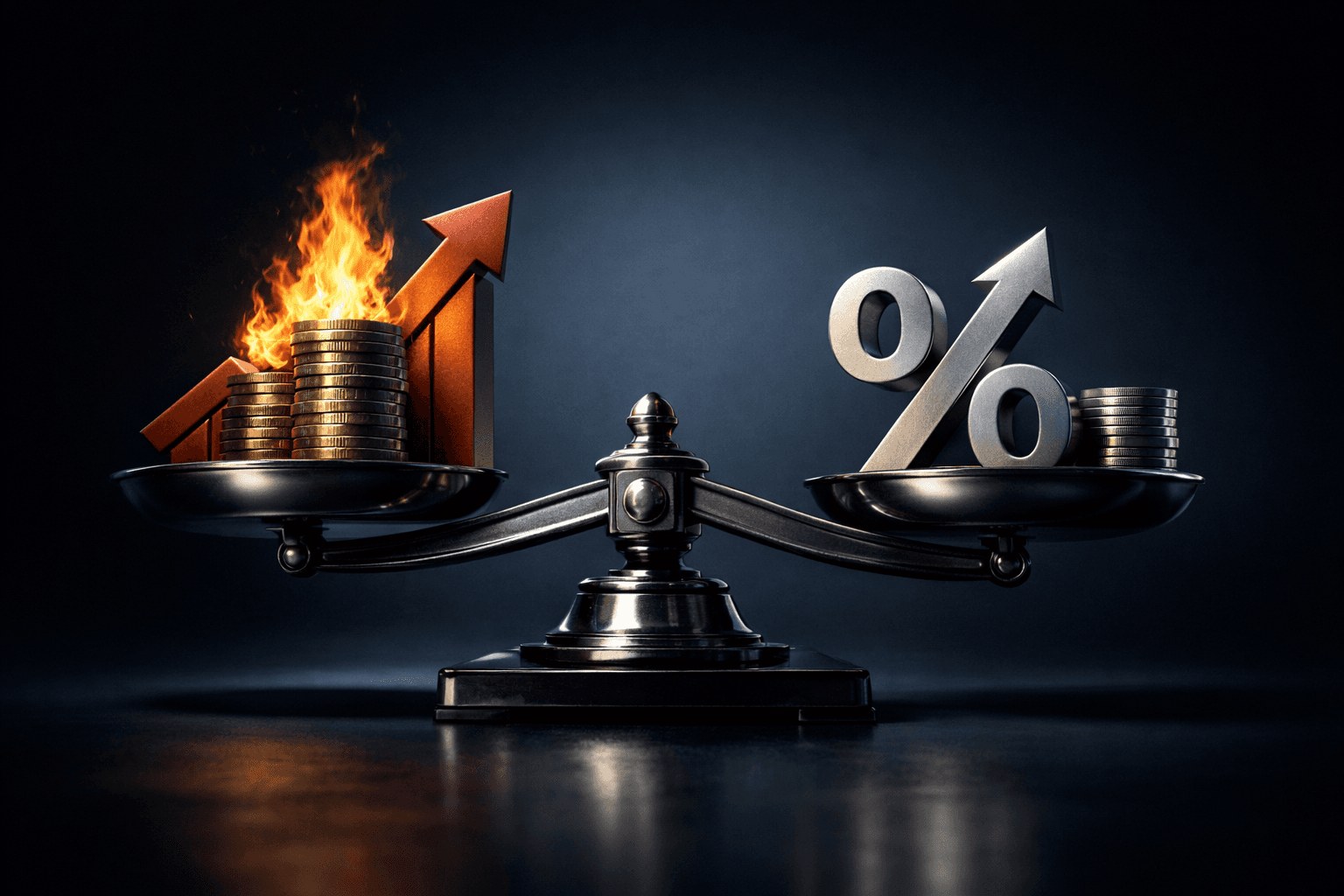
- High inflation and rising interest rates change returns: bonds generally fall, and some stocks face margin pressure while others can benefit.
- Inflation-resistant assets include inflation-indexed bonds (TIPS), short-duration bonds, commodities, and real estate/REITs.
- Adjust portfolio duration, favor floating-rate or short-term debt, and consider real assets or dividend growers to protect purchasing power.
- Use diversification, gradual rebalancing, and tax-aware choices; avoid market timing and chasing hot sectors.
- Practical moves: mix equities, TIPS, short-term bonds, commodity exposure, and select REITs based on cash flow and lease structure.
Introduction
Investing in a high-inflation, rising-rate environment means planning for higher prices and higher interest rates over time. Both inflation (measured by CPI or PCE) and central bank rate policy affect the value of stocks, bonds, and real assets.
This matters because inflation erodes purchasing power and higher rates raise borrowing costs and change asset valuations. For a beginner investor, learning practical strategies now helps protect capital and pursue real returns (returns after inflation).
In this article you will learn why inflation and rates matter, which asset types tend to resist inflation, concrete portfolio adjustments for 2026 and beyond, real-world examples, common mistakes to avoid, and answers to frequent questions.
How Inflation and Rising Rates Affect Markets
Start with the basics: inflation means general price increases. Rising interest rates are central bank actions (or market moves) intended to slow inflation or respond to economic strength. Both change expected returns.
Effects on Bonds
Bonds have fixed payments, so when rates rise, existing bond prices fall because new bonds offer higher yields. Long-term bonds (long duration) are more sensitive to rate changes.
Example: A long-duration Treasury ETF like $TLT will typically fall when yields rise. Short-duration bonds or cash equivalents decline far less because they reprice sooner.
Effects on Stocks
Stocks react through earnings and discount rates. Higher rates increase the discount rate used to value future earnings, which often hits growth stocks hardest because much of their value is expected far in the future.
Value stocks, dividend growers, and companies with pricing power (ability to raise prices) tend to fare better. For example, an energy company like $XOM may benefit from commodity-driven revenue, while a high-growth tech name with thin current profits may see larger negative moves.
Inflation-Resistant Assets and Why They Help
Not every asset reacts the same. In a high-inflation, rising-rate environment, consider assets that either grow with inflation or have short duration to reprice at higher yields.
Inflation-Indexed Bonds (TIPS)
Treasury Inflation-Protected Securities (TIPS) adjust principal with inflation. When CPI rises, TIPS principal increases, protecting purchasing power. Investors can buy TIPS directly or via ETFs such as $TIP.
TIPS are best for core fixed-income allocation when the goal is protection from inflation rather than chasing high yields.
Short-Duration & Floating-Rate Debt
Short-duration bonds and bank-loan or floating-rate note funds reprice faster as rates rise. Examples include short-term Treasury ETFs and bank loan ETFs like $BKLN.
These reduce interest-rate sensitivity and can benefit when yields move higher, since coupons reset more frequently.
Commodities and Commodity ETFs
Commodities like oil, natural gas, and industrial metals often rise with inflation because they are raw inputs. Commodity ETFs such as $GLD (gold) or $USO (oil) provide exposure without owning physical assets.
Commodities can be volatile; use them for diversification and inflation hedge, not as all of your portfolio.
Real Estate and REITs
Real assets and real estate can offer rent increases and inflation-linked cash flows. REITs (e.g., $VNQ or individual REITs like $O) often hold properties with the ability to raise rents over time.
Not all REITs are equal: industrial and multifamily REITs may have stronger pricing power than retail REITs in some cycles.
Dividend-Growing and Pricing-Power Stocks
Companies that consistently grow dividends and can pass higher costs to customers are better positioned. Look for strong balance sheets, low leverage, and steady cash flows.
Examples include consumer staples ($KO) and large diversified firms with pricing power. These stocks can outpace inflation over long periods if earnings grow.
Practical Portfolio Adjustments for 2026 and Beyond
As a beginner, focus on sensible allocation and simple tools: ETFs, mutual funds, and Treasury instruments. Avoid complex leverage or frequent market timing.
Adjust Duration and Bond Exposure
Reduce exposure to long-duration bonds and increase short-duration or floating-rate holdings. For example, shift from a heavy $TLT position to a mix of short Treasury ETFs and TIPS ($TIP).
Consider a bond ladder of short-term Treasuries (3-5 maturities) to capture rising yields without long-duration risk.
Add Real Assets Gradually
Introduce commodity exposure (a small allocation to $GLD or a diversified commodity ETF) and REIT exposure ($VNQ or a targeted REIT) for inflation protection. Keep allocations modest, often 5-15% collectively, so volatility remains manageable.
Real assets can offset purchasing-power losses but are cyclical. Rebalance regularly to maintain target weights.
Equity Tilt and Risk Management
Tilt equity exposure toward companies with strong free cash flow, pricing power, and dividends. Consider value and dividend-growth ETFs instead of concentrated bets on high-growth names.
Maintain diversification across sectors and geographies. International stocks can provide additional inflation hedges if foreign growth or commodities support earnings.
Sample Beginner Portfolios (illustrative)
- Conservative: 40% short-term bonds/TIPS, 30% cash/short-term Treasuries, 20% dividend-paying equities, 10% REITs/commodities.
- Balanced: 30% bonds (short/TIPS), 40% equities (tilted toward value/dividend), 15% REITs/commodities, 15% cash/laddered Treasuries.
- Aggressive: 15% bonds (short/TIPS), 65% equities (dividend/value tilt), 10% commodities, 10% REITs.
These examples are frameworks, not prescriptions. Your age, goals, risk tolerance, and tax situation should guide final allocation choices.
Real-World Examples: Putting Theory into Action
Concrete numbers help make the abstract tangible. Below are two short scenarios showing how an investor might deploy cash in a rising-rate, high-inflation period.
Scenario 1, $10,000 Conservative Shift
Situation: You hold $10,000 and fear inflation at 5% and rising rates. Strategy: preserve purchasing power with low rate sensitivity.
Example allocation: $4,000 into short-term Treasury ETF, $3,000 into $TIP, $2,000 into a diversified dividend ETF, $1,000 into $GLD. This mix lowers duration, adds inflation protection, and keeps equity exposure for growth.
Why it helps: Short Treasuries reprice quickly, TIPS rise with CPI, dividend ETFs provide income that may keep up with inflation over time, and $GLD offers commodity-like hedge.
Scenario 2, $50,000 Balanced Rebalance
Situation: You have a balanced portfolio 60/40 (60% equities $SPY, 40% bonds $TLT). Rising rates have reduced bond value and increased yields.
Action: rebalance by selling a portion of equities (or new contributions) to buy short-duration bonds and add 10% to TIPS and 5% to REITs ($VNQ). Result: lowered bond duration, added inflation-linked assets, and maintained equity exposure.
Outcome: Over time, the portfolio will lose less when rates rise further and gains more if inflation persists above nominal returns.
Common Mistakes to Avoid
- Chasing one “hot” inflation hedge. Commodity prices can spike but also crash. Use measured allocations and diversify across hedges.
- Holding too much long-duration debt. Long bonds crash when rates rise; prefer short-duration and floating-rate instruments in this environment.
- Ignoring taxes and fees. Selling and buying can trigger taxable events and fees that erode real returns, use tax-efficient accounts and low-cost ETFs where possible.
- Market timing. Trying to predict the peak of inflation or rates can lead to missed gains or larger losses. Use gradual adjustments and dollar-cost averaging.
- Overlooking balance-sheet quality. In equities, companies with weak balance sheets are vulnerable to higher borrowing costs, favor low-leverage names.
FAQ
Q: How do I tell if inflation is temporary or persistent?
A: Watch wage growth, supply-chain normalization, and central bank guidance. Persistent broad-based wage and service-price inflation suggests longer duration, while one-off supply shocks (e.g., weather, geopolitics) may be temporary.
Q: Are gold and commodities a guaranteed hedge against inflation?
A: No. Commodities and gold can hedge inflation over long periods but are volatile and influenced by demand, supply, and liquidity. Use them as part of a diversified strategy rather than a sole hedge.
Q: Should I sell bonds completely when rates rise?
A: Not necessarily. Bonds still provide diversification and income. Instead, shorten duration, add inflation-linked bonds, and ladder maturities to reduce sensitivity to rate swings.
Q: How often should I rebalance my portfolio in a rising-rate environment?
A: Rebalance on a set schedule (quarterly or annually) or when allocations drift significantly (e.g., 5-10% away from target). Rebalancing keeps risk aligned with objectives without market timing.
Bottom Line
A high-inflation, rising-rate environment reshapes expected returns but also creates opportunities. Protect purchasing power with inflation-indexed bonds, shorten bond duration, consider floating-rate debt, and add measured exposure to commodities and real estate.
Focus on diversification, cost- and tax-efficiency, and allocations that match your time horizon and risk tolerance. Start with small, gradual adjustments and use simple tools, ETFs, bond ladders, and dividend-focused funds, to build a resilient portfolio for 2026 and beyond.
Next steps: review current allocations, decide on a target mix that accounts for inflation risks, and implement changes gradually while monitoring for tax impacts and fees.