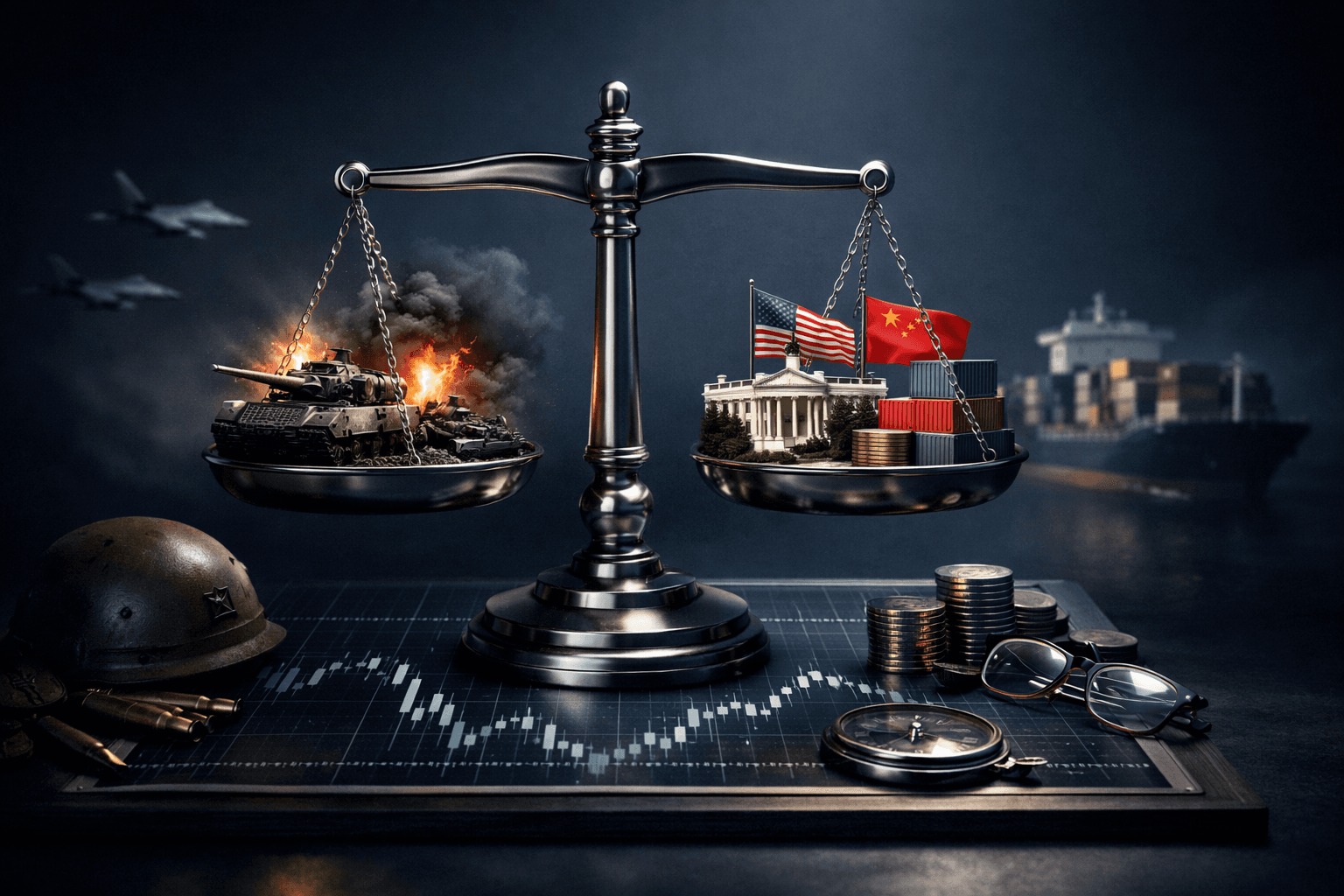
- Geopolitical events are risk multipliers; anticipate correlation shifts rather than assuming static behavior.
- Different events produce distinct market signatures: wars spike commodity and defense exposure, elections raise policy and sector rotation risk, trade wars increase supply-chain and currency stress.
- Construct layered defenses: liquidity, duration exposure, strategic hedges (options, FX, commodity positions), and scenario-driven rebalancing.
- Hedges have costs and basis risk; use them for risk-control and asymmetry management, not as permanent returns engines.
- Run actionable scenario-analysis and predefine trigger-based playbooks for rebalancing, tactical hedging, and opportunistic buying.
Introduction
Geopolitical Events and Your Portfolio examines how wars, major elections, and international trade disputes disrupt markets and what advanced investors can do to manage those risks. Geopolitical shocks can simultaneously affect commodity prices, interest rates, currencies, and equity-sector performance, often in ways that standard risk models fail to capture.
This article explains the market mechanics behind different types of geopolitical events, provides a toolkit of hedging and positioning techniques, and walks through historical case studies to make the theory practical. You will learn how to build playbooks, measure exposure, and use instruments, from Treasury duration to options and FX, to protect portfolio objectives without locking in significant long-term cost.
How Geopolitical Events Move Markets
Geopolitical events alter fundamentals (supply, cash flow, policy) and risk premia (uncertainty, liquidity). The market reaction depends on event type, geographic scope, duration expectations, and pre-event positioning. Investors should separate immediate liquidity shocks from persistent structural changes.
Wars and Military Conflicts
Wars typically cause acute commodity shocks and risk-premium spikes. Energy and agricultural supplies are first-order channels when production or shipping lanes are threatened. Defense and infrastructure-related sectors often rally in nominal terms, while cyclicals tied to consumer demand may weaken.
Correlations compress: assets that were uncorrelated can move together as investors rush to liquidate risk. Expect volatility indices (e.g., VIX) to jump and bid-ask spreads to widen, liquidity risk is as important as directional risk.
Elections and Policy Uncertainty
Elections create policy and regulatory uncertainty. Markets react to expected fiscal, tax, trade, and regulatory changes and to the probability distribution of outcomes. Sector rotation is common, financials respond to rate expectations, healthcare to regulatory policy, and energy to climate policy signals.
Unlike wars, elections often generate more gradual repricing as polls, debates, and primary results update probabilities. Still, surprise outcomes can cause sharp intraday moves (e.g., futures gaps), so pre-event hedges and contingency plans are necessary.
Trade Wars and Economic Friction
Trade disputes create supply-chain shocks and profit-margin pressure for exporters and import-dependent industries. Tariffs and retaliation reduce trade volumes and can accelerate onshoring or supplier diversification, which affects capex and margin outlooks for specific sectors.
FX moves are material here: currencies of export-dependent economies may weaken, and global manufacturing cycles can cause synchronized equity drawdowns. Duration and credit spreads may widen as growth expectations fall.
Portfolio Construction and Pre-Event Positioning
Advanced investors should treat geopolitical risk as a factor: measure current exposure, define acceptable drawdowns, and build scalable responses. The goal is not to predict every outcome but to ensure the portfolio can absorb plausible scenarios.
Key preparatory steps include stress-testing with multiple scenarios, sizing liquidity buffers, and setting rules for tactical shifts. Use quantitative and qualitative inputs: exposure reports, counterparty concentration, and geopolitical intelligence.
Measure and Map Exposures
Create a matrix that maps portfolio positions to event channels: commodity sensitivity, export exposure, supply-chain concentration, and regulatory sensitivity. For equities, tag names by revenue geography and supplier concentration to quantify direct exposure.
Example: if $AAPL generates 20% of revenue in a region at risk of trade restrictions, model revenue and margin impacts under 10%, 20%, and 50% disruption scenarios. Translate those effects into cash-flow and valuation impacts.
Define Tolerance and Triggers
Predefine drawdown limits and tactical triggers that initiate hedging or rebalancing. Triggers can be event-based (e.g., invasion announced), market-based (VIX crosses threshold), or policy-driven (tariff announcement exceeding X%).
Having rules reduces decision paralysis during volatile periods. For example, a rule might state: if the VIX exceeds 30 and portfolio drawdown exceeds 5% intraday, enact temporary put protection sized for the marginal risk.
Tactical Hedges and Instruments
Hedges should be layered and coherent: immediate liquidity management, short-term risk reduction, and longer-term strategic shifts. Each instrument has tradeoffs: cost, basis risk, liquidity, and counterparty exposure.
Options and Volatility Products
Puts provide directional downside protection; collars reduce cost by selling calls. Use index puts for broad market insurance and single-name options for concentrated exposures. Be mindful of implied volatility spikes that can make insurance expensive right after events.
Volatility ETPs (long-VIX futures products) offer tactical insurance but suffer from roll cost and path dependency. They are effective for short-term hedging, not long-term allocation, unless actively managed.
Fixed Income and FX Hedges
Long-duration Treasuries often act as safe havens in risk-off episodes, though correlation is not guaranteed. TIPS can protect purchasing power if geopolitical events raise inflation expectations, especially via commodity channels.
Currency hedges protect revenue streams when trade disputes or sanctions cause FX moves. Hedging can be done via forwards, options, or currency-hedged ETFs. Remember that hedging operational revenue differs from hedging mark-to-market equity exposure.
Commodities and Real Assets
Gold and certain commodities can be defensive during geopolitical risk, but their behavior varies. Oil often spikes during conflicts affecting supply; however, demand shocks can counterbalance supply concerns over time.
Real assets such as infrastructure and farmland have different risk-return profiles and may act as partial hedges against specific shocks, but they also suffer liquidity constraints and valuation opacity.
Credit and Counterparty Considerations
Credit spreads typically widen during geopolitical stress. Defensive credit positioning, higher-quality names, shorter maturities, reduces liquidity and credit risk. Evaluate counterparty exposure in derivatives and FX as sanctions or market closures can create settlement risk.
Case Studies: Real-World Examples
Historical episodes provide instructive patterns but not guarantees. Below are concise studies illustrating typical channel behaviors and hedging outcomes.
Russia, Ukraine (2022)
When Russia invaded Ukraine in early 2022, energy and commodity prices surged and global supply-chain stress reappeared. Brent and WTI crude prices rose toward triple digits briefly, pressuring energy-importing economies and elevating inflation expectations.
Investors who had exposure to energy producers benefited from higher oil prices, while industrials and transport names experienced margin pressure. Hedgers who held long-duration Treasuries benefited as flight-to-quality bid yields lower despite inflationary pressures.
US, China Trade Tensions (2018, 2019)
Tariffs implemented in 2018 created earnings volatility for exporters and companies with complex supply chains. Semiconductor and capital goods names saw valuation re-rates due to expected capex reductions, while agriculture suffered from retaliatory tariffs.
Tactical responses included currency hedges for emerging-market exposures and rotation into domestically-focused companies with lower foreign-revenue shares. Option-based hedges across impacted sectors helped control downside while maintaining upside participation.
US Elections (2016 and 2020)
Elections often cause short-term volatility and sector rotation. In 2016, initial equity futures plunged pre-market but reversed as markets digested the policy implications. In 2020, technology and healthcare dominated the post-election recovery as interest-rate expectations adjusted.
Probabilistic hedging, scaling protection as poll odds change, and focus on liquidity allowed active managers to capitalize on dislocations rather than crystallize losses via forced sales.
Common Mistakes to Avoid
- Assuming correlations remain constant: Avoid relying solely on historical covariances; run forward-looking stress tests and scenario correlations.
- Over-hedging at full cost: Buying insurance after volatility spikes can lock in high premiums; instead use layered, trigger-based hedges and cheaper structures like collars where appropriate.
- Neglecting liquidity and counterparty risk: Hedging with illiquid instruments or concentrated counterparties can create execution risk in crises.
- Confusing noise with regime change: Reacting to every geopolitical headline can increase transaction costs; focus on event persistence and structural impact.
- Ignoring tax and accounting implications: Temporary trades can have mark-to-market or tax consequences; factor these into sizing and horizon decisions.
FAQ
Q: How much of my portfolio should I hedge against geopolitical risk?
A: There is no one-size-fits-all percentage. Determine hedging size from portfolio tolerance for drawdown, liquidity needs, time horizon, and cost of hedges. Use scenario analysis to estimate losses under plausible events and size protection to cover the marginal risk you cannot absorb.
Q: Are gold and Bitcoin reliable geopolitical hedges?
A: Gold has a long history as a safe-haven asset and often appreciates during acute geopolitical stress, though not always. Bitcoin behaves inconsistently; it has been both a risk asset and a store of value and should not be assumed to be a reliable hedge without specific allocation logic and risk controls.
Q: When is it better to reduce risk exposure versus buy protection with options?
A: Reduce exposure when long-term fundamentals are impaired or liquidity is constrained. Buy options when you want to preserve upside while limiting downside for a defined period. Consider cost, implied volatility, and basis risk when choosing between the two approaches.
Q: How should I handle concentrated geopolitical exposure in a single stock or country?
A: Map the concentration drivers, revenue, supply chain, regulatory dependence, and use targeted hedges like single-name puts, CDS for sovereign credit, or reweighting to diversify. If hedging is costly or unavailable, consider reducing position size to acceptable concentration limits.
Bottom Line
Geopolitical events are persistent sources of market uncertainty that require a structured, scenario-driven response. Advanced investors should combine measurement (mapping exposures), preparation (liquidity and triggers), and tactical instruments (options, duration, FX, commodities) to manage risks without permanently sacrificing returns.
Prioritize planning: build playbooks with predefined triggers, stress-test often, and understand the costs and mechanics of each hedge. In most cases, hedging is about controlling asymmetry and preserving optionality rather than predicting outcomes.
Next steps: run a geo-risk exposure matrix for your portfolio, define tactical triggers, and pilot a layered hedge sizing approach using small, managed trades to learn execution and basis behavior before major events occur.