Introduction
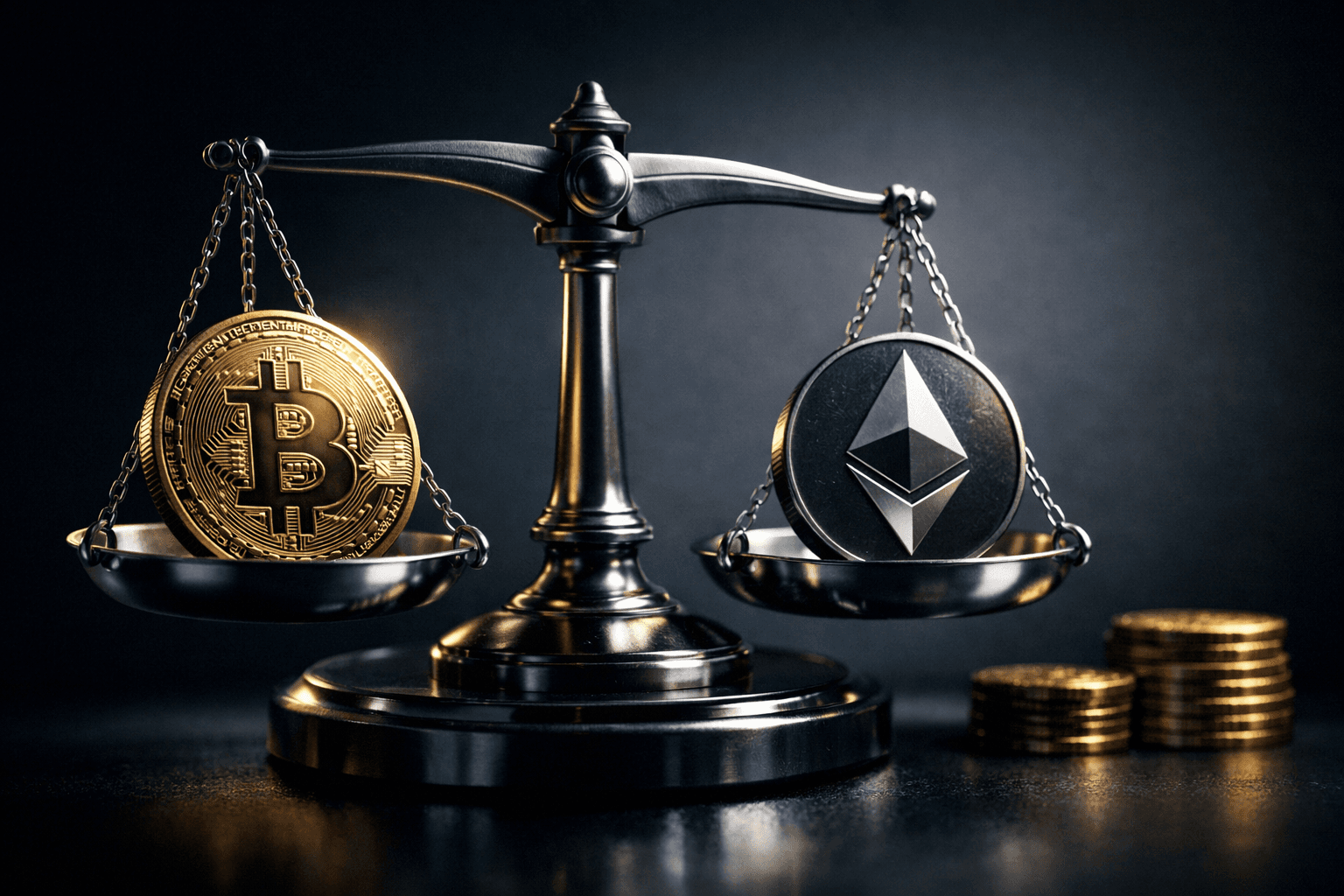
Cryptocurrency investing is the process of acquiring and managing digital assets, primarily Bitcoin (often represented as $BTC) and Ethereum ($ETH), with both speculative and portfolio diversification goals. This guide explains core concepts, how blockchain works, where and how to buy crypto, custody options, security best practices, and the principal risks every investor should know.
This article is written for investors who have basic market experience and want an intermediate-level playbook for entering or improving their crypto allocation. You will learn practical, actionable steps: choosing an exchange, executing trades, securing holdings with wallets, and integrating crypto into a broader portfolio.
Below are concise takeaways, then step-by-step sections, real-world scenarios, common mistakes, FAQs, and a short bottom line with next steps.
- Understand the difference between on-chain ownership (self-custody) and custodial holdings on exchanges; custody choice changes your risk profile.
- Pick reputable exchanges based on fees, liquidity, KYC, and jurisdiction; use limit orders to control slippage and consider fee tiers for active trading.
- Use hardware wallets (cold storage) for long-term holdings; enable multi-factor authentication and protect seed phrases in physical form, not digital photos.
- Know transaction costs: Bitcoin fees vary with network congestion; Ethereum gas can spike but Layer 2s reduce per-transfer cost dramatically.
- Diversify position sizes, set position limits, and treat staking and DeFi yields as higher-risk allocations with smart-contract risk and liquidity constraints.
- Tax, regulatory, and custodial-insurance considerations materially affect net returns, document trades and understand local rules.
What are cryptocurrencies and how does blockchain work?
Cryptocurrencies are digital assets that use cryptography and distributed ledger technology to enable ownership, transfers, and, in platforms like Ethereum, programmable logic via smart contracts. Bitcoin was designed as digital money; Ethereum extended the model to decentralized applications and tokens.
Blockchain basics (simple, actionable)
A blockchain is a replicated ledger maintained by many nodes. Transactions are grouped into blocks, validated by consensus (Proof of Work for Bitcoin historically, Proof of Stake for modern Ethereum), and appended in immutable order. That immutability means transactions can be verified publicly, but you must control the private key to move funds.
Key concepts investors should know
- Private key vs public address: private keys sign transactions; anyone with a private key can move funds.
- Confirmation time and finality: Bitcoin confirms in ~10-minute blocks; Ethereum finality is faster but can vary by network design.
- Smart contracts: code that runs on-chain. Useful for DeFi but introduces software risk, bugs can lead to loss of funds.
How to buy crypto: choosing exchanges and executing trades
Decide whether you want a custodial exchange (convenient for trading, custody handled by the platform) or a direct, non-custodial route (more control for longer-term holdings). Most beginners start on a regulated exchange and then move assets off-platform if they want self-custody.
Choosing an exchange
Compare exchanges on these criteria: regulatory compliance (U.S. SEC/FinCEN, EU rules, etc.), KYC requirements, fee structure, liquidity, security track record, and customer support. Examples of large exchanges are Coinbase ($COIN), Kraken, and Gemini. International platforms like Binance may offer more tokens but have differing regulatory constraints.
Order types and cost control
Use limit orders to avoid slippage in volatile markets; market orders execute immediately but may pay more in tight liquidity. Be aware of trading fees (maker/taker), deposit/withdrawal fees, and spread. For example, a $1,000 market buy may incur a 0.5% spread plus a 0.5% fee, whereas a limit order could reduce total cost if liquidity allows.
Storing crypto: wallets, custody, and security
Custody choice is a primary determinant of operational risk. Holding on an exchange means you trust the platform's security and solvency. Self-custody gives control but increases personal responsibility for protecting private keys and recovery seed phrases.
Wallet types
- Custodial wallets: hosted by exchanges. Pros: convenient, integrated fiat rails. Cons: counterparty risk, potential withdrawal limits.
- Software wallets (hot wallets): apps like MetaMask or Exodus. Pros: easy for daily use and DeFi. Cons: connected to internet, risk of compromise.
- Hardware wallets (cold wallets): devices like Ledger and Trezor. Pros: private keys offline, strong security for long-term holdings. Cons: cost and slightly more complex setup.
- Multisignature and institutional custody: require multiple approvals to move funds; appropriate for larger allocations or shared accounts.
Practical security controls
- Use a hardware wallet for >=5, 10% of investable assets earmarked for crypto, or for any long-term holdings you cannot afford to lose.
- Never store seed phrases online; write them on paper or use a metal backup. Consider geographically distributed backups for redundancy.
- Enable strong, unique passwords, a reputable password manager, and two-factor authentication for exchange accounts (prefer app-based 2FA like Authenticator over SMS).
- Beware of phishing: verify URLs, set up withdrawal whitelists, and use hardware wallet confirmations for high-value transfers.
Advanced topics: fees, staking, Layer 2s, and DeFi risks
Understanding transaction costs and protocols beyond spot holdings helps you manage both returns and operational risk. Gas and network congestion can dramatically change the economics of frequent on-chain operations.
Network fees and execution
Bitcoin transaction fees depend on block demand; a typical period of low congestion might have fees under $2, while high congestion can push fees above $20. Ethereum gas fluctuates with network demand; before Layer 2 adoption, transfers might cost several dollars to dozens of dollars, whereas Layer 2 solutions (Optimistic Rollups, zk-Rollups) can reduce per-transaction costs to cents or low dollars.
Staking and yield
Ethereum staking (after Proof of Stake) and staking on other chains can generate annual yields, commonly single-digit to low double-digit percentages. However, staking often requires locking assets for a period and carries validator/slashing risk. Yield in DeFi can be higher but comes with smart-contract, oracle, and counterparty risks.
Smart contract and counterparty risk
DeFi protocols are software; hacks or economic design flaws can drain funds. Consider audited contracts, total value locked (TVL), and the team’s reputation. Limit exposure and use conservative position sizing when interacting with DeFi.
Real-world examples: step-by-step scenarios
Example 1, Buying and moving $1,000 of $BTC to a hardware wallet
- Create and verify an account on a regulated exchange (e.g., Coinbase or Kraken) and complete KYC.
- Deposit USD via bank transfer (ACH, SEPA), then place a limit order for $1,000 of $BTC; if filled at $50,000/BTC, you acquire 0.02 BTC before fees.
- Estimate fees: exchange trading fee (e.g., 0.5% = $5) and on-chain transfer fee (assume $3, $10). Plan the withdrawal when network fees are low to save cost.
- Set up a hardware wallet, generate a seed phrase offline, confirm the receiving address, then withdraw $BTC from the exchange to your device’s address. Verify the address on the device screen before sending.
Example 2, Using $ETH to access DeFi with a $200 action budget
- Buy $ETH on an exchange for $200. Assume trading fee 0.5% ($1) and a small spread.
- Transfer $ETH to a software wallet like MetaMask to interact with Layer 2s. If mainnet gas is high (e.g., $20), consider bridging to an L2 where transactions cost <$1.
- On an L2, you can provide liquidity or stake. Limit exposure: use a portion (for example, 25% of the $ETH) to experiment with yields and keep the rest in cold storage or on the exchange.
Managing risks: tax, regulation, and portfolio integration
Crypto’s volatility and evolving regulatory landscape require clear rules for position sizing, tax accounting, and exit strategies. Treat crypto as an asymmetric bet and size positions consistent with your risk tolerance and time horizon.
Tax and recordkeeping
Most jurisdictions treat crypto events, buys, sells, trades, and certain transfers, as taxable events or events that trigger reporting obligations. Use transaction-tracking tools (e.g., CoinTracking, Koinly) and export exchange statements to maintain accurate records for capital gains and income tax reporting.
Portfolio allocation guidance (no specific advice)
Consider crypto as part of a diversified portfolio. Many institutional allocations range from a fraction of a percent up to a few percent for long-term strategic exposure; more active traders may allocate more. Determine an allocation that matches your risk tolerance and financial goals, and rebalance periodically.
Common Mistakes to Avoid
- Keeping large balances on exchanges: Exchanges can be hacked or face liquidity freezes. Mitigation: move long-term holdings to hardware wallets and leave only trading funds on exchanges.
- Weak seed phrase storage: Storing seeds in cloud backups or phone photos risks theft. Mitigation: use physical backups and consider metal plates for fire/water resistance.
- Ignoring fees and slippage: Frequent small transfers or market orders during volatility increase costs. Mitigation: batch withdrawals, use limit orders, and monitor network congestion.
- Blindly trusting smart-contract yields: High APYs often signal higher risk or unsustainable incentives. Mitigation: research audits, TVL, and start with small amounts.
- Poor tax documentation: Not tracking transactions creates tax headaches and potential penalties. Mitigation: use tax software and keep records of all deposits, trades, and withdrawals.
FAQ
Q: How much of my portfolio should be in crypto?
A: There’s no one-size-fits-all answer. Consider your time horizon, risk tolerance, and liquidity needs. Many investors start with a small allocation (e.g., 1, 5%) and scale up as they become more comfortable and informed.
Q: Is it safer to keep crypto on an exchange or in my own wallet?
A: Custodial exchanges reduce the complexity of security but introduce counterparty risk and potential withdrawal limits. Self-custody gives you control but requires rigorous security practices. Use a hybrid approach: keep trading funds on exchanges and move long-term holdings to hardware wallets.
Q: Can I lose my crypto if I forget my password?
A: If you lose access to an exchange account and cannot pass KYC, you may be unable to withdraw funds. If you lose a private key or seed phrase for a self-custodial wallet, funds are irretrievable. Back up seed phrases and store them securely to avoid permanent loss.
Q: Are staking rewards guaranteed income?
A: No. Staking rewards depend on protocol inflation rates, network participation, and validator performance. Locks, unbonding periods, and slashing risks mean staking can be illiquid and carry potential principal loss.
Bottom Line
Cryptocurrency investing blends technical infrastructure, market mechanics, and evolving regulation. For intermediate investors, a disciplined approach, choosing reputable platforms, understanding custody trade-offs, securing private keys, and managing tax and smart-contract risks, is essential.
Actionable next steps: open an account on a regulated exchange, educate yourself on wallet setup, buy a small amount to practice transferring to a hardware wallet, and track every transaction for tax purposes. Begin with modest allocations and scale only as you gain confidence and operational competence.
Continue learning: follow protocol documentation, review security best practices regularly, and treat new DeFi opportunities with healthy skepticism. Proper preparation reduces operational risk and makes crypto a manageable part of a broader investment strategy.