The Big Picture
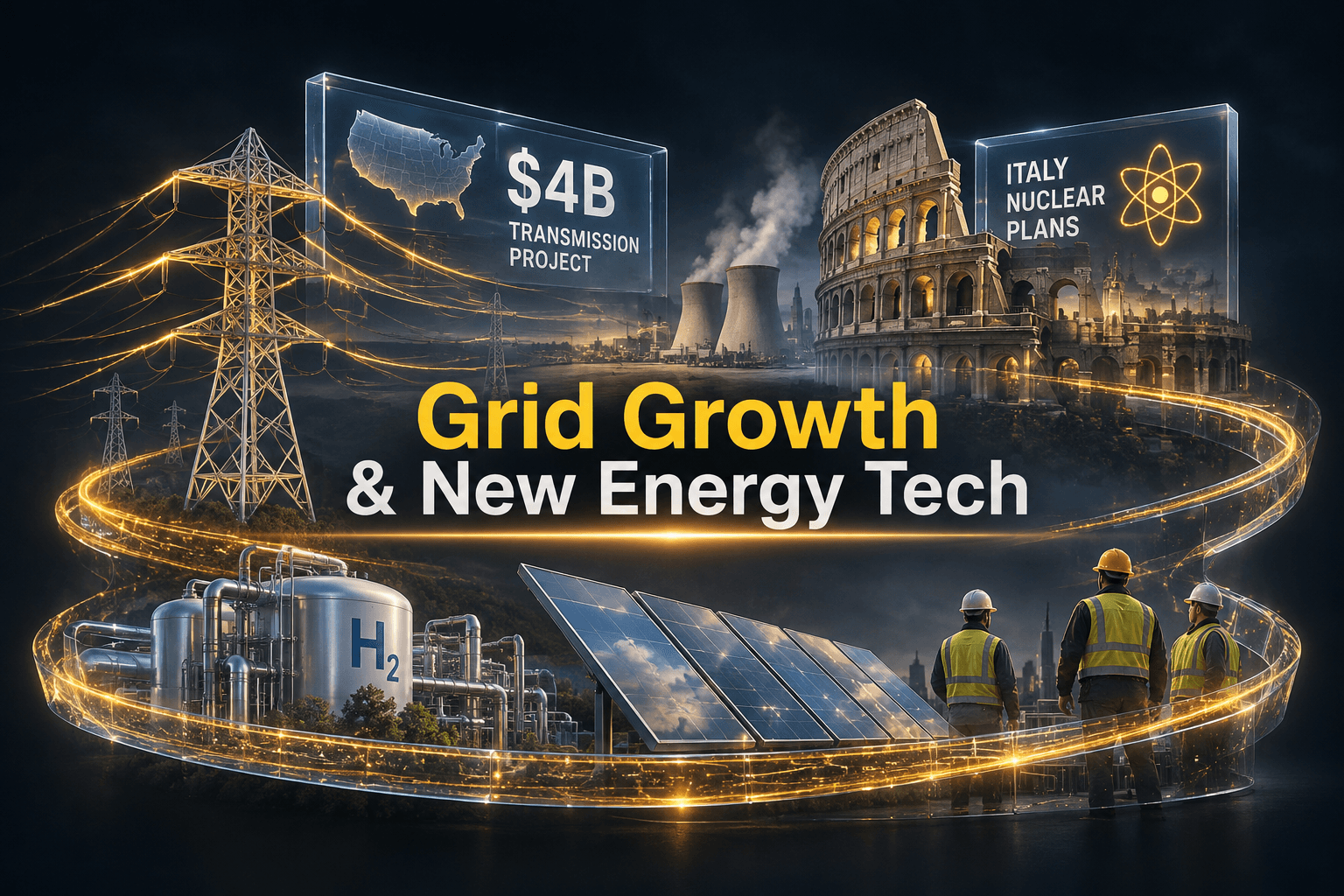
A proposed $4 billion transmission link backed by the U.S. Department of Energy stands out in a day of Utilities news focused more on long-term infrastructure and emerging technologies than on earnings. The Grid United project in Wyoming would connect the eastern and western electricity grids, with estimated savings of $39 billion over 30 years, according to the report.
Other headlines ranged from Italy’s move to make room for nuclear power to a hydrogen truck demonstration and a greenhouse solar-glass application. These developments point to varied approaches to energy supply and system planning, but the available reports don’t establish near-term revenue or quantify market effects. What should you take from a news cycle with few direct financial results? For now, the key distinction is between projects with a stated scale and savings estimate and early demonstrations that still need to prove wider commercial use.
Market Highlights
Today’s stories provided no utility earnings updates, analyst rating changes, or company share-price data. Although U.S. markets were open, these reports alone don’t support a reliable assessment of sector performance or individual stock reactions.
- Grid United’s proposed Wyoming transmission intertie carries a reported $4 billion price tag and an estimated $39 billion in savings over 30 years. The federal government is backing the project.
- Loblaw’s hydrogen truck crossed the Rocky Mountains using three fills, with fuel delivered by a separate mobile unit. The report says the trip did not establish a commercial freight-fueling system.
- UbiQD’s specialized perovskite glass was reported to filter natural sunlight for greenhouse lettuce while conserving water. No quantified yield or savings figures were provided.
Two additional items addressed the industry’s workforce and generation mix. Babcock & Wilcox, which trades as $BW, and BrilliT were named 2026 Best Places to Work in the Power Industry. In Italy, lawmakers are taking steps to revive nuclear power, though the report doesn’t specify a project schedule or expected capacity.
Key Developments
Federal backing puts transmission planning in focus
The proposed eastern-western grid connection is the day’s largest infrastructure story. If completed, the intertie could help move electricity between regions, while the reported $39 billion in savings over three decades gives the proposal a substantial long-term economic case. That figure is an estimate, however, not a guaranteed outcome, and the report does not provide a construction timetable or details on the project’s financing beyond the $4 billion cost.
For utilities and power-market participants, transmission can be as consequential as new generation: power needs a route from where it is produced to where it is consumed. You’ll want to track the project’s permitting, funding and development milestones before treating the projected savings as a realized benefit. The announcement is a signal of federal support, not proof that the line is built or operating.
New energy technologies remain at different stages
Loblaw’s Rocky Mountain trip demonstrated that a hydrogen-powered truck can complete a specific route with three refueling stops. But the need for a separate truck to deliver fuel is an important limitation. The report explicitly says the trip did not establish a commercial freight system, so it offers a demonstration rather than evidence of a readily scalable network.
A different kind of technology story came from UbiQD, whose perovskite-based glass filters natural sunlight in a greenhouse where lettuce was reported to thrive while using less water. The application connects solar materials with controlled-environment agriculture, but no performance figures were included. For investors, the practical questions are whether results can be replicated, what the product costs, and whether customers can adopt it at scale. Those details weren’t available in the report.
Nuclear policy and industry workforce make the headlines
Italian lawmakers are paving the way for nuclear power to return to the country’s energy mix. That is a policy development rather than an announcement of a completed plant or operating capacity. The story offers no specific timetable, so investors following nuclear supply chains will need more detail on legislation, project plans and implementation before assessing potential business effects.
Separately, POWER Magazine named Babcock & Wilcox and BrilliT Best Places to Work in the Power Industry for 2026. The recognition is a workforce and employer signal, not a financial result. It may be relevant in a sector where technical skills and staffing matter, but the report gives no hiring, retention or productivity figures to connect the award with operating performance.
CleanTechnica also published a strongly critical opinion piece about Elon Musk’s idea for space-based data centers. The article’s tone is not an independent technical assessment, and the summary supplied no cost, power-demand or deployment figures. The broader issue of energy needs tied to data centers may matter to utilities, but this story by itself doesn’t establish a project or quantify demand.
What to Watch
For the coming sessions, focus on verifiable milestones rather than broad announcements. On the Wyoming intertie, watch for updates on permitting, financing, route development and the schedule behind the $4 billion proposal. The projected long-term savings could be significant, but the estimate will be more useful to investors when project details and execution risks become clearer.
Italy’s policy process is another item to monitor. Further legislative or project announcements could clarify whether the country’s nuclear plans are moving from policy direction toward implementation. In the United States, any follow-up on transmission support may also help show whether the federal backing reported here is part of a broader buildout.
For hydrogen and perovskite applications, look for repeatable performance data, customer commitments and evidence of economics at commercial scale. A successful route demonstration or promising greenhouse result is a starting point, not a substitute for those measures. If you follow $BW, distinguish the company’s workplace recognition from financial disclosures or operating updates. Across all these stories, the main risk is reading potential as delivered growth.
Bottom Line
- The proposed $4 billion grid intertie is the day’s clearest large-scale infrastructure story, with $39 billion in estimated savings over 30 years.
- No sector stock moves, earnings results or analyst actions were provided, so today’s market reaction cannot be quantified from these reports.
- The hydrogen truck and perovskite greenhouse stories are notable demonstrations, but neither report establishes broad commercial adoption.
- Italy’s nuclear steps are a policy signal; timing, capacity and project details remain unclear.
- Use a selective, evidence-based lens: watch for permitting, financing, customer uptake and measurable operating results.
FAQ
Q: What was the biggest Utilities development today? A: Federal backing for Grid United’s proposed $4 billion eastern-western grid connection in Wyoming, which is projected to save $39 billion over 30 years.
Q: Did the hydrogen truck trip prove hydrogen freight is commercially viable? A: No. The truck completed a Rocky Mountain crossing with three fills, but a separate vehicle delivered fuel, and the report says the trip did not establish a commercial system.
Q: Were Utilities stocks up or down on these headlines? A: The provided stories did not include share-price data or quantified market reactions, so no direction can be confirmed from this news alone.