The Big Picture
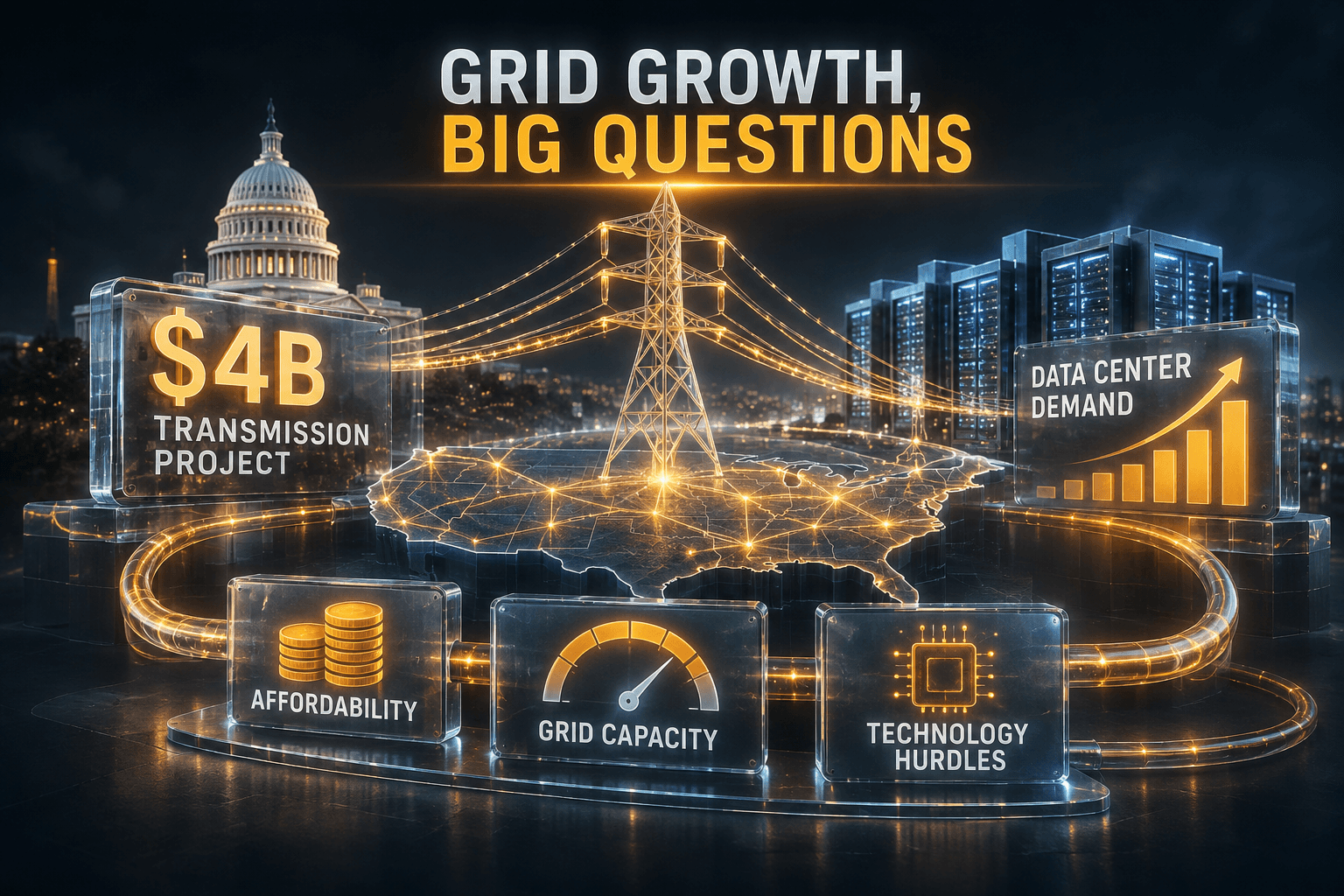
A proposed $4 billion transmission link between the eastern and western electricity grids could deliver an estimated $39 billion in savings over 30 years, putting grid capacity and system-wide costs at the center of the Utilities sector’s Thanksgiving news. The U.S. Department of Energy is backing Grid United’s Wyoming intertie, while utilities in the state are also preparing for substantial data center demand.
That combination shows the sector’s two-sided challenge: new power-hungry customers can support load growth, but serving them requires investment and attention to affordability. U.S. stock markets were closed Thursday for Thanksgiving. The latest session was Wednesday, November 25, so there were no U.S. equity moves today to report. What should you take from the headlines heading into Friday’s session? The key question is whether infrastructure and utility programs can keep pace with demand without shifting too much cost or risk to customers.
Market Highlights
Thursday’s reports were mainly about projects, operating conditions, and technology, rather than new earnings or stock-price data. No percentage changes or share prices were provided in the supplied coverage. The market context below is based on reported developments, not Thursday trading.
- Grid United’s proposed $4 billion Wyoming transmission project has federal backing and is expected to save $39 billion over 30 years, according to Renewable Energy World.
- Cheyenne Light reported a 439-MW peak load record and is working through a near-term data center pipeline of 3 GW, with another 2.5 GW in emerging opportunities. The company is pursuing deals involving Microsoft.
- Otovo has completed more than 1,000 inverter replacements using Tigo Energy technology, restoring service to solar systems described as orphaned.
- Bidirectional EV charging could provide value to customers and the grid, but experts cited high costs and incomplete technical solutions as barriers.
For utility investors, the reports offer a mixed snapshot: power demand and grid investment are rising, but converting those trends into dependable, affordable service remains the test. If you track utility earnings, management’s ability to explain who pays for new infrastructure may matter as much as the headline size of a project pipeline.
Key Developments
Transmission and data centers put grid capacity in focus
The proposed Grid United intertie is the clearest large-scale infrastructure development in the day’s coverage. The reported $39 billion in expected savings over three decades is a projection, not a realized benefit, and the project still has to move through development and implementation. Even so, federal support signals attention to the value of moving electricity between regions.
Wyoming’s demand story is more immediate. Cheyenne Light’s 439-MW peak and its 3-GW near-term data center pipeline, alongside 2.5 GW of emerging opportunities, illustrate the scale of potential new load. Those figures describe a pipeline, not a guarantee that every proposed facility will be built or take service. The broader coverage also highlighted factories competing with data centers for power, an issue that could make capacity allocation and affordability more consequential. Can new demand be served while keeping electricity accessible to households and existing businesses?
Utilities emphasize growth, but affordability remains a concern
A roundup of third-quarter utility earnings said executives sought to reassure investors amid election-related uncertainty. Companies highlighted data center prospects while also pointing to a broader mix of sources for load growth, the importance of energy affordability, and the need for constructive relationships with incoming officials. The reports don’t provide a single sector-wide earnings figure, but they show how utilities are framing growth alongside policy and customer considerations.
For you, the distinction between announced demand and funded, connected load is important. Large projects may require generation, transmission, and distribution investment, and the timing and allocation of those costs can affect both utility plans and customer bills. Regulatory decisions and company disclosures should help clarify which proposals advance.
Distributed energy and new technologies bring promise and limits
Several reports focused on options beyond conventional utility-scale projects. Plug-in solar could offer renters and apartment residents a way to use small solar systems, and the coverage discussed UL 3700 certification as one part of U.S. safety considerations. Certification shouldn’t be treated as automatic approval in every location: local rules and utility requirements still matter. Separately, Otovo’s more than 1,000 inverter replacements using Tigo Energy technology show how repowering can extend the usefulness of existing residential and commercial solar installations.
Bidirectional EV charging could let vehicles support the grid, but high costs and incomplete technical solutions remain barriers, according to experts cited by Utility Dive. Program design and newer charging solutions may help, though the story describes potential rather than a mature, widely deployed resource. XPENG’s technology and EV showcase in Guangzhou adds context to the broader vehicle transition, but the report doesn’t establish a direct utility-sector financial impact.
Two other items underline how early-stage energy ideas need to clear practical hurdles. The Metals Company’s proposed seabed-mining business faces a refinery timing problem, with its Brownsville, Texas, processing plans central to turning recovered metals into sales. And a first 20-year power purchase agreement for orbital solar, signed by Virtus Solis and Brae Systems to serve data center computing infrastructure, is an early commercial milestone, not evidence of established large-scale supply.
What to Watch
On Friday, November 27, U.S. markets are scheduled to reopen after the Thanksgiving closure. Watch for company updates that distinguish data center interest from signed agreements, committed construction, and actual electricity use. Those details can help you assess how much of the reported load pipeline may translate into utility investment and revenue.
Grid United’s next development and permitting milestones will be important to track against the projected long-term savings. For utilities, upcoming regulatory proceedings and policy discussions could also clarify how new generation and transmission costs are shared. Affordability remains a recurring concern in the earnings coverage, so customer bills and cost-recovery plans deserve attention.
Finally, monitor whether EV charging programs can address cost and technical barriers, and whether certification and local rules allow plug-in solar to expand safely. Orbital solar and seabed-mineral processing remain highly execution-dependent stories. Their eventual relevance will hinge on demonstrated delivery, financing, and commercially workable infrastructure, not just ambitious plans.
Bottom Line
- Federal backing for Grid United’s $4 billion intertie is a notable grid investment, while its $39 billion savings figure remains an estimate over 30 years.
- Cheyenne Light’s data center pipeline points to substantial potential demand, but pipeline capacity isn’t the same as completed projects or confirmed load.
- Utility executives are balancing growth narratives with energy affordability and policy uncertainty.
- Solar repowering and bidirectional EV charging show potential system benefits, alongside practical safety, cost, and technology constraints.
FAQ
Q: Were U.S. utility stocks trading on November 26? A: No. U.S. stock markets were closed for Thanksgiving. Wednesday, November 25, was the last trading day before the holiday.
Q: What is the significance of the proposed Grid United project? A: The $4 billion Wyoming intertie would connect eastern and western electricity grids. It is expected to save $39 billion over 30 years, though that figure is a projection.
Q: Does the data center pipeline guarantee higher utility earnings? A: No. A pipeline reflects potential projects, not necessarily completed facilities or confirmed electricity use. Buildout, approvals, costs, and customer demand will affect the outcome.