The Big Picture
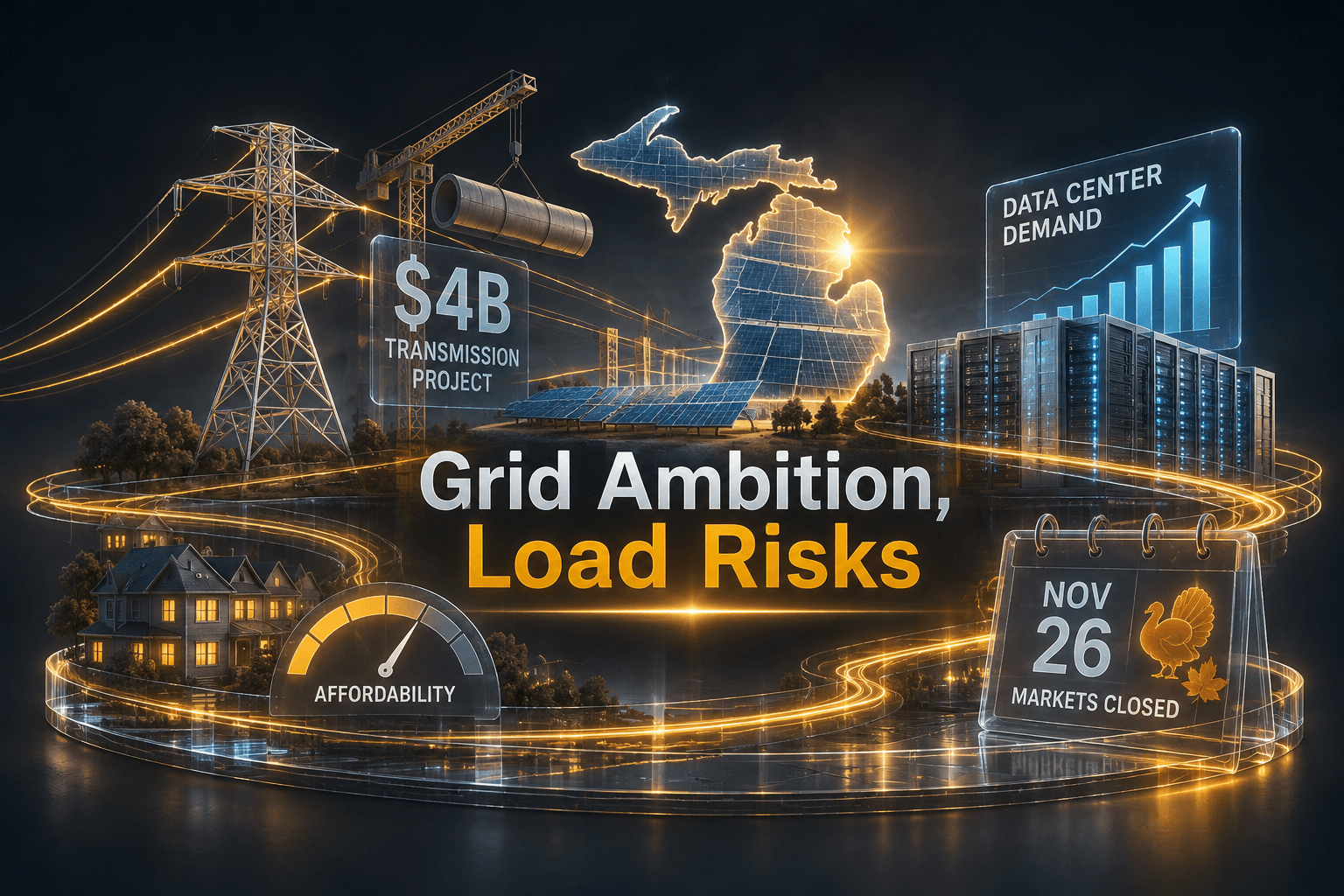
Federal backing for a proposed $4 billion Wyoming transmission link puts the challenge of moving electricity across the country at the center of the Utilities sector’s Thanksgiving news. The Department of Energy supports Grid United’s plan to connect the eastern and western grids, a project expected to save $39 billion over 30 years, according to the report.
The investment story is paired with a more complicated demand picture: utilities are pursuing solar and data center growth even as grid capacity and customer affordability remain in focus. U.S. stock markets are closed Thursday for Thanksgiving, so there are no new U.S. equity moves to report; the last trading session was Wednesday, November 25. What matters next is how utilities turn ambitious projects and proposed demand into reliable, cost-effective power.
Market Highlights
Project announcements and load growth dominated the updates. DTE Energy (DTE) opened a competitive process for up to 150 megawatts of Michigan solar, while Cheyenne Light is working through a large data center pipeline in Wyoming. These plans could support investment and demand, but their economics depend on execution, grid readiness and who ultimately bears the costs.
Several stories also point to the limits of a fast-changing power system. European solar is generating electricity, but policy support, grid capacity and flexibility are struggling to keep pace. In the U.S., factories are competing with data centers for power, and experts say high costs and incomplete technology continue to hold back vehicle-to-grid charging.
- Grid United’s proposed intertie carries a reported $4 billion price tag and an estimated $39 billion in savings over 30 years.
- DTE is seeking proposals for up to 150 MW of new Michigan solar capacity.
- Cheyenne Light has recorded a 439-MW peak load and is working on a 3-GW near-term data center pipeline, with another 2.5 GW in emerging opportunities.
- No share-price or percentage changes were provided in these reports. U.S. markets reopen Friday, November 27.
Key Developments
Transmission could ease regional power constraints
The DOE’s support for Grid United’s proposed eastern-western intertie highlights how transmission is becoming a key part of the energy investment story. The project is planned for Wyoming and is designed to connect the two major U.S. grid regions. Its reported long-term savings estimate is substantial, though the news summary does not provide a construction schedule, financing details or a final approval timeline.
For investors, the proposal underscores both potential and execution risk. More transfer capacity can help move electricity between regions, but large transmission projects typically require extensive planning and coordination. You’ll want to watch for permitting, cost updates and evidence that the project is progressing beyond federal support.
Load growth is attractive, but affordability stays in focus
Cheyenne Light’s data center pipeline illustrates the scale of potential new electricity demand. Company officials cited Microsoft data center deals amid a Wyoming buildout, a 3-GW near-term pipeline and a further 2.5 GW in emerging opportunities. Those figures describe pipeline and opportunity, not a guarantee that all proposed demand will be built or served.
That distinction matters as utilities discuss how to meet rising demand without placing undue pressure on households and businesses. The Q3 earnings roundup found executives emphasizing diverse sources of load growth, customer affordability and constructive relationships with incoming officials after the election. A separate report highlights competition between American factories and data centers for power, a reminder that capacity decisions have economic and political consequences. If you’re following utilities with large customer additions, pay attention to planned infrastructure spending and how costs are allocated.
Solar and electrification bring opportunity with practical hurdles
DTE’s procurement for up to 150 MW of Michigan solar is presented as a way to create construction jobs, support communities and reduce fuel costs for customers. Those are company-stated benefits, and the competitive bidding process is an early step rather than a completed buildout. Meanwhile, an analysis of Europe’s solar market says generation is contributing to energy security and affordability, but grid bottlenecks, weaker policy support and limited flexibility are challenging the surrounding system.
Other stories show the work needed to make clean energy assets useful over time. Otovo says it has completed more than 1,000 inverter replacements using Tigo Energy technology, repowering older or orphaned residential and commercial solar systems. Bidirectional EV charging could also provide value to utilities and consumers, but experts cite high costs and incomplete technical solutions, with program design important to making the resource viable. A first 20-year power purchase agreement for orbital solar has been signed by Virtus Solis and Brae Systems, but buyers, lenders and insurers still need a framework for pricing this unfamiliar technology.
What to Watch
Start with project delivery. For the Wyoming intertie, look for permitting, financing, cost estimates and a clearer schedule. For DTE’s solar procurement, the next useful details will be selected projects, contract terms and expected timing. Those milestones can help distinguish announced capacity from power that is likely to reach customers.
Data center demand and affordability will remain closely linked. Watch whether utilities convert proposed pipelines into firm commitments, how they plan to serve new loads and whether investment costs are shared fairly. The Q3 commentary suggests executives are already balancing growth narratives with concern about customer bills and policy relationships.
Technology and policy are additional watch points. Grid flexibility, transmission access and storage can affect how much value solar adds, while vehicle-to-grid programs need workable costs and customer participation. Space-based solar remains an early test case after its first reported PPA. With U.S. markets closed today, you can use the holiday pause to review company filings and project updates before trading resumes Friday.
Bottom Line
- Federal backing gives a major cross-grid transmission proposal added visibility, but approval, financing and construction milestones still matter.
- DTE’s up-to-150-MW solar procurement is a concrete step, not yet completed capacity.
- Data center pipelines signal potential utility load growth, but proposed demand is not the same as contracted demand.
- Grid constraints, customer affordability and cost allocation remain central risks across the sector.
- U.S. markets are closed for Thanksgiving; assess new information against Wednesday, November 25 closing prices when trading resumes Friday.
FAQ
Q: Why is the proposed Wyoming transmission project important? A: It aims to connect the eastern and western grids, and the report estimates $39 billion in savings over 30 years, subject to project execution.
Q: Is Cheyenne Light’s data center pipeline guaranteed demand? A: No. The reported 3-GW near-term pipeline and 2.5 GW in emerging opportunities indicate potential, not a guarantee that all projects will proceed.
Q: Are U.S. utility stocks trading on November 26? A: No. U.S. stock markets are closed for Thanksgiving and are scheduled to reopen Friday, November 27.