The Big Picture
A reported 3-GW near-term data-center pipeline in Wyoming puts the utilities sector’s central tension in sharp focus: new power demand can support growth, but only if the grid can serve it. Cheyenne Light is also tracking 2.5 GW of emerging opportunities, even as its recorded peak load stands at 439 MW. The scale of that gap signals potential, not guaranteed projects or revenue.
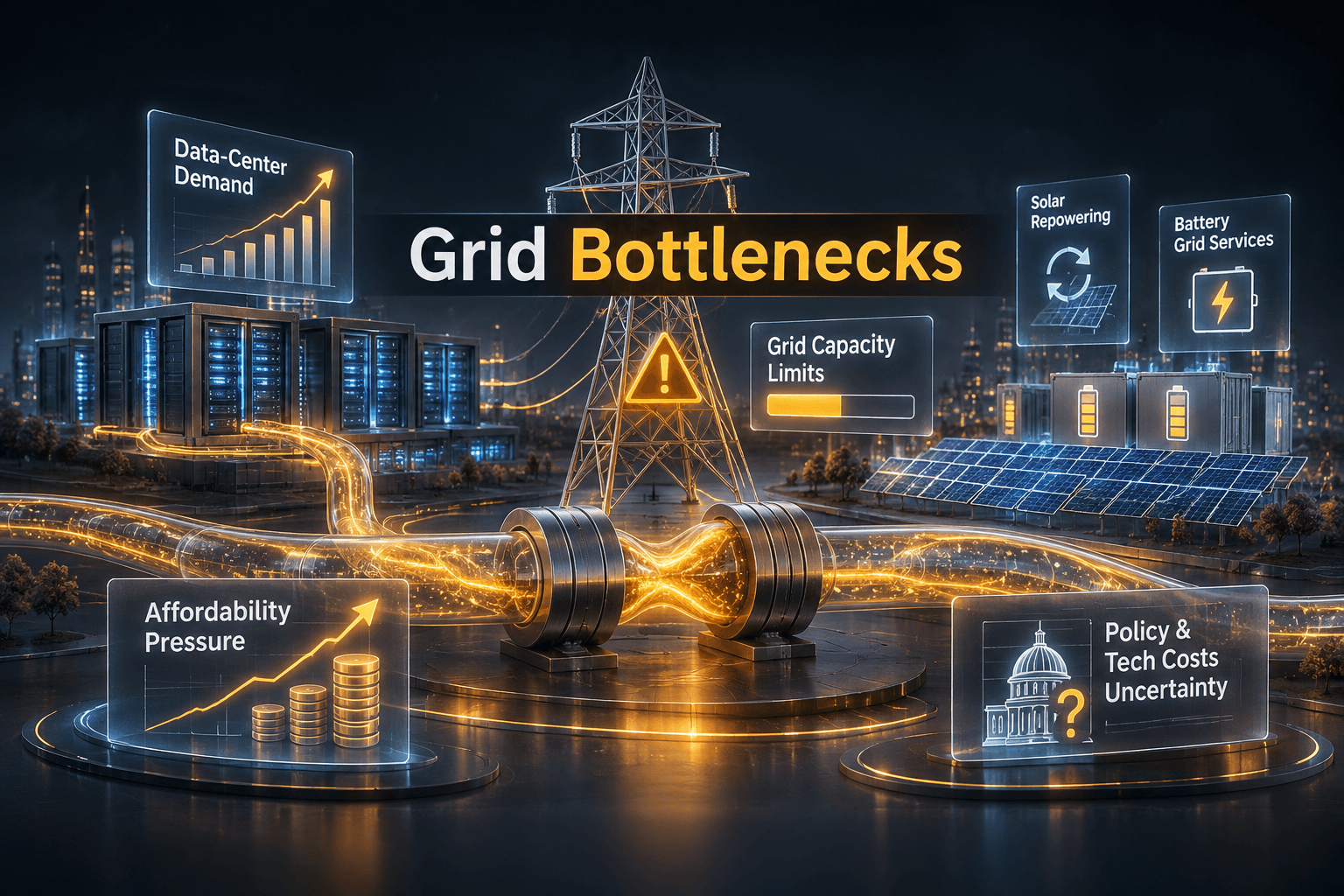
Across today’s reports, utilities are balancing expansion plans against grid bottlenecks, customer affordability and uncertain policy conditions. What matters for you is whether proposed loads turn into contracts, approved infrastructure and dependable returns. The news is mixed, so selectivity and attention to execution remain important.
Market Highlights
The strongest utility-specific development was Cheyenne Light’s data-center pipeline, including deals involving Microsoft. The story does not provide a stock-price move or identify a listed parent company, so there’s no verified share reaction to report. More broadly, utility executives have been emphasizing diverse sources of load growth and affordability as they address investors amid election-related uncertainty.
- Cheyenne Light cited a 439-MW peak load record, a 3-GW near-term data-center pipeline and 2.5 GW of additional emerging opportunities.
- COP31 leaders said more than 2,000 GW of renewable projects are awaiting grid connections, making transmission, storage and interconnection major constraints.
- Experts say bidirectional EV charging could benefit utilities and consumers, but high costs and incomplete technical solutions are holding it back.
Other developments point to the transition’s range of opportunities and risks. Otovo has completed more than 1,000 inverter replacements using Tigo Energy technology, while Europe’s inland-shipping cost comparison found battery swapping cheaper than HVO when current Dutch fuel prices were applied. Neither report establishes an immediate earnings impact for a utility, but both illustrate how system costs and technology choices can shape electricity demand and infrastructure needs.
Key Developments
Data centers offer growth, with execution still unproven
Cheyenne Light’s reported Microsoft-related deals and large development pipeline underscore the competition for power between data centers and industrial customers. A separate cleantech report described American factories competing with data centers for electricity. For utilities, serving both could mean more demand, but also greater pressure to build generation, transmission and local distribution capacity.
Pipeline figures deserve careful interpretation. A prospective 3-GW load is not the same as connected demand, and the available report doesn’t detail project schedules, required capital spending or customer commitments. If you’re assessing a utility exposed to this trend, watch for confirmed agreements, construction plans, cost recovery and evidence that existing customers won’t bear an unfair share of expansion costs.
Grid capacity is becoming a transition bottleneck
At COP31, industry leaders warned that grids and storage aren’t keeping pace with renewable energy growth. More than 2,000 GW of projects are waiting for grid connections, according to the report. That backlog suggests the challenge is increasingly not just building low-cost generation, but moving and balancing power where it’s needed.
The issue connects directly to utility earnings and planning. Delays can push out projects and defer potential revenue, while needed upgrades may require substantial investment and regulatory approval. Utilities’ third-quarter messaging, as summarized by Utility Dive, also emphasized affordability and constructive relationships with incoming officials. Those priorities may shape how quickly infrastructure plans move forward and how costs are allocated.
New grid tools have promise, but costs matter
Bidirectional EV charging could allow vehicles to send electricity back to the grid, potentially providing flexibility as renewable output and power demand change. Experts cited high costs and incomplete technical solutions as barriers, while pointing to careful utility program design and newer charging equipment as ways to create value for customers and the grid.
Other stories show related policy and technology questions. A coalition urged EU ministers not to count combustion vehicles as clean under revised car and van emissions rules, arguing that doing so could weaken the signal for electric-vehicle sales. Hyundai’s IONIQ 3 won a TopGear.com award, but an award alone doesn’t establish sales momentum. Meanwhile, Otovo’s 1,000-plus inverter replacements show how maintaining existing rooftop solar systems can extend their usefulness. Together, these developments point to a transition shaped by regulation, equipment economics and the ability to connect assets.
What to Watch
Tomorrow is Thanksgiving, and U.S. stock markets are scheduled to be closed, so there won’t be a regular trading session to assess immediate reactions. Trading is expected to resume Friday, November 27, with an early close. For your next review of utility shares, distinguish company-specific disclosures from broad sector themes, particularly when project pipelines are large but timelines and investment requirements aren’t yet detailed.
In the coming weeks, monitor utility updates on data-center contracts, load forecasts, capital plans and regulatory cost recovery. Watch whether grid-connection delays begin to ease, and whether storage and transmission investment can keep pace with renewable additions. Bidirectional charging programs also merit attention, but their consumer costs, technical readiness and measurable grid benefits will matter more than potential alone.
Policy is another key variable. Utilities have highlighted affordability and engagement with incoming officials, while European vehicle-emissions rules could influence longer-term electrification trends. The practical question is whether projected demand becomes reliable, financeable load without compromising service or pushing costs onto existing customers.
Bottom Line
- Data-center demand offers a growth narrative, but Cheyenne Light’s pipeline figures are prospective and don’t confirm future revenue.
- Grid connections, transmission and storage remain significant constraints, with more than 2,000 GW of renewable projects awaiting connection globally.
- Affordability, regulatory approvals and cost allocation are central to whether infrastructure growth can benefit utilities and customers.
- Bidirectional charging and solar repowering offer potential flexibility, but costs and implementation will determine their impact.
- No utility share-price reactions were included in today’s reports. The sentiment is neutral, and the next useful signals are project commitments, execution details and regulatory outcomes.
FAQ
Q: What was the biggest utilities development today? A: Cheyenne Light reported Microsoft-related data-center deals alongside a 3-GW near-term pipeline and 2.5 GW of emerging opportunities.
Q: Why are grid bottlenecks important to utility investors? A: Delayed connections can defer new demand and project revenue, while grid upgrades require capital, approvals and decisions about who pays.
Q: Are U.S. markets open tomorrow? A: No. U.S. stock markets are scheduled to close Thursday, November 26, for Thanksgiving, and resume trading Friday with an early close.