The Big Picture
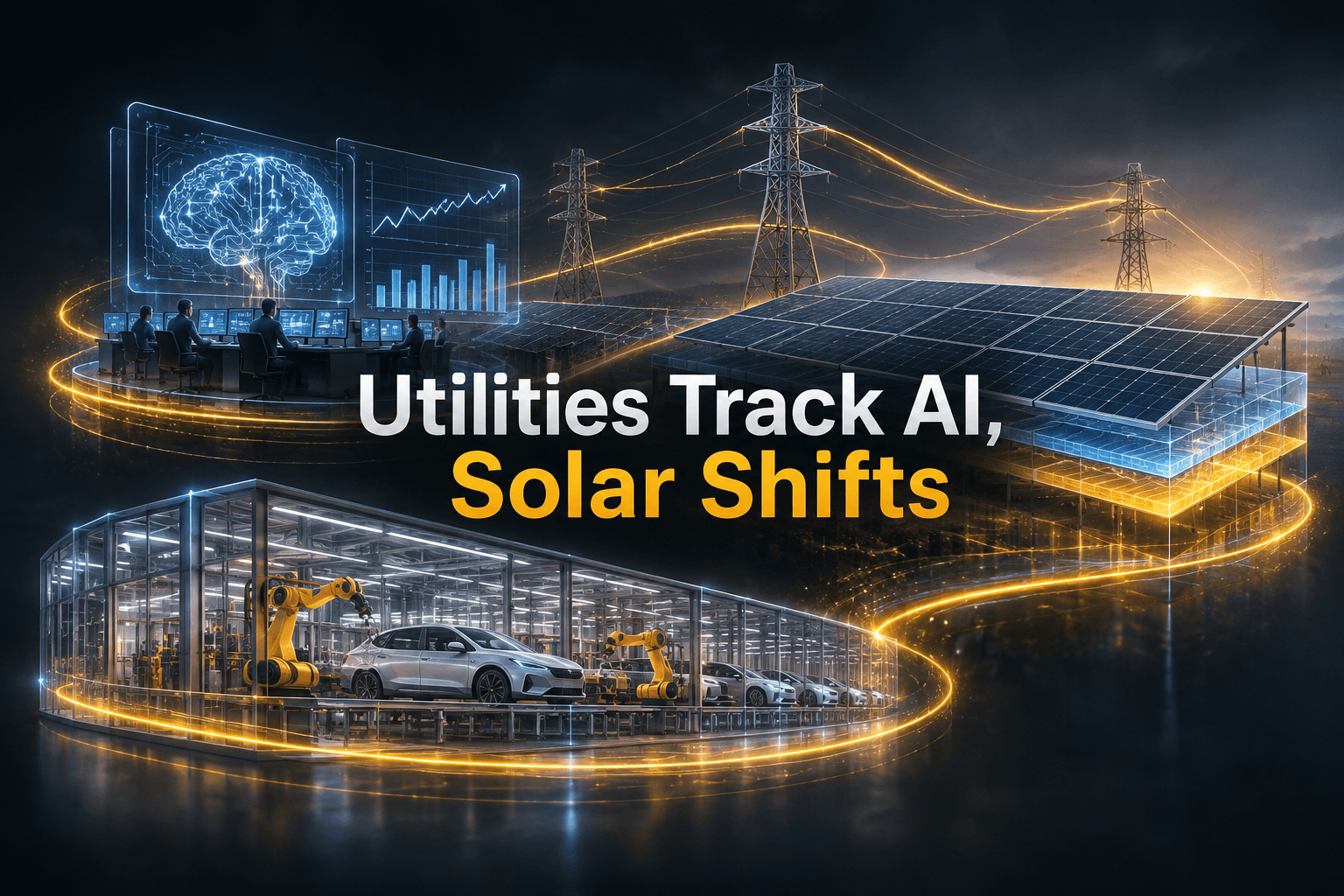
Utilities’ latest headlines are about improving how energy projects get built and operated, not a new earnings or policy catalyst. Two sponsored Utility Dive articles promote data-driven jobsite management and vertical AI, while a separate report describes a new solar-cell deposition platform designed for high-volume manufacturing.
For investors, the common thread is the effort to turn technology into more efficient energy infrastructure. But the reports don’t establish cost savings, customer adoption, commercial output, or financial results. What should you take from that? Treat the developments as industry signals, not proof of near-term changes to utility company earnings or stock performance.
Market Highlights
The available coverage gives a few concrete operating and production figures, but does not report stock movements, percentage changes, or share prices. That leaves investors without a direct market-performance comparison for the sector this morning.
- NAED says its PV-1 PECVD-V vertical deposition platform is built for a throughput of 96,000 wafers per hour.
- The company says the platform doubles wafer throughput compared with its previous platform and is designed for perovskite/HJT tandem cells targeting 30% efficiency. These are design and target figures, not reported production results.
- CleanTechnica reports that Scout Motors has produced its first validation-build vehicles at its South Carolina factory, with more than 200,000 reservations cited for its trucks and SUVs.
- The two Utility Dive articles, published as sponsored content, focus on jobsite data and the use of vertical AI in energy and utilities. They do not provide company-level financial metrics.
None of the five stories reports a utility’s earnings, guidance, share-price move, or a new regulatory ruling. You’ll need company disclosures and market data for those indicators; the headlines alone don’t show how investors are pricing these developments.
Key Developments
Utility operations put data and AI in focus
The first Utility Dive piece argues that jobsite data is generated in large volumes but often isn’t used before it loses practical value. Its proposed focus is better use of that information rather than simply choosing lower-cost vendors. The second sponsored article presents “People + Vertical AI” as a developing operating model for energy and utility businesses.
Together, the articles point to a potential efficiency theme: using data and specialized AI tools to support decisions and operations. However, they are promotional pieces, not independently reported measurements of savings or productivity. For your assessment of any utility, the distinction matters: an operating concept becomes financially relevant when a company reports implementation, costs, results, and scale. The stories don’t identify a utility that has done so.
NAED introduces a high-throughput solar platform
CleanTechnica reports that NAED Energy Holding unveiled PV-1 PECVD-V, a U.S.-engineered vertical in-line deposition platform for tandem solar manufacturing. NAED describes it as patent-pending and says it is designed for perovskite/HJT tandem cells, with a target efficiency of 30% and capacity of 96,000 wafers per hour.
The stated throughput is twice that of NAED’s previous platform, according to the company. That is a notable design claim, but investors should distinguish equipment specifications from verified factory output, customer orders, and revenue. The report doesn’t provide deployment schedules or financial terms, so the commercial effect remains unclear.
Scout reaches a vehicle validation milestone
In a separate development, Scout Motors, a Volkswagen Group subsidiary, has apparently built its first validation vehicles at its South Carolina factory. The report describes this as a step toward mass production and cites more than 200,000 reservations for Scout’s electric trucks and SUVs.
Reservations indicate customer interest, but they aren’t the same as completed sales or deliveries. The factory milestone adds context to the broader electrification landscape, though the report doesn’t specify a production start date or the financial contribution to Volkswagen Group. It’s also distinct from the utility and solar-equipment stories, rather than evidence of a direct utility-sector earnings catalyst.
What to Watch
For today’s session, the supplied reports don’t identify a scheduled utility earnings release, policy announcement, or company event. With U.S. markets open, monitor company filings and market updates for information that adds measurable financial detail to these technology themes.
For the AI and jobsite-data angle, look for named utility deployments, disclosed implementation costs, and quantified operational results. For NAED, relevant follow-up would include customer commitments, factory deployment, validated throughput, and evidence that the stated efficiency target can be achieved in commercial production.
For Scout, the key distinction is between reservations, validation builds, and mass-produced vehicles reaching customers. Production timing, deliveries, and any disclosures from its parent could help clarify execution. Across all three topics, the risk is treating an announcement or target as a confirmed business outcome. A selective approach means checking what is measured and reported before drawing conclusions about sector-wide performance.
Bottom Line
- The day’s coverage is technology-focused, with no reported earnings surprise, regulatory decision, or utility share-price move.
- Utility Dive’s AI and jobsite-data articles are sponsored content, not independently verified evidence of operating gains.
- NAED cites 96,000 wafers per hour and a 30% cell-efficiency target; these are platform specifications and targets, not confirmed commercial results.
- Scout’s validation builds and more than 200,000 reservations are milestones to track, but reservations don’t equal sales or deliveries.
- Use company filings and reported results to assess whether these developments translate into measurable financial outcomes. This summary is informational and isn’t personalized investment advice.
FAQ
Q: What is the main Utilities sector theme in today’s coverage? A: The stories emphasize operational data, vertical AI, and solar-manufacturing technology, without reporting a sector-wide financial catalyst.
Q: Has NAED reported that its new platform is already producing at 96,000 wafers per hour? A: No. The figure is the stated design capacity; the coverage doesn’t report verified commercial production at that rate.
Q: Do Scout’s 200,000-plus reservations confirm future vehicle sales? A: No. Reservations signal interest, but the report doesn’t establish how many will become completed sales or deliveries.