The Big Picture
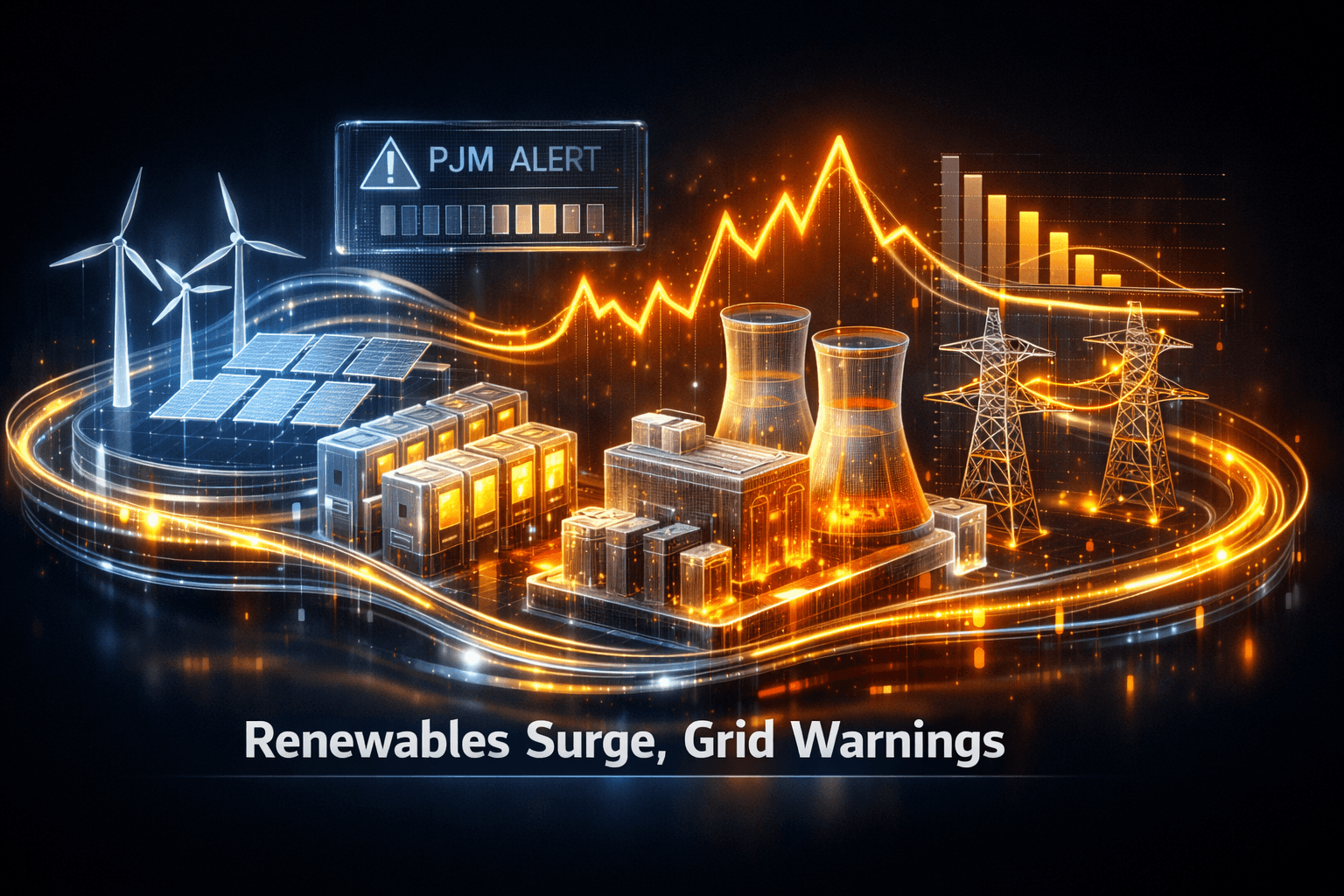
Renewable projects and technology advances are driving momentum in the utilities sector, but grid stress and strategic asset moves are keeping risk front and center for investors. You’ll see both expansion stories and reliability warnings in today’s headlines, a mix that calls for selectivity rather than broad bets.
Policy support and project-level wins are nudging the energy transition forward, while system operators and large generators are adjusting portfolios to manage short-term pressures. What does that mean for your exposure to utilities and clean energy? Read on for the key items to watch this morning.
Market Highlights
Quick facts and notable moves from last night and the pre-market session.
- NRG Energy (NRG) agreed to sell 4.9 GW of gas generation back to LS Power in a $4.0 billion transaction, following last year’s acquisition integration.
- PJM reports forecast winter demand up roughly 7,500 MW since 2022 and now above its all-time peak, driving tighter reserve margins and heightened focus on generator performance.
- Arevon’s Eland solar-plus-storage project in California is being highlighted as a scalable hybrid model helping Los Angeles meet renewable targets while providing firming capacity.
- Eco Wave Power completed Phase 1 of an AI-driven digital twin program focused on wave interaction modeling, a step toward better performance and predictive maintenance for wave energy assets.
- The Bipartisan American Affordability and Jobs Act of 2026 (BAAJA) won industry backing for potential hydropower reforms, which could change permitting and upgrade economics for hydro operators.
Key Developments
NRG’s $4B Sale and What It Signals
NRG’s decision to sell six gas plants, totaling 4.9 GW, back to LS Power for $4 billion is a major portfolio shakeup. Analysts note the move follows an unsolicited offer NRG said it couldn’t ignore, and it changes the company’s fossil-fuel footprint while likely freeing capital for other priorities.
For you, this raises questions about gas exposure in utility portfolios and the pace at which large generators will redeploy capital into renewables or storage. Is this portfolio pruning a one-off or part of a broader trend toward asset rotation?
PJM’s Winter Readiness and Grid Risks
PJM’s communications show winter peak forecasts have climbed by about 7,500 MW since 2022 and now exceed the region’s prior record. The operator is prioritizing generator performance and cold-weather preparedness to avoid shortfalls.
Reserve margins are tighter, and you should monitor alerts from PJM and state regulators through the season. Tight capacity conditions could mean higher winter prices and greater volatility for energy and utility stocks if weather turns severe.
Renewables, Storage, and Tech Momentum
Project-level progress continues to be a positive for the transition. Arevon’s Eland solar-plus-storage project is being held up as a working example of hybrid builds that provide both daytime generation and firming capacity to maintain reliability.
Meanwhile, component and system trends point to higher-voltage, higher-power energy storage designs, and Eco Wave Power’s AI digital twin Phase 1 shows how advanced modeling can improve marine renewable operations. These developments suggest the supply chain and project performance are evolving together, one step in the right direction for clean energy developers.
What to Watch
Here are the catalysts and risk factors that could move the sector in the near term and what you can track as an investor.
- Regulatory timing on BAAJA hydropower provisions, which could affect retrofits and licensing economics for existing hydro assets.
- PJM notices and seasonal alerts, especially any emergency capacity calls or unusual price spikes, since tight margins raise the odds of volatility.
- NRG’s follow-up disclosures on how proceeds from the $4B sale will be used, and any shifts in dividend or buyback plans as a result.
- Commercial progress and interconnection milestones for hybrid solar-plus-storage projects, including contractual terms that affect revenue certainty.
- Technology adoption signals, such as digital twin rollouts and component supply updates, which can influence O&M costs and project uptime.
Are EV sales and adoption trends influencing utilities near term? Indirectly yes, as EV growth supports long-term load growth and distributed energy integration, but grid operators tell us that timing and geographic concentration of load matter a lot.
Bottom Line
- Renewables and storage are advancing via project deployments and tech upgrades, improving long-term utility fundamentals.
- System operators like PJM warn that reserve margins are tightening, so near-term reliability and price volatility are elevated risks.
- Corporate portfolio moves, exemplified by NRG’s $4 billion sale of 4.9 GW, are reshaping exposure to gas generation and freeing capital for other uses.
- Policy support for hydropower and hybrid projects could accelerate upgrades and new capacity, but implementation timelines will matter.
- Stay selective, watch operational updates from grid operators, and monitor project-level milestones for clearer signals about sector momentum.
FAQ Section
Q: How could PJM’s tighter reserve margins affect electricity prices this winter? A: Tighter margins raise the likelihood of price spikes during peak demand or extreme weather, as scarcity drives up wholesale prices and stress tests generator availability.
Q: What does NRG’s sale of 4.9 GW mean for its business? A: The $4 billion divestiture reduces NRG’s gas generation footprint and provides capital that the company can redeploy, though details on reinvestment will clarify strategic intent.
Q: Are solar-plus-storage projects likely to be more valuable than solar alone? A: Hybrid projects generally offer greater capacity value and revenue stacking potential because storage can shift generation into higher-value hours and provide grid services.