The Big Picture
Clean-energy deployments and grid-scale reliability measures set the tone for utilities on Nov 3, with multiple stories pointing to accelerating investment in solar, storage and grid controls. You saw a small utility-scale solar project come online, but the bigger signal was scale—thousands of batteries aggregated into dispatchable capacity and major equipment backlogs that reflect robust demand.
Why does this matter to you as an investor or watcher of the sector? These items together suggest growing revenue opportunities for developers, equipment suppliers and integrators as utilities and corporate customers prioritize resilience and decarbonization.
Market Highlights
Key facts and reported numbers from today’s coverage for quick reading.
- PowerBank completed the 3.26 MW Camillus community solar project in New York, now permitted to operate.
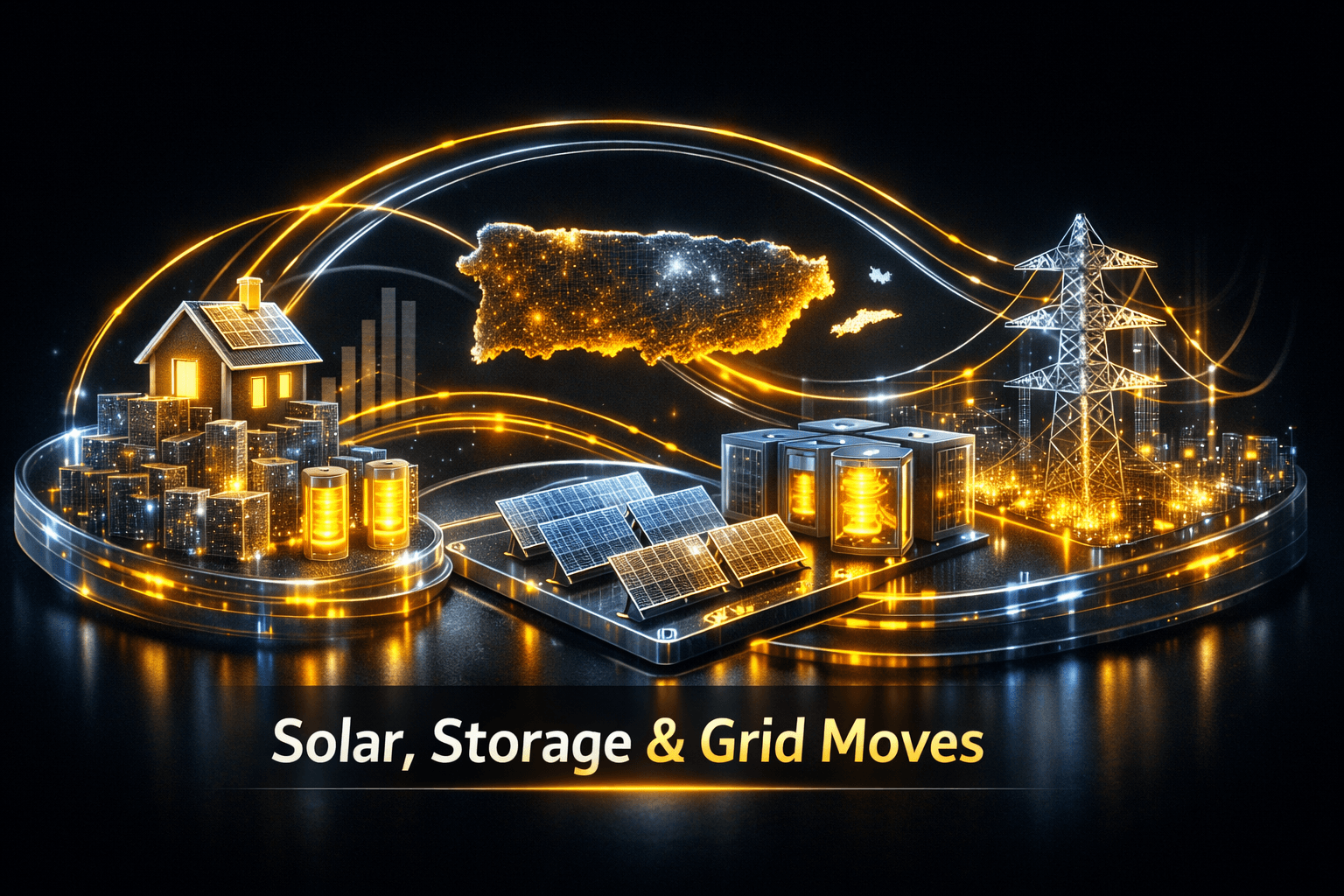
- Sunrun $RUN reported participation in its Puerto Rico virtual power plant doubled to more than 60,000 customers, representing nearly 70,000 home batteries, delivering about 45 MW of dispatchable power for four hours.
- Voya Energy raised $35 million to commercialize aluminum air backup generators aimed at data centers and other critical loads.
- Caterpillar Caterpillar (CAT) said third-quarter order backlog reached $78 billion, almost double last year, driven in part by data center demand for power equipment.
- A $1 billion proposed gas-fired plant in northern Wisconsin was canceled by the groups behind the project, altering local capacity plans.
Key Developments
Community solar builds keep rolling
The Camillus, New York array, a 3.26 MW community solar project completed by PowerBank and built by Solar Advocate Development, shows developers are still finding reusable sites, even capped landfills. You can see how smaller projects like this matter: they expand local access to solar and often pair well with community resilience programs.
Storage scales from homes to grid relief
Sunrun’s Puerto Rico VPP doubled participation, now topping 60,000 customers and nearly 70,000 batteries, which reliably delivers roughly 45 MW for four-hour windows. That level of distributed, dispatchable capacity is a real grid support asset. What does that mean for utilities and regulators? It changes planning and procurement calculus for peak events and emergency response.
Supply chain, backup tech and policy are converging
Private funding and industrial capacity moved forward at the same time. Voya Energy’s $35 million financing targets aluminum air generators as low-emissions backup power for data centers, addressing permitting and emissions constraints that plague diesel. Caterpillar $CAT expanding engine and turbine production, and a $78 billion backlog, shows OEMs are reacting to demand from data centers and other heavy users.
On policy, voices say the Senate permitting bill could help speed clean projects but needs amendments to avoid unintended consequences, according to a Utility Dive opinion. At the same time, the Energy Department’s Battery Manufacturing Accelerator is trying to close gaps as U.S. battery demand is expected to grow rapidly.
What to Watch
Expect a focus on integration and permitting as the next test. Developers are building more distributed assets, but grid operators need trusted data and controls to dispatch them at scale.
- Permitting amendments and regulatory timelines, both federal and state, could speed or slow projects. Will the Senate bill be amended to reduce overreach?
- Battery supply chain moves, including the Energy Department’s Accelerator, will determine whether domestic capacity keeps pace with demand. You should watch announcements on manufacturing slots and materials sourcing.
- Adoption of trusted control frameworks for AI in generation and grid operations. Experts say reliable operational data matters more than algorithms alone for grid stability when fleets grow.
- Commercial adoption of alternative backup tech like aluminum air generators, where logistics and scrap aluminum supply will be a gating factor.
Bottom Line
- Clean energy deployment is showing momentum across small-scale solar and large-scale distributed storage, which boosts potential revenue for developers and equipment makers.
- Scale matters: aggregated home batteries are already providing meaningful dispatchable capacity in Puerto Rico, altering emergency planning options.
- Industrial and equipment suppliers are seeing demand, as reflected in Caterpillar’s backlog, which could support long lead-time revenues for the sector.
- Policy and permitting remain key risks, and targeted amendments could materially change project timelines and costs.
- Innovation is active, from aluminum air backup systems to AI control room debates, but practical constraints like logistics and data quality will determine winners.
FAQ Section
Q: How significant is Sunrun’s VPP growth in Puerto Rico for grid reliability? A: The program’s growth to 60,000 customers and nearly 70,000 batteries, delivering about 45 MW for four hours, represents a meaningful, distributed source of emergency capacity that grid operators can dispatch during peak or crisis periods.
Q: Will the Senate permitting bill speed up renewable projects? A: Analysts say the bill holds promise to accelerate projects, but experts including a former FERC chair urge targeted amendments to avoid negative side effects that could slow specific projects or increase costs.
Q: Are alternative backup technologies like aluminum air generators ready for wide use? A: Companies secured early funding, for example $35 million for Voya Energy, but supply logistics and commercialization hurdles remain before the technology can replace diesel at scale in sensitive sites like data centers.