The Big Picture
Heading into the long weekend, the utilities sector is balancing clear technology and modernization wins against persistent policy and reliability risks, and US markets were closed on Saturday. You should note that last trading day was Friday, October 30, and market reaction will resume on Monday, November 2.
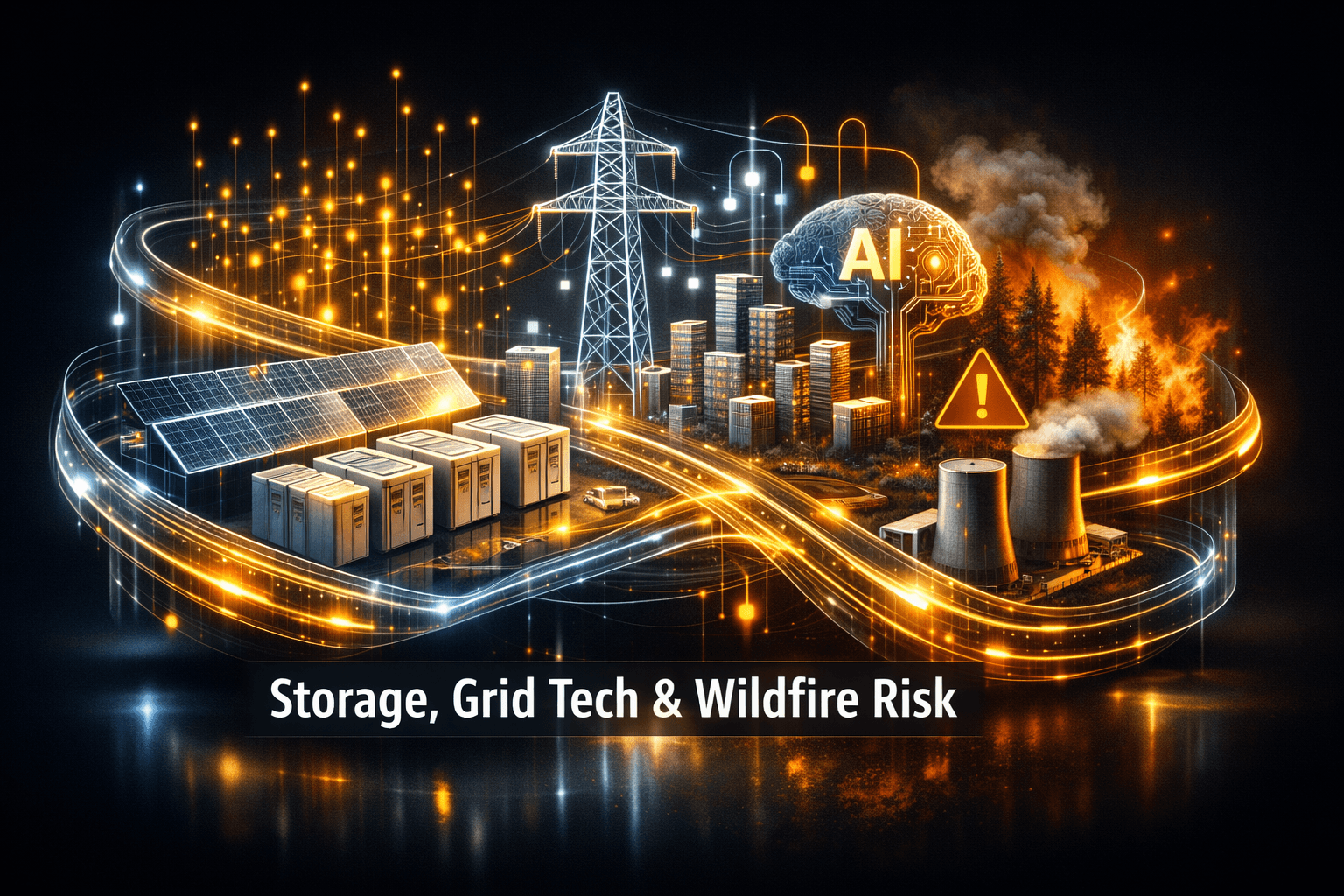
From a structural view, two themes stand out: rapid growth in co-located battery storage with utility-scale solar, and steady investment in grid intelligence and resilience. At the same time, delays in wildfire reform and scrutiny of new gas plants create regulatory uncertainty that could shape capital allocation for utilities.
Market Highlights
Key facts and company moves to watch as you plan for the week ahead, with price context as of Friday, October 30.
- Battery + solar adoption: Over 16% of new utility-scale solar capacity added in 2026 is co-located with operable battery storage, up from about 2% in 2017, according to EIA-reported data cited by CleanTechnica.
- Advanced metering rollout: $AMRC reported completion of a $5.9 million AMI project in Mustang, Oklahoma, replacing more than 8,000 water meters in five months.
- Wildfire and regulation: Edison International $EIX warned that lack of wildfire reform has “dire and escalating impacts,” with CEO Pedro Pizarro saying delay into 2027 will be costly.
- Nuclear and supply chain: Hitachi’s Energy segment is seeing rising nuclear revenue as a small modular reactor delivery date nears, though the company flagged inflation and long delivery timelines.
- Industry entrants and tech: Ansaldo Energia is betting on speed and flexibility in the U.S. gas turbine market, while Toyota $TM and Waymo are advancing autonomous vehicle collaboration, a development that indirectly affects electric demand and grid planning.
Key Developments
Storage Gains Momentum with Solar
Data shows co-located battery storage is becoming a material share of new utility-scale solar builds, rising to over 16% year-to-date through September 2026. That rapid increase signals developers and operators are prioritizing dispatchability and capacity value, which matters if you follow capacity markets or utility procurement trends.
For investors, this suggests equipment makers, battery integrators, and project developers could see steady opportunities, while grid operators will need to adapt interconnection and market rules to handle more hybrid resources.
Grid Tech, AMI, and Resilience Advances
Ameresco’s $5.9 million AMI completion in Oklahoma shows municipal and regional utilities are moving fast on metering modernization. Rapid deployments, like replacing 8,000 meters in five months, cut operational costs and improve outage response, which is good news if you track utilities focused on efficiency and customer service.
Florida municipal utilities are using AI-enabled vehicle-mounted cameras to automate pole assessment, expediting storm damage surveys and reducing field hours. You should ask, how quickly will these tools scale beyond pilot programs, and how will they affect outage restoration economics?
Reliability Tests and Nuclear Timelines
A 230-kilovolt three-phase transformer was subjected to simulated earthquake conditions by Idaho National Laboratory, which highlights growing attention to physical resilience of critical grid assets. Tests like this feed into underwriting, maintenance, and capital planning decisions for utilities facing extreme weather and seismic risk.
Hitachi reported higher nuclear revenue as SMR delivery approaches, but executives flagged inflationary pressure and long lead times. That combination is a double-edged sword for utilities weighing long-term low-carbon generation against near-term cost and schedule risk.
What to Watch
Expect focus on a few actionable catalysts and risks in the coming weeks, and you can position your watchlist accordingly.
- Regulatory moves on wildfire reform, especially in California. Edison International $EIX has signaled delays into 2027 would be costly, so any legislative action or delay will matter for regional utilities and insurers.
- Interconnection and market rule updates for hybrid solar plus storage, since rising co-located capacity changes dispatch and capacity valuations. Watch state PUC filings and ISO/RTO rulemakings.
- SMR project milestones and supplier timelines. Hitachi and other vendors will report milestone progress, and you should track announcements on delivery dates and cost trends.
- Scaling of AI inspection platforms and AMI projects. Faster storm assessment and smart metering rollouts reduce outage duration and could improve O&M efficiency, which affects utility operating metrics.
- Proposals for new gas plants. Regulators are being urged to scrutinize gas builds versus clean alternatives, so expect contested proceedings and potential project delays.
Bottom Line
- Storage adoption with solar is accelerating, now exceeding 16% of new utility-scale solar builds in 2026, which reshapes procurement and grid operations.
- Grid modernization projects, such as AMI and AI inspection, are delivering measurable operational gains and faster outage response.
- Policy and regulatory uncertainty, especially on wildfire reform and new gas plant approvals, is a near-term headwind for some utilities and vendors.
- Resilience testing and nuclear supplier dynamics highlight long-run reliability and supply chain risks you should monitor.
- Overall, the sector shows mixed signals, so a selective and data-driven approach is warranted heading into next week.
FAQ Section
Q: How much of new utility-scale solar is paired with batteries in 2026? A: As of September 2026, over 16% of new utility-scale solar capacity added this year is co-located with operable battery storage, up from about 2% in 2017.
Q: What near-term regulatory risk should I watch for? A: Wildfire reform, particularly in California, and state-level decisions on new gas plants are the biggest near-term policy risks that could affect utility costs and project pipelines.
Q: Will grid tech projects like AMI and AI inspections make a big difference? A: Early deployments, such as Ameresco’s $5.9 million AMI project and AI-enabled pole inspections in Florida, indicate these tools can reduce restoration times and O&M costs as they scale.