The Big Picture
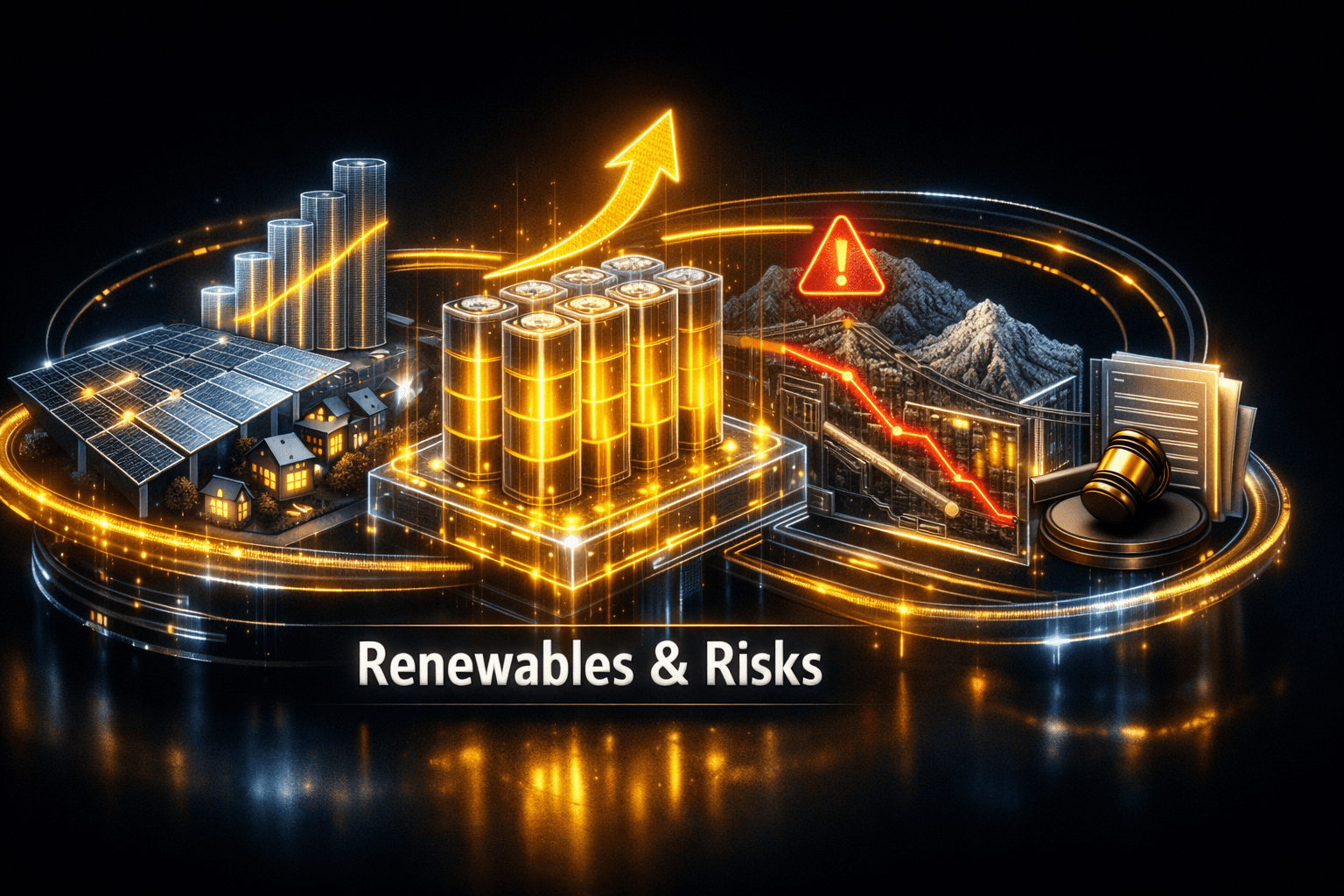
Renewables and storage are gathering real momentum, with new projects, state funding and acquisitions signaling continued buildout of clean capacity. At the same time, big cost adjustments, regulatory scrutiny and climate-driven weather risk are creating headwinds that could pressure utility budgets and timelines.
For you as an investor, that means opportunities and risks are arriving together, not in isolation. Which trends are likely to win out in the long haul, and where should you focus your attention this week?
Market Highlights
Quick facts and numbers from overnight and recent sector headlines.
- State investment: Maryland launched “Megawatts for Maryland,” a $200 million auction program to spur new clean generation over two years under the Utility RELIEF Act.
- Community solar consolidation: Neighborhood Sun doubled its project portfolio to more than 600 MWDC after acquiring Meadow Energy, up from roughly 300 MWDC.
- Major capex bets: Mitsubishi Power is directing about $490 million to expand U.S. manufacturing at Savannah Machinery Works as orders for gas turbines surge, under the broader Mitsubishi Heavy corporate umbrella ($MHVYF).
- Long lead project pain: Australia’s Snowy 2.0 pumped storage project now faces costs up to A$25 billion and a completion push to late 2029, a significant upward revision for a once marquee storage project.
- Distributed resilience: A Puerto Rico apartment complex case study highlights growing reliance on rooftop solar plus batteries to manage blackouts, underscoring distributed energy demand.
Key Developments
State funding boosts clean buildout: Maryland’s $200M auction program
Governor Wes Moore’s administration established a $200 million “Megawatts for Maryland” program to auction support for new clean generation over the next two years. The program is intended to fill the financing gap left by previous federal programs and to lower power costs for ratepayers.
For utilities and developers, that creates near-term procurement opportunities and potential project pipelines. For you, it means localized demand for renewables and storage continues to be driven by state-level policy as much as federal incentives.
Community solar scales: Neighborhood Sun expands in New York
Neighborhood Sun’s acquisition of Meadow Energy roughly doubles its portfolio to more than 600 MWDC and quadruples its footprint in New York. The transaction was facilitated by Climate First Bank and signals consolidation in the community solar market.
Community solar is a growth channel for developers and service providers. You should watch for follow-on M&A or integration challenges as smaller portfolios are rolled into larger platforms.
Tidal, storage and distributed resilience: varied tech bets
Minesto signed an MoU with Morteza Capital to develop tidal energy in the Maldives, highlighting niche marine technologies moving from demonstration to deployment. Meanwhile, Puerto Rico case studies are showing practical battery plus solar solutions reducing outage exposure for building owners.
These items suggest you're seeing a widening technology palette: centralized pumped storage, modular batteries, community solar and even tidal projects are each competing for capital and permitting bandwidth.
Cost and risk backdrop: Snowy 2.0 and weather-driven threats
Snowy Hydro’s update that Snowy 2.0 may cost up to A$25 billion and be delayed to late 2029 underscores the reality that large, long-duration projects carry execution risk and significant budget volatility. Separately, experts warn that weather risk is now a year-round consideration for utility operations.
Together, schedule slippage and more frequent extreme weather events can raise operating and capital costs for utilities, and they can complicate rate cases and recovery mechanisms you may be tracking.
What to Watch
Here are the catalysts and risks that could move utility names and projects in coming sessions.
- Regulatory decisions: Keep an eye on state utility commissions, including fallout from the Sierra Club report on the Arizona Corporation Commission, which could shape rate cases and resource plans.
- Project execution and cost updates: Snowy 2.0’s revised cost and timeline will be a bellwether for how large storage projects handle inflation and supply-chain pressures. Expect more cost transparency from other big projects.
- State and municipal programs: Watch MEA’s auction details and award timelines in Maryland, they’ll indicate near-term project pipelines and who wins contracted capacity.
- M&A and consolidation: After Neighborhood Sun’s deal, you should track whether other community solar aggregators pursue roll-ups to gain scale.
- Manufacturing and supply: Mitsubishi’s $490 million U.S. expansion highlights the onshore manufacturing trend. Could more turbine and equipment makers follow, particularly with continued gas and flexible capacity demand?
- Resilience demand: Expect continued interest in behind-the-meter batteries and microgrid projects in hurricane-prone and outage-prone regions like Puerto Rico.
Bottom Line
- Policy and state programs are creating tangible funding for new clean capacity, but you should watch award schedules to assess near-term supply.
- Community solar and distributed storage continue to scale, evident from portfolio roll-ups and real-world resiliency deployments.
- Large, centralized projects still face execution and cost risk, as Snowy 2.0 demonstrates, which can affect investor sentiment across the sector.
- Regulatory scrutiny and weather-driven risk are raising the importance of prudently managed project timelines and contingency planning.
- Expect a selective market where policy-driven winners and well-managed projects outperform, while troubled large builds remain a drag.
FAQ Section
Q: How soon will Maryland’s $200 million program produce new energy? A: The program targets awards over the next two years, so new capacity and contracts should begin appearing during that period.
Q: Does Snowy 2.0’s cost increase mean storage is a bad bet? A: No, the cost revision highlights project-specific execution risk; data suggests storage demand remains strong even though big projects can face delays and overruns.
Q: Will community solar consolidation raise prices for subscribers? A: Consolidation can bring operational efficiency but outcomes depend on contract pricing and local regulatory frameworks, so follow auction results and state commission filings.