The Big Picture
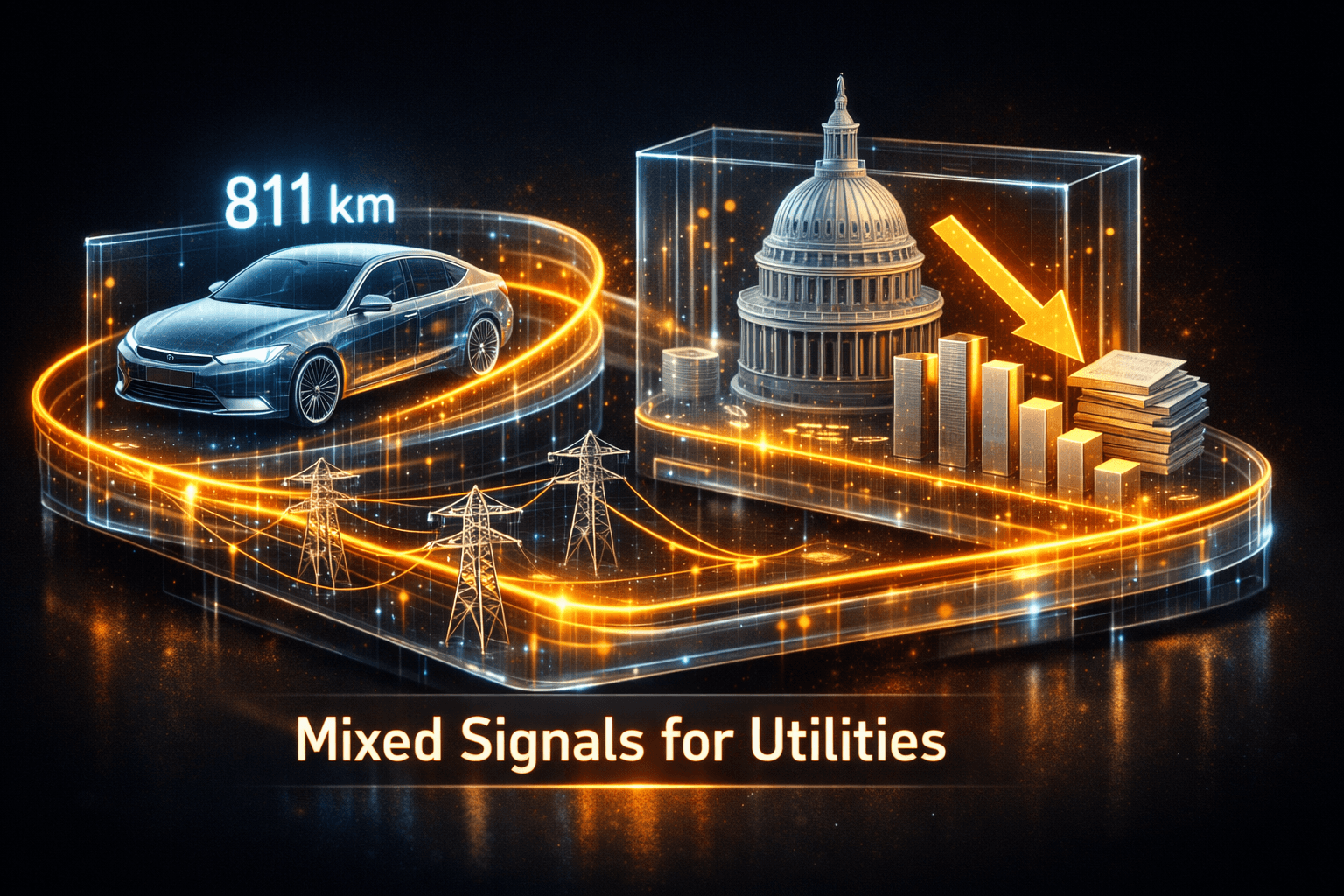
Two developments out of clean-energy and automotive coverage point in opposite directions for utilities and clean-technology investors. Li Auto's announcement of an 811 kilometer range for its new i6 signals stronger EV adoption and higher charging demand, which can be a tailwind for grid investment. At the same time a Department of Energy budget request that trims funding for certain clean-energy programs reduces federal support for electrification and applied research, creating uncertainty for policy-dependent projects.
Markets were closed Sunday, Oct 25, and you'll see trading resume on Monday, Oct 26. The headlines below matter for how utilities and adjacent clean-energy names may reopen, so you'll want to watch early-week flows and any congressional response to the budget request.
Market Highlights
Key facts and figures to keep in mind heading into the long weekend.
- Li Auto ($LI) revealed the new i6 achieves 811 kilometers, or about 504 miles, on a single charge, a figure that stands out in the EV space.
- The DOE budget request, released Oct 25, proposes cuts that eliminate some hydrogen-focused programs and reduce support for technologies tied to electrification and grid modernization.
- The Alex Gibney documentary "Musk" closed after one week in U.S. theaters, a cultural note that has modest implications for market narratives around technology leaders and public sentiment toward EV companies.
- With U.S. equities closed on Sunday, watch for positioning and headlines to drive moves when markets reopen Monday, Oct 26.
Key Developments
Li Auto i6: Long range, bigger charging demand
Li Auto's i6 posting an 811 km (504 mile) range is noteworthy because longer-range EVs reduce range anxiety and broaden use cases for family and commercial buyers. For utilities and charging-network companies, longer-range EVs still increase total electricity demand as more vehicles hit the road and charging sessions grow in aggregate.
That means you should keep an eye on firms tied to charging infrastructure, battery supply chains, and grid upgrades. Analysts note that sustained improvements in EV range can shift charging patterns toward overnight and destination charging, which affects distribution planning and demand profiles for companies like NextEra Energy (NEE) and regional utilities.
DOE budget request: Cuts complicate the federal support picture
The Department of Energy budget request reported Oct 25 seeks to scale back or eliminate some programs that supported hydrogen and other experimental technology bets while also reducing funding for applied electrification research. That could slow grant-backed pilots, grid modernization pilots, and early-stage commercialization that utilities and developers have relied on.
Congress ultimately decides final appropriations, so this is a headline that creates runway uncertainty rather than an immediate cash flow shock. Still, reduced federal investment can lengthen timelines for grid upgrades and make private financing more expensive for some projects, a risk you should factor into assessments of capital-intensive utility plans.
Media moment: Musk documentary closes early
The early closure of the Elon Musk documentary after one week in theaters is mainly a cultural story, but it contributes to the broader sentiment environment around high-profile clean-technology leaders. Media narratives can affect short-term investor attention and social sentiment, especially for high-volatility names such as Tesla (TSLA).
Will that shift in attention have lasting effects on utilities or clean-energy stocks? Probably limited direct impact, yet narrative shifts sometimes amplify volatility in adjacent sectors, so monitor sentiment indicators when markets reopen.
What to Watch
Here are the catalysts and risks you'll want on your radar as trading resumes Monday.
- Congressional response to the DOE budget request, and any amendments that restore funding, will be the key policy catalyst to watch. Legislative changes could reverse or soften the proposed cuts.
- Utility and grid operator updates on capacity planning and rate cases, especially any guidance that reflects higher EV load forecasts. Those filings can reshape expected capex and revenue profiles.
- Announcements from charging-network operators, battery suppliers, and auto OEMs about deployments, partnerships, or supply contracts. Real-world rollouts will drive demand assumptions for the grid.
- Short-term market flow when U.S. markets reopen on Oct 26, including how investors reprice policy risk versus demand upside. You'll want to watch early-session volume and sector leadership.
- Potential macro cross-currents, such as interest-rate moves or commodity price swings, which can change financing costs for capital-heavy utility projects.
Bottom Line
- Li Auto's 811 km i6 is a bullish signal for long-term electrification and charging demand, which supports utility revenue through higher electricity consumption.
- The DOE budget request introduces policy uncertainty by cutting programs that help commercialize electrification technologies, a bearish factor for policy-dependent projects.
- Net effect for the utilities sector is mixed, so a selective approach makes sense as you assess company-specific exposure to EV demand and reliance on federal funding.
- Watch congressional action, utility filings, and early trading on Monday Oct 26 to see which narrative wins in the near term.
- This summary is for informational purposes only. Analysts note trends and data, but this is not personalized investment advice and does not recommend buying, selling, or holding any specific security.
FAQ
Q: How does a longer-range EV like Li Auto's i6 affect utility demand? A: Longer range tends to increase overall EV adoption and total electricity consumption, changing charging patterns and boosting load for distribution and retail electricity providers.
Q: Will DOE budget cuts stop clean-energy projects immediately? A: Not immediately, because Congress must approve final appropriations. The request increases uncertainty and may slow future pilot funding and commercialization timelines.
Q: Should you change your utility exposure because of these headlines? A: Consider company-specific factors such as exposure to EV-driven demand, reliance on federal grants, and regulated rate frameworks. This article offers analysis but not personalized investment recommendations.