The Big Picture
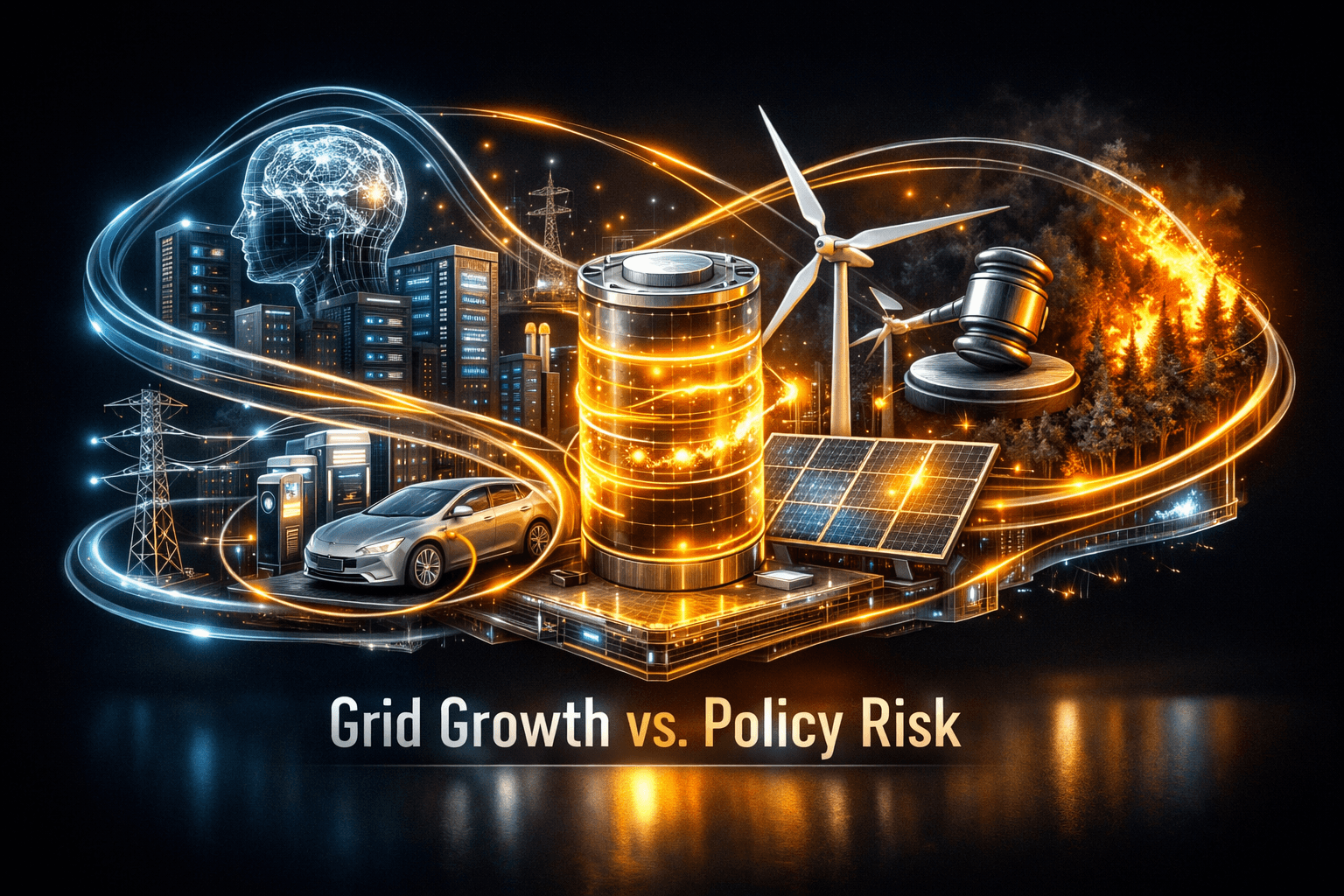
Electricity demand is rising fast, and that trend is reshaping investment themes across generation, storage, and grid technology. Clean energy deployment and improved reliability metrics are meaningful positives, but permitting fights and regulatory exposure mean you should watch policy as closely as capacity builds.
Markets were closed Sunday, Oct 25. The developments below reflect reporting over the last 48 hours and should be read as you position for the next session, which opens Monday, Oct 26.
Market Highlights
Here are the concrete data points and company-level items that matter for the utilities sector right now.
- Surging demand backdrop: CleanTechnica notes AI data centers, EVs, and industrial electrification are driving higher electricity use and renewed investor focus on solar capacity and grid expansion.
- Battery reliability improves dramatically: EPRI data cited by Power Engineering show lithium-ion battery energy storage system annual failure rates plunged 98% between 2018 and 2025, even as deployments scaled up globally.
- Nuclear workforce and projects ramping: Siemens Energy reports it has more than tripled nuclear training activity as restarts and upgrades accelerate. Indiana proposals target roughly 6.0 GW via CANDU reactors plus about 960 MW of SMRs from other partnerships.
- Policy and permitting flashpoints: The Trump administration seeks reconsideration of a major offshore wind permit, marking the fourth project recently targeted. At the same time, a House bill HR 10851 aims to legalize nationwide plug-in solar use at the consumer level.
- Utility governance and credit risk: PG&E CEO Patti Poppe warns wildfire policy reform is needed to manage tail risk and preserve credit quality, highlighting ongoing regulatory exposure for investor considerations.
Key Developments
Solar and demand growth reshape capacity math
CleanTechnica frames solar as a focal infrastructure play as electricity demand climbs from AI data centers, EV fleets, and industrial electrification. Analysts and developers are recalculating required scale to meet new load curves. For you, that means solar project pipelines and interconnection queues will stay central to any growth thesis.
Storage reliability improves, lowering operational risk
Power Engineering reports an EPRI white paper showing a 98% drop in lithium-ion BESS annual failure rates from 2018 to 2025. That drastic improvement suggests system operators and project financiers may be more comfortable scaling storage into grids worldwide. Would you view storage as less risky now than two years ago? The data say it’s becoming a more dependable grid asset.
Nuclear restarts, SMRs and workforce buildout
Siemens Energy’s ramp in nuclear training reflects a tangible shift: restarts and upgrades today are training the next generation for new builds tomorrow. In Indiana, public and private partners proposed a mix of CANDU reactors totaling 6.0 GW and 12 small modular reactors adding about 960 MW. Those plans signal long-term capacity commitments and supply chain hiring that could benefit equipment and services providers.
Offshore wind permitting under renewed legal pressure
Renewable Energy World reports the administration has asked a judge to allow reconsideration of a federal permit for a large offshore wind farm, the fourth project recently targeted. Faster approvals were meant to speed new-build timelines, but legal challenges mean developers and investors face schedule risk and potential cost escalation.
What to Watch
Keep an eye on both the policy calendar and project pipelines. You’ll want to know whether permitting fights or legislative action slow construction or raise financing costs.
- Regulatory rulings: Watch court filings and federal agency responses on offshore wind permits, and track any new guidance that could change project timelines.
- Federal and state legislation: Monitor progress of HR 10851 on plug-in solar and any state bills that could further liberalize consumer-level solar devices.
- Utility credit and wildfire policy: Follow updates from PG&E (PCG) and state regulators on wildfire liability reforms because ratings and financing costs hinge on these outcomes.
- Project milestones: Look for construction starts, interconnection agreements, and procurement announcements for solar, storage and SMR projects as signs that backlogs are turning into delivered capacity.
- Supply chain and workforce signals: Siemens Energy’s training expansion is a leading indicator. Hiring and vendor contract announcements will show whether the sector is ready to scale new nuclear and grid projects.
Bottom Line
- Electricity demand tailwinds from AI, EVs and electrification support long-term growth in solar, storage and new-build nuclear capacity.
- Reliability gains in battery storage, evidenced by a 98% drop in failure rates, reduce operational risk and improve developer economics.
- Permitting and legal challenges to offshore wind, along with shifting emissions policy in other regions, create near-term timing and regulatory risk.
- Wildfire liability and credit concerns at major utilities like $PCG mean legislative and regulatory outcomes could materially affect financing costs and valuations.
- Be selective: short-term volatility around permits and policy is likely even as technology and deployment fundamentals improve, so watch catalysts and timelines closely.
FAQ
Q: How does improved battery reliability affect grid investments? A: Data showing a 98% decline in annual BESS failure rates suggests storage can be deployed more confidently, which helps balancing, peak shaving, and renewable integration strategies.
Q: Will offshore wind permitting fights stop buildouts? A: Legal challenges increase timeline and cost risk but do not necessarily stop projects. Developers and purchasers will need contingency plans and flexible contracting to manage delays.
Q: Should I worry about PG&E credit risk for the utilities sector? A: PG&E’s wildfire-related credit risks are material and could influence investor sentiment for regional peers, particularly where liability frameworks and regulatory relief are unresolved.