The Big Picture
Large-scale clean energy and storage moved from forecast to execution today, and that shift matters to you because it’s changing where utilities will invest capital over the next several years. Regulators and developers reported multiple fast-tracks, construction starts, and cost signals that make batteries not just a niche option but a mainstream resource in many markets.
At the same time, gas and microgrid projects landed meaningful commercial wins, underscoring that the energy transition will be mixed and pragmatic. You should watch how policy, interconnection timelines, and rate filings shape who benefits most from this wave of projects.
Market Highlights
Quick facts and numbers to scan before you dive deeper.
- Black Hills Corporation $BKH announced plans for 564 MW of new natural gas generation and will manage a 2.1 GW microgrid for a Google data center in Cheyenne, Wyoming, a deal valued at roughly $1.8 billion.
- PJM approved an expedited interconnection study for nearly 1.7 GW of storage projects from Engie $ENGI and a 455 MW gas-fired uprate from LS Power, with the expectation of commercial operation by mid-2029.
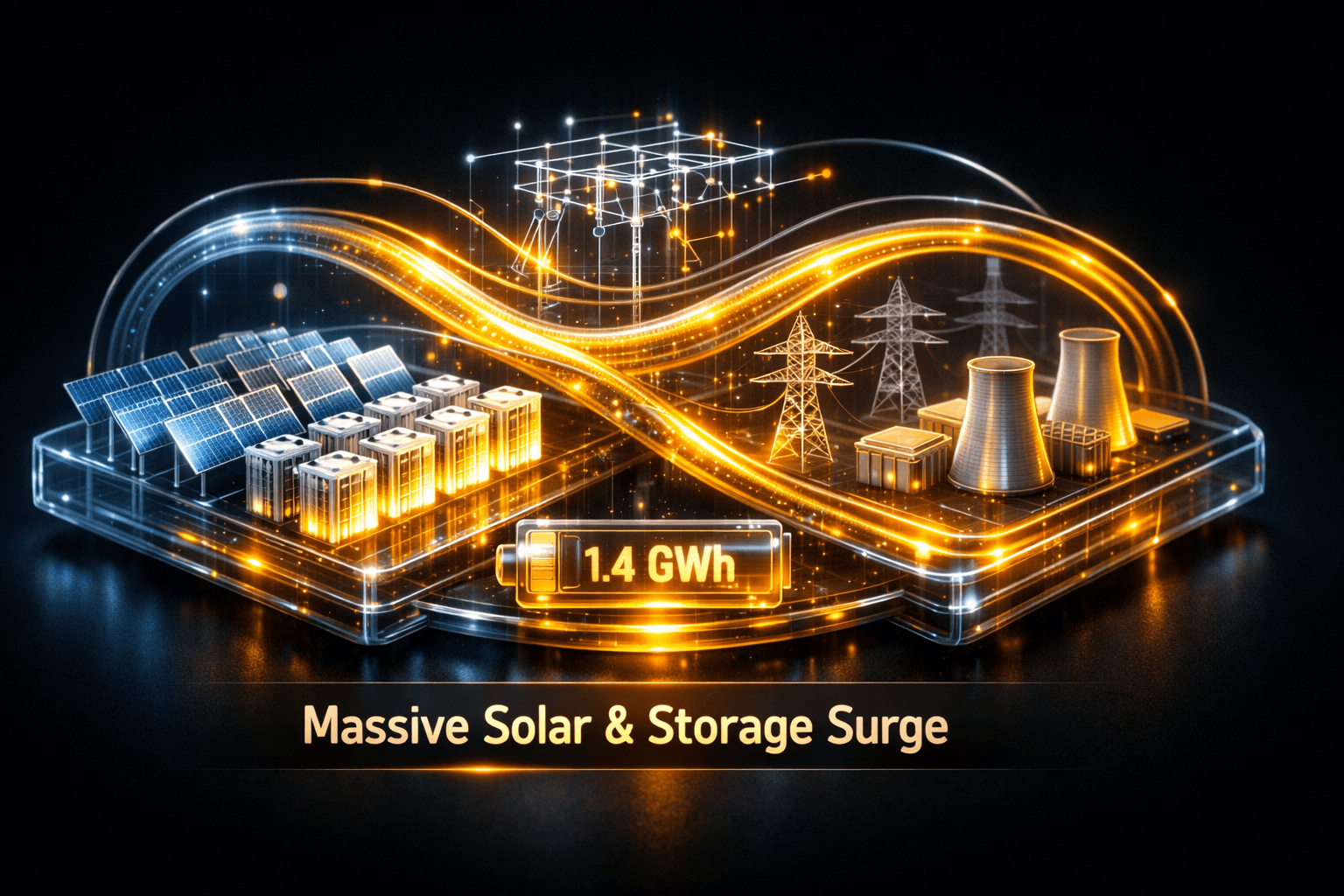
- Project Sterling in Mohave County, Arizona moved to construction, a 509-MW solar field paired with 1.4 GWh of storage, with Tesla $TSLA already signed to the PPA.
- Wood Mackenzie’s modeling shows 4-hour battery storage is now cheaper to install than open-cycle gas turbines across 43 modeled markets, shifting long-term generation economics.
- Regulatory and customer impacts: Q3 utility rate requests jumped to $4.5 billion, more than double Q3 2025, signaling higher near-term revenue pressure for ratepayers and revenue opportunity for utilities.
Key Developments
Storage costs and deployment accelerate
Wood Mackenzie’s LCOE analysis and multiple project approvals today underline a structural change: four-hour batteries are now cheaper to install than many gas options in modeled markets. That cost crossover is prompting faster approvals and construction starts for storage paired with solar and standalone battery projects.
For you, that means the utility resource mix is likely to include more storage capacity, which changes how peak needs are met and where future capital is directed.
GW-scale interconnections fast-tracked in PJM
PJM’s decision to fast-track Engie’s nearly 1.7 GW of storage and LS Power’s 455 MW uprate compresses development timelines and reduces a common barrier to project economics. The operator expects these resources online by mid-2029, which could relieve capacity tightness and support renewable integration.
The practical implication is faster revenue streams for developers and more near-term supply for the market, while interconnection capacity will remain a pivot point for new entrants.
Gas plants and microgrids still play a role
Black Hills’ $1.8 billion commitment to 564 MW of new gas generation alongside a 2.1 GW microgrid contract to serve $GOOGL’s data center shows that large power users and utilities are choosing hybrid approaches. Data centers are signing bespoke deals that blend dispatchable gas and large microgrids with on-site resources.
This reinforces that the energy transition is pragmatic. You should expect capital allocation to include both renewables with storage and retained investments in flexible gas where reliability or local needs demand it.
What to Watch
Here are the catalysts and risks that could move the sector next week and into Q4.
- Interconnection timelines and rule changes in regional transmission organizations, especially PJM, will be critical. Faster approvals can boost developer returns and accelerate project online dates.
- Rate filings are rising, with Q3 requests hitting $4.5 billion. Track state commission responses because approved increases affect utility cash flow and affordability for your customers.
- Keep an eye on Wood Mackenzie and other LCOE updates, they drive planning assumptions. If battery costs continue to fall or battery duration economics shift, procurement strategies will follow.
- Policy moves like Massachusetts redirecting clean energy funds to winter heating relief show state-level tradeoffs between climate and affordability priorities. That creates regulatory uncertainty for some clean energy incentives.
- Corporate offtake activity and data center demand will shape regional project pipelines. Watch announcements from large tech customers and major developers for new microgrid or PPA deals.
Bottom Line
- Storage is crossing an economic threshold, and today's approvals and starts make the transition more tangible.
- Solar plus storage projects are moving from planning to construction, which should accelerate near-term equipment and labor demand.
- Gas and microgrids remain commercially relevant as reliability and large customer contracts persist.
- Rising rate requests suggest utilities are seeking more revenue to fund modernization, but regulatory approvals will determine how quickly that reaches financials and customers.
- Watch interconnection processes, LCOE updates, and corporate offtake as the main drivers of near-term sector performance.
FAQ Section
Q: How will cheaper battery storage affect utility planning? A: Data suggests planners will favor more storage capacity for peak shifting and reserve services, which can reduce reliance on simple-cycle gas in many markets.
Q: Should you expect utilities to stop investing in gas plants? A: No, many utilities and large customers are pursuing mixed solutions, using gas where dispatchable power or grid resilience is needed, while adding storage and renewables for cost and emissions benefits.
Q: What near-term events could change the picture? A: Watch interconnection rulings, state regulatory decisions on rate requests, and new corporate PPAs or microgrid contracts, as these items directly affect project economics and timing.
This article is for informational purposes only and does not constitute investment advice. Analysts note trends in costs and approvals, and data suggests momentum for storage, but outcomes depend on policy and market execution.