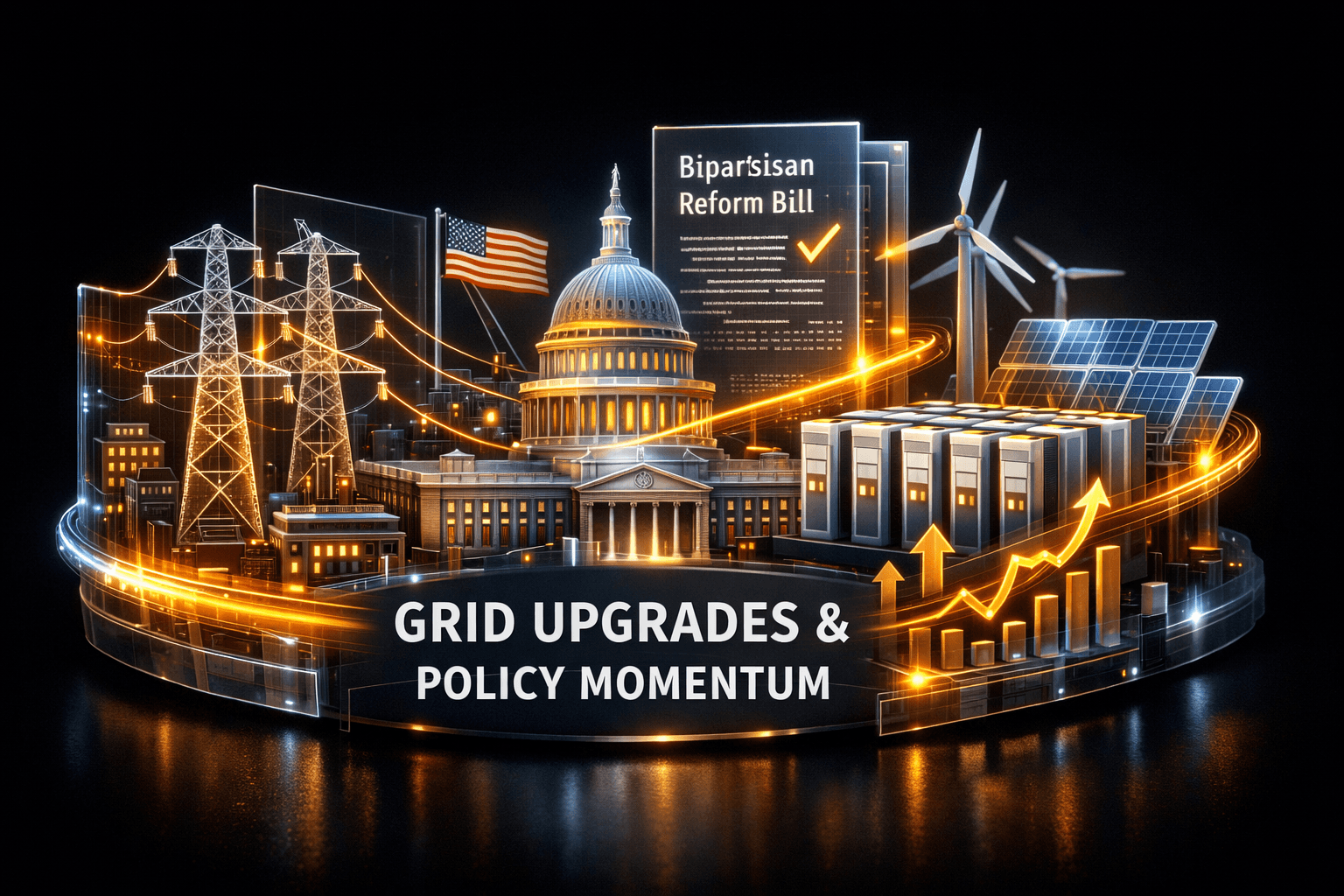
The Big Picture
Grid resilience and clean-energy project financing are shaping the Utilities narrative this morning, with new technology pilots, policy proposals, and tax-credit-driven investments pushing upgrades and deployments. You should pay attention, because these developments affect demand patterns, capital spending, and regulatory incentives that will shape utility earnings and project pipelines over the coming quarters.
Taken together the news points to momentum in grid modernization and distributed resources, while raising a few operational and demand questions that investors and customers will want clarity on.
Market Highlights
Quick facts and market-moving items to note before the opening bell and in early trading today.
- FedEx order: $FDX confirmed an order for 2,000 electric delivery trucks via a California startup deal reported by CleanTechnica, a sign of continued fleet electrification that adds distributed EV load over time.
- EV electricity growth: U.S. light-duty EVs consumed about 8% more electricity in H1 2026 versus 2H25, down from prior six-month growth rates of 13 to 24 percent.
- Community and project wins: Central Hudson Gas & Electric, serving roughly 315,000 electricity and 90,000 gas customers, won POWER Magazine's Community Impact Award for local programs and resilience work.
- Project scale examples: A Sisters of Mercy installation opened in Belmont, North Carolina, at 680 kilowatts, and Silfab Solar is moving its Fort Mill, SC, solar-cell plant into full production after third-party safety testing.
Key Developments
Moneypoint Synchronous Condenser Advances Grid Stability
POWER Magazine named the Moneypoint synchronous condenser project a Reinvention Award finalist, highlighting how synchronous condensers help integrate intermittent renewables by providing inertia and voltage support. For utilities and grid operators, that technology reduces the need for fossil backup and can lower the cost of connecting large volumes of wind and solar.
Policy Push: Bipartisan Grid Reform Bill Introduced
A group of senators introduced the Bipartisan American Affordability and Jobs Act of 2026, which includes provisions aimed at electric grid reform. Sponsors include Sens. Shelley Moore Capito, Sheldon Whitehouse, Mike Lee and Martin Heinrich, and the bill could unlock federal support for modernization projects if it advances.
Will the bill clear committee hurdles and translate into funding that speeds upgrades? That will be a key question for utilities and their capital plans in the months ahead.
Project Finance and On-the-Ground Wins
Facilities are increasingly using the 48E investment tax credit to make battery storage and paired projects pencil out, according to Utility Dive. That tax support is helping building operators and utilities pursue storage for rate arbitrage and resiliency.
At the project level Silfab Solar’s Fort Mill plant is moving to full production after third-party safety tests, and a 680 kW ground-mounted solar system in Belmont, NC opened after local ordinance changes. These stories show both the financing and permitting hurdles are being navigated successfully in many cases.
What to Watch
Here are the catalysts and risks that could move utility stocks and project economics in the coming days and weeks.
- Legislative progress: Monitor developments on the Bipartisan American Affordability and Jobs Act of 2026. Passage or amendments that expand grid funding could accelerate utility capital spending plans.
- 48E implementation details: Watch IRS guidance and state-level uptake that will determine how quickly developers and facilities claim credits and begin battery projects.
- Grid reliability signals: The high-voltage insulator report flagged degradation risks from salt, dust and UV exposure. Track utility inspection reports and outage filings to see if asset-condition issues trigger incremental O&M spending.
- EV load growth: Slower electricity consumption from EVs, with 8 percent growth in H1 2026, may damp near-term load forecasts. Are utilities revising load projections and rate cases in response?
- Company-level operational updates: Keep an eye on Silfab’s ramp at Fort Mill and the Moneypoint synchronous condenser pilot schedule. Project delays or commissioning issues can affect near-term costs and timing.
Bottom Line
- Policy and tax-credit support are creating tangible demand for storage, grid upgrades and distributed solar installations.
- Technology pilots like synchronous condensers, and facility-level wins such as Silfab moving to production, add momentum to modernization plans.
- Operational risks remain, including aging insulation assets and slower EV electricity growth, so you should watch asset-condition reports and updated load forecasts.
- Legislative outcomes for the grid reform bill and final IRS guidance on 48E will be major catalysts for project pipelines.
- Data suggests the sector has upside from modernization and financing trends, but execution and timing will determine near-term market reactions.
FAQ Section
Q: How will the 48E tax credit affect utility projects? A: 48E makes battery storage and paired projects more financially attractive by providing investment tax credits that lower upfront costs and improve project returns, which should accelerate deployments.
Q: What is a synchronous condenser and why does it matter? A: A synchronous condenser provides inertia and voltage control that helps stabilize the grid as more wind and solar are added, reducing the need for conventional spinning reserves.
Q: Should you expect immediate load growth from EV adoption? A: Not necessarily, recent data shows EV electricity use rose 8 percent in early 2026, slower than prior periods, so widespread utility load growth may be gradual and localized.