The Big Picture
The Utilities sector opened this morning with concrete signs that clean-energy assets are moving from pilots to commercial scale, and that matters to you as an investor because it changes capital plans, revenue mix and regulatory conversations for utilities and developers.
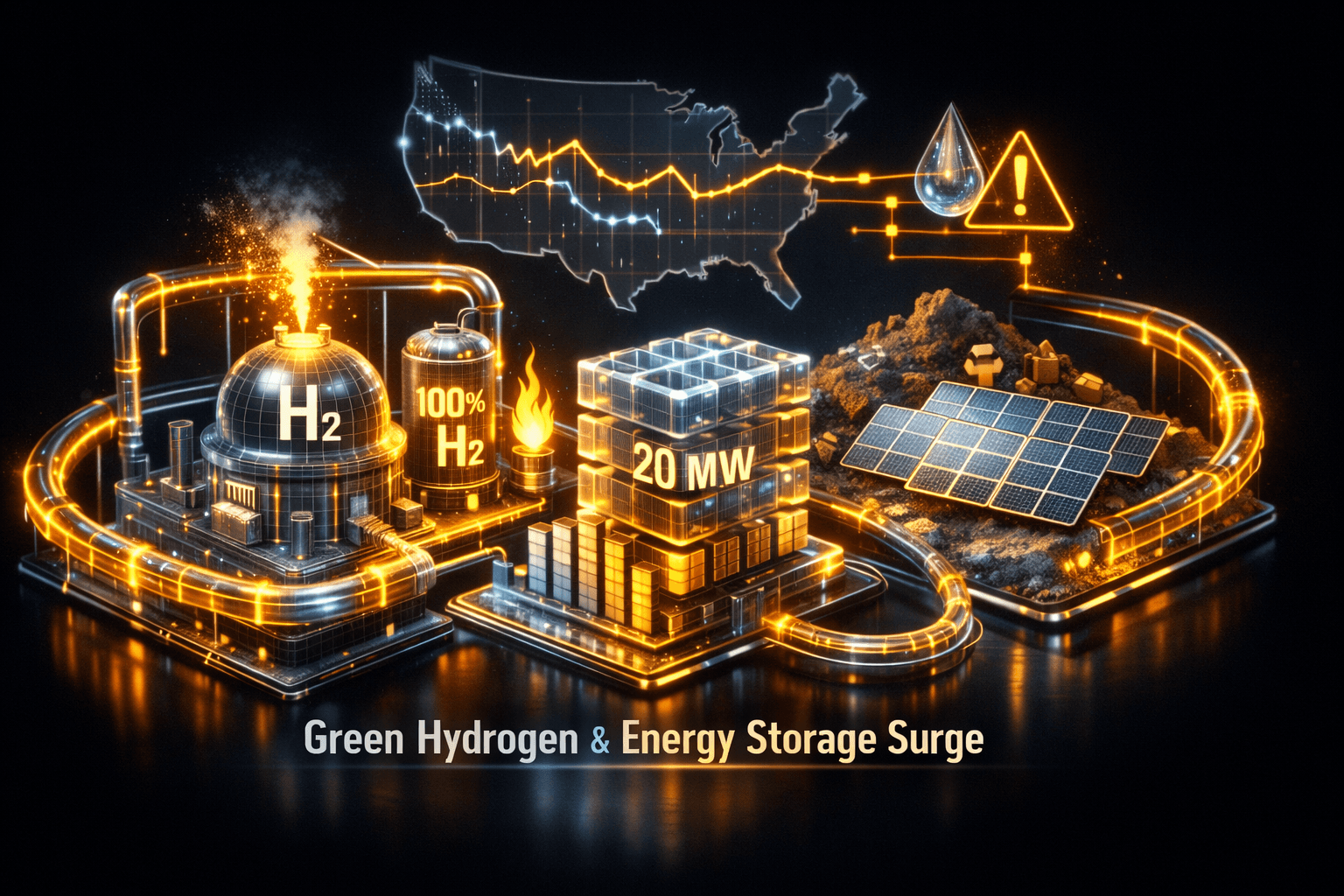
Florida’s DeBary complex becoming the first U.S. facility to produce, store and burn 100 percent green hydrogen is the most impactful development. At the same time a 20-MW battery energy storage system came online in the Bronx and municipal landfill solar projects advanced, underscoring growth across hydrogen, storage and distributed generation.
Market Highlights
Quick facts to keep on your radar this morning.
- DeBary Hydrogen Production Storage System, Florida: first U.S. plant to produce, store and burn 100% green hydrogen for power generation, winner of POWER's Top Plant Award.
- Hunts Point BESS, Bronx: 20 MW battery energy storage system expected to back up nearly 20,000 homes during peak hours, built by NineDot Energy.
- Cleveland municipal solar: two landfill-based arrays in design, a 7 MW project at Kolthoff Drive plus a 2 MW installation at a second site.
- Geely and NIO Power: Geely secures a 30% stake in NIO Power, a notable development for battery swapping and EV infrastructure, relevant to grid load profiles and charging patterns, see $NIO coverage for context.
- Energy resilience risk: Moldova declared a 60-day energy and water emergency due to drought and rising costs, highlighting hydro vulnerability and regional supply risks.
Key Developments
DeBary: First U.S. 100% green hydrogen plant goes commercial
POWER Magazine awarded the DeBary Hydrogen Production Storage System a Top Plant Award after it demonstrated the ability to produce, store and burn 100 percent green hydrogen for power generation. This is a milestone for utilities exploring hydrogen as a long-duration resource.
For you that means utilities and independent power producers may increase pilot-to-scale capital allocations for hydrogen projects, and analysts note hydrogen's role is likely to be most relevant where seasonal or long-duration storage is needed.
Battery storage expands in dense urban markets
NineDot Energy’s Hunts Point 20-MW BESS in the Bronx started operations, offering peak-hour support that can displace polluting generators and improve local reliability. The project size and location show storage is moving beyond utility-scale deserts into congested urban distribution systems.
Will more cities follow with community-scale storage? If you’re watching municipal procurement and state incentives, these projects could move the needle on interconnection timelines and distribution upgrades.
Solar on reclaimed land and grid durability advances
Cleveland’s plan to place 7 MW and 2 MW solar arrays on two city-owned landfills highlights an ongoing trend of using underutilized municipal land for renewables. These projects add local capacity and lower municipal bills over time.
At the same time, a POWER Magazine case study on phenolic coatings in heat recovery economizers and a Renewable Energy World conversation on grid modernization in New England emphasize that operational improvements and vendor-agnostic grid strategies are advancing alongside new generation.
What to Watch
Here are the catalysts and risks that could shift outcomes in the coming weeks and months.
- Regulatory shifts: The U.S. policy backdrop matters. Track state public utility commission dockets, federal grant awards and any federal rules that affect emissions and efficiency. Policy changes can reprice project economics quickly.
- Project commissioning and performance: Watch commissioning reports from DeBary and Hunts Point for capacity factors, ramp rates and fuel supply terms. Data suggests early operational metrics will shape investor confidence.
- Supply and interconnection: Interconnection queue timelines and equipment lead times remain bottlenecks. If you follow developers or utilities, check notices on major queue revisions and transformer availability.
- Weather and resource risk: Moldova’s 60-day emergency is a reminder drought and hydrology can stress systems. Dry conditions could reduce hydro output in regions you follow and increase reliance on firming capacity.
- EV infrastructure moves: The Geely 30 percent stake in NIO Power and ongoing EV technology debates, including $TSLA's autonomous tech coverage, will influence load shapes and timing of charging peaks.
Bottom Line
- Clean-energy deployments are gaining commercial traction, with green hydrogen, urban battery storage and landfill solar showing real scale and impact.
- Operational and grid strategy improvements are becoming as important as new generation for resilience and cost control, analysts note.
- Policy and weather remain meaningful risk factors, so monitor regulatory dockets and hydro conditions closely.
- EV infrastructure deals and technology shifts will affect utility load profiles and distribution investment needs.
- Data suggests selectivity matters; follow commissioning performance and interconnection updates to separate promising projects from higher-risk builds.
FAQ
Q: How significant is the DeBary green hydrogen milestone? A: It’s a notable commercial first in the U.S. showing hydrogen can be produced, stored and burned at scale, which could influence utility long-duration storage plans.
Q: Will the Hunts Point BESS reduce local pollution? A: The 20-MW system is expected to back up nearly 20,000 homes during peak hours and replace or reduce reliance on high-emission local generators at peak times.
Q: What immediate risks should I monitor? A: Watch policy developments, interconnection queue changes, equipment lead times and weather-driven resource risks like droughts that can change supply mixes quickly.