The Big Picture
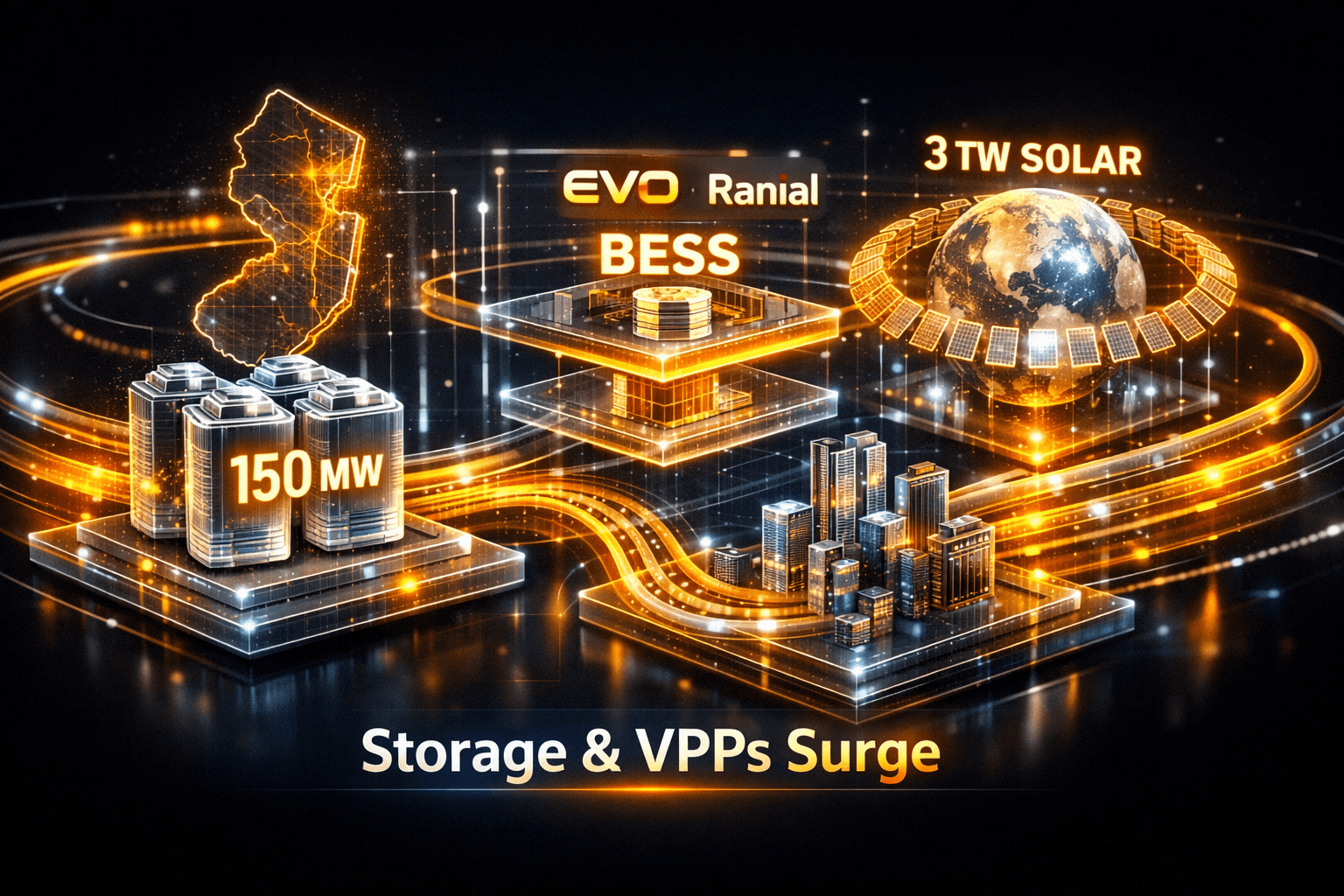
Today’s most impactful development for the Utilities sector is policy and project momentum around energy storage and distributed resources. New Jersey’s Board of Public Utilities proposed opening 150 megawatts of new storage capacity, including behind-the-meter residential batteries, and several industry moves pushed virtual power plants and commercial storage into the spotlight.
Why does this matter to you as an investor? Storage and VPPs are central to decarbonization and grid resilience, and policy plus commercial rollouts are starting to move the needle on deployment and revenue models. At the same time operational concerns in the West and hydrogen fuel chain issues keep resource adequacy squarely on the agenda.
Market Highlights
Trading today reflected a focus on storage, distributed energy services, and infrastructure needs driven by AI and electrification. Here are the quick facts you should know from the headlines.
- Policy: The New Jersey Board of Public Utilities proposed expanding the Garden State Energy Storage Program by 150 MW, including behind-the-meter residential systems.
- Commercial rollouts: EVO Power USA and Ranial Systems launched a nationwide battery and energy management service for commercial and industrial customers using integrated BESS and AI-enabled operations software.
- Industry views: Experts emphasized that strong compensation, metering and customer protections are needed to drive participation in utility virtual power plants.
- Sector milestone: Global installed solar capacity surpassed 3 terawatts, underscoring sustained demand for generation and storage integration.
- Operational risks: Western market experts flagged grid-flow mismatches tied to WECC-1 RAS rules, and OCTA disclosed another $27.6 million in hydrogen spending after fuel chain issues.
- Corporate note: A fraud lawsuit involving $TSLA and a high-profile promotion advanced toward a class action determination, a legal development that could shape public perception of EV and cleantech firms.
Key Developments
New Jersey proposes 150 MW storage expansion
The New Jersey Board of Public Utilities released a proposal to expand the Garden State Energy Storage Program by 150 MW statewide, and for the first time it would explicitly include behind-the-meter residential battery storage. This is a direct policy push to accelerate distributed storage deployment under Gov. Sherrill’s Executive Order No. 2.
Implication for investors: policy certainty at the state level tends to catalyze project pipelines and local supply chains. You should watch procurement timelines and incentive design because they will determine developer economics and interconnection demand.
VPPs and commercial storage scale up
Utility Dive’s coverage highlighted that virtual power plant programs are broadening their value proposition to affordability, reliability and resilience. Experts say robust compensation and metering plus customer protections will be essential to get consumers to participate.
On the commercial front, EVO Power and Ranial announced a nationwide battery and energy management offering, pairing integrated battery systems with AI-enabled operations software. That combination points to faster rollouts for C&I storage and new revenue stacking opportunities for DERs.
Solar hits 3 terawatts and AI changes energy economics
CleanTech reports global solar installations have passed the 3 terawatt mark, which adds urgency to storage and grid upgrades. Meanwhile a POWER Magazine analysis described how AI infrastructure decisions now include tax and energy strategies, increasing demand for reliable, dispatchable power near data centers.
Implication for investors: growing solar capacity and AI-driven data center builds will push more capacity onto grids and boost demand for storage, grid services, and transmission upgrades. You’ll want to monitor corporate procurement trends and tax-driven site decisions.
What to Watch
Looking ahead, several catalysts will shape the sector over the next weeks and months. Regulatory detail, project awards, and reliability indicators will determine who benefits and who faces pressure.
- Regulatory actions: Track the NJBPU’s rulemaking timeline and incentive details for the Garden State Energy Storage Program. Those rules will influence developer returns and residential adoption.
- VPP rulemaking and tariffs: Watch state and utility proposals for compensation, metering standards, and customer protections that affect virtual power plant economics.
- Project pipelines: Monitor announcements from storage integrators and software vendors for commercial and industrial deployments that signal scaling beyond pilot stages.
- Grid reliability signals: Pay attention to WECC and BPA comments on south-to-north flows and any actions to revise RAS logic. Could current protections be insufficient as flows evolve?
- Hydrogen supply chain risk: OCTA’s renewed spending underscores persistent fuel chain weaknesses that fleet operators and investors should track if hydrogen is in your radar.
- Legal and reputational developments: The $TSLA lawsuit moving toward class action status may affect sentiment around EV-linked supply chains and market narratives.
Bottom Line
- Policy and commercial momentum is bullish for storage and distributed energy, with New Jersey’s 150 MW proposal a notable near-term catalyst.
- VPPs and BESS software partnerships are scaling, suggesting new revenue streams for DER operators and services businesses.
- Rising solar capacity and AI-driven data center economics will increase demand for dispatchable resources and grid services.
- Operational and supply chain risks remain, especially in the Western grid and hydrogen fuel chains, so you should keep an eye on reliability signals.
- Analysts note these developments shift the competitive landscape, but outcomes depend on rule details, procurement timelines and the success of commercial rollouts.
FAQ Section
Q: How big is New Jersey’s proposed storage expansion and who benefits? A: The NJBPU proposal would open 150 MW of storage statewide and include behind-the-meter residential batteries, which benefits developers, integrators, and customers seeking resilience.
Q: What will drive customer participation in virtual power plants? A: Experts say fair compensation, accurate metering, and strong consumer protections are key to getting customers to enroll and provide dispatchable capacity.
Q: Should I be concerned about grid reliability risks in the West? A: Data from Western market workshops highlights evolving power flow patterns and gaps in current RAS measures, so reliability is a valid concern and you should monitor WECC and utility updates.