The Big Picture
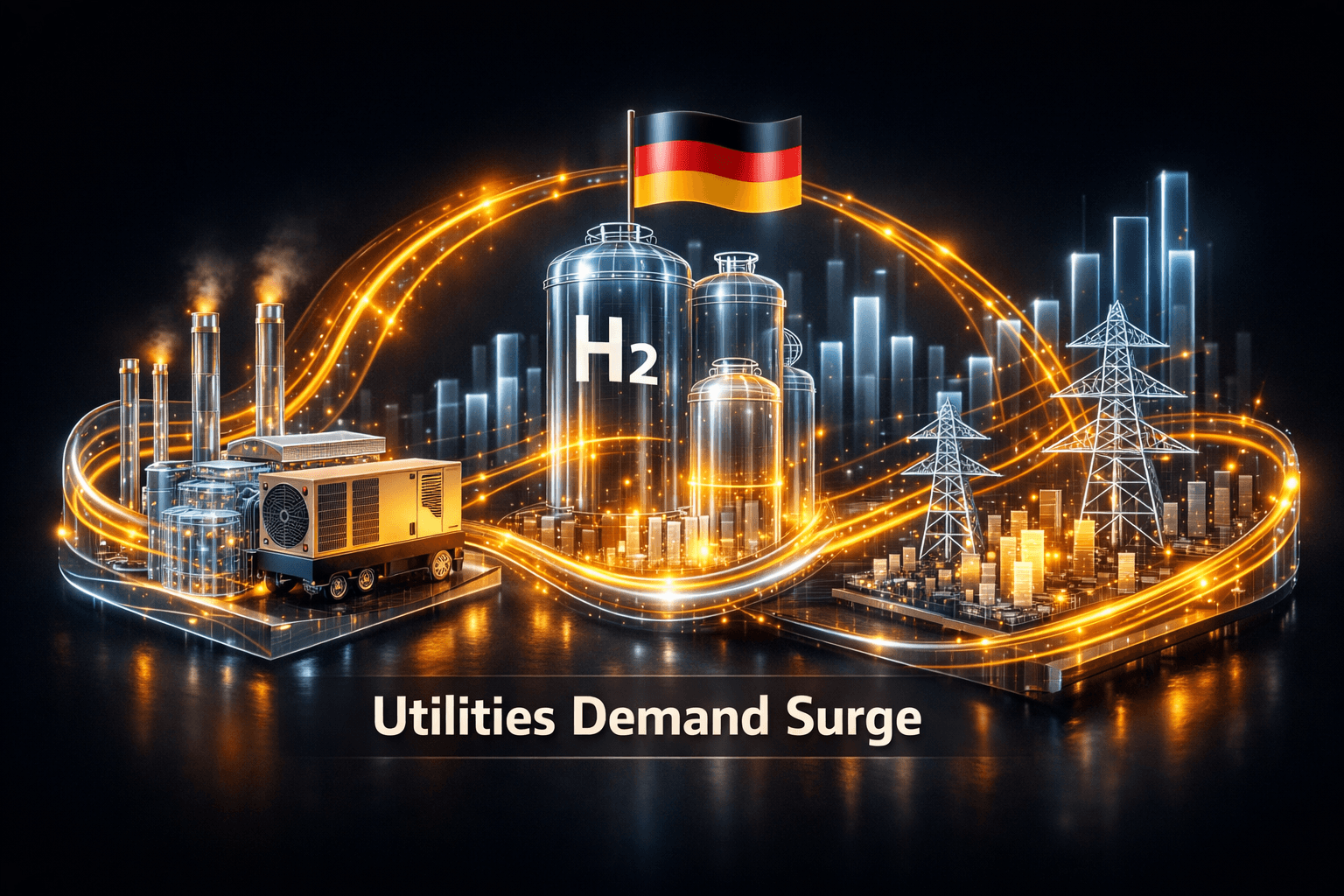
Demand is the headline for utilities this morning, and it is hard to miss. From Germany's nearly 6 GW of paid reservations for a hydrogen core network to U.S. utilities signing multi-gigawatt large-load deals, the sector is showing tangible commercial traction across generation, storage and new fuel chains.
That momentum matters because it strengthens revenue visibility for equipment makers, project developers and regulated utilities, and it signals rising capacity needs for grids that are already strained in places. If you follow utility-adjacent names, today's news suggests the market is shifting from promises to booked projects and sales.
Market Highlights
Quick facts and numbers to start your trading day.
- Germany hydrogen reservations: FNB Gas reported nearly 6 GW of paid reservations for the emerging hydrogen core network, a sign of commercial interest in green hydrogen capacity.
- Caterpillar, $CAT: Power generation retail sales jumped 72% year over year and total sales topped $20 billion, driven in part by demand for data center generators.
- Evergy, $EVRG: The utility disclosed 3 GW of large loads already signed and a 5 GW generation pipeline, with 1 to 2 GW in advanced discussions.
- Storage and distributed projects: Base Power raised roughly $1 billion and launched a battery product, and Eolian started PJM's largest BESS, while new pay-as-you-go residential battery models are expanding in more markets.
- Community and commercial solar: Multiple small projects shipped, including a rooftop system at Andover Elementary in Connecticut and a 1.3 MW rooftop and carport system in Cypress, Texas.
Key Developments
Hydrogen reservations show early commercial demand
FNB Gas's revelation of nearly 6 GW of paid reservations in Germany is the clearest market signal yet that industrial and transport customers are starting to commit budget to hydrogen infrastructure. For investors, this is proof of concept that hydrogen can move from pilots to contracted capacity, though developers will still have to convert reservations into financed projects and long-term offtakes.
Data center demand fuels equipment and generation sales
$CAT reported power generation retail sales rose 72% year over year and total revenue above $20 billion, citing strong demand for data center generators. At the same time, reporting that the largest single pollution source in the U.S. may be an Amazon AI data center points to rapidly growing electricity and onsite generation needs for hyperscalers. That keeps OEMs and generator-focused suppliers in focus as grid-intensive customers expand.
Utilities and storage pipelines expand in parallel
Evergy's disclosure of 3 GW of signed large-load deals and a 5 GW generation pipeline demonstrates a similar trend in the regulated utility space where large commercial customers and new loads are locking in service. On the storage front, Base Power's funding, Eolian's PJM BESS construction and pay-as-you-go battery pilots show developers are stacking solutions to address congestion and capacity needs. Together these items suggest both centralized and distributed resources will be needed to meet near-term demand.
What to Watch
Expect the next waves of news to determine which companies convert promise into profits. Which developer actually moves hydrogen reservations to construction? How quickly do data center operators finalize long-term power arrangements? And how will storage leasing models scale outside tight VPP markets?
- Hydrogen project milestones: Look for firm financing announcements, construction starts or offtake contracts tied to the 6 GW reservations in Germany, because conversions matter more than headlines.
- Utility procurement and contracts: Track Evergy for PPAs, interconnection approvals and the conversion of advanced discussions into signed agreements for the additional 1 to 2 GW it mentioned.
- Storage business models: Monitor announcements from Base Power, Palmetto-type platforms and utilities on virtual power plant enrollments and lease terms, especially in congested regions like parts of PJM and California.
- Equipment order books: Watch $CAT and other OEMs for order backlog updates and production ramp plans, since generator and engine demand is rising with data center growth.
- Regulatory and permitting hurdles: You should watch grid interconnection timelines and environmental approvals, because permitting delays remain a common showstopper.
Need a shorter list of immediate catalysts? Earnings updates, project finance closings and grid interconnection decisions will move shares and project timelines in the coming weeks.
Bottom Line
- Demand is expanding across fuels and technologies, from hydrogen reservations in Germany to multi-gigawatt utility pipelines in the U.S.
- Equipment makers and services firms are seeing tangible revenue growth, exemplified by $CAT's 72% YOY gain in generation retail sales.
- Storage and new commercial models, including pay-as-you-go batteries and large BESS builds, are bridging gaps between intermittent supply and fast-growing load pockets.
- Conversion risk remains, so watch project finance, permitting and firm offtakes as the tests of whether contracts become assets.
- Analysts note this looks like the tip of the iceberg for capacity demand, but timelines will be staggered and selective exposure will matter for your portfolio.
FAQ Section
Q: How real is the Germany 6 GW hydrogen reservation number? A: The 6 GW figure comes from FNB Gas as paid reservations, signaling commercial interest, but analysts caution reservations must be followed by financing and construction to become reliable capacity.
Q: Will data center growth boost generator and grid demand? A: Yes, manufacturers like $CAT report rising sales to meet data center needs, and large-scale AI sites are increasing demand for both onsite generation and grid-delivered power.
Q: Are pay-as-you-go batteries viable outside pilot markets? A: Experts say lease models can work where virtual power plants and persistent congestion create revenue streams, and you should watch scalability announcements and enrollment rates.