The Big Picture
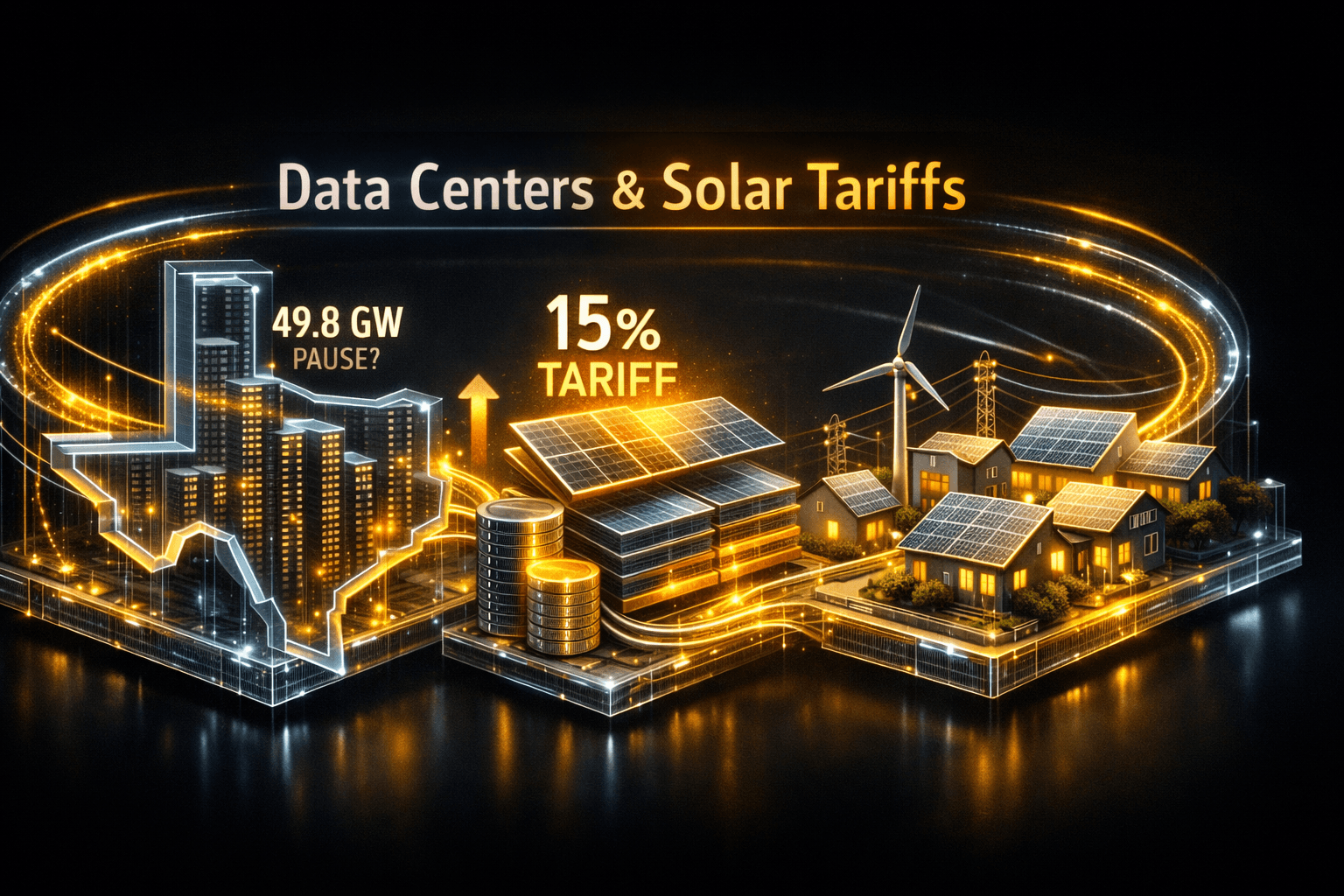
A regulatory tale of two forces is dominating the utilities landscape this morning: a major Texas audit that could stall nearly 50 GW of data center demand and a 15% U.S. tariff on imported polysilicon that will raise costs across the solar supply chain. Investors and grid planners alike will be parsing the near-term impacts on demand growth, project economics and rate cases.
At the same time you can see continued signs of practical electrification and community-scale clean energy solutions. Novel financing for a 110-MW Texas solar project and a 1.8-MW Solar for All installation in Washington, D.C. show momentum, even as domestic manufacturing and panel pricing face new headwinds.
Market Highlights
Quick facts and the numbers you need up front.
- ERCOT audit impact: BloombergNEF warns Gov. Greg Abbott’s pause could delay 49.8 GW of new data center load and raise project costs by as much as $15 billion, highlighting a major near-term demand uncertainty for Texas, a key market for some utilities and developers.
- Polysilicon tariffs: The U.S. Sec. 232 decision imposes a 15% tariff on imported polysilicon, wafers, cells and finished panels, effective Dec. 4, 2026, which will increase the landed cost of most imported solar modules.
- Industry moves: Heliene has permanently cut 93 jobs at its Mountain Iron, Minnesota assembly plant, signaling manufacturing pressures even as other projects find funding and support.
- Clean-energy wins: A fractionalized financing structure helped underwrite a 110-MW Texas solar project, and DC Water completed a 1.8-MW system expected to deliver up to $3.8 million in lifetime bill savings for income-qualified households.
- Rate pressure: Utilities filed for more than $18 billion in rate hikes across the U.S. during the first half of the year, which may affect customer bills and regulatory dynamics.
- Tech & grid: Waymo, part of Alphabet $GOOGL, is boosting lobbying activity in Washington, while industry coverage highlights rugged switchgear demand as data center and grid resilience needs grow.
Key Developments
ERCOT Audit Could Stall Nearly 50 GW of Data Center Load
BloombergNEF estimates the governor-ordered pause on new data center connections to ERCOT could delay 49.8 GW and push project costs up to $15 billion. That’s a material demand shock for whatever utilities and power producers were planning to serve that growth, and it raises questions about interconnection timelines and resource planning.
For you that means grid demand forecasts and long-term contracts may be revisited. Developers, switchgear makers and interconnection service providers could face schedule shifts, while Equinix $EQIX and other hyperscalers will watch permissioning closely.
Polysilicon Tariff Raises Solar Costs; Manufacturing Strains Persist
The Sec. 232 finding imposes a 15% tariff on all imported polysilicon-related solar components starting Dec. 4, 2026. That will raise costs for projects that rely on imported modules and could slow some procurement timelines or compress developer margins.
Manufacturers are already feeling pressure. Heliene’s cut of 93 jobs at its Minnesota assembly plant underscores the uneven recovery in domestic solar manufacturing. Expect project economics and procurement strategies to shift toward long-lead domestic supply or higher-cost imports.
Practical Electrification, Community Wins and New Financing Models
Not all the headlines are negative. Clean rolling stock stories highlight that battery-electric trains are becoming the workhorses operators prefer over hydrogen for many routes, emphasizing reliability and depot charging pragmatics.
Innovative financing is also moving projects forward. Fractionalized virtual PPAs and REC deals enabled a 110-MW Texas solar project to secure funding, and Washington, D.C.’s DC Water installed a 1.8-MW Solar for All system expected to save low-income households up to $3.8 million over the array’s life. These items suggest pockets of momentum you’ll want to follow.
What to Watch
Here are the catalysts and risks that could move utilities and clean energy names today and in the coming weeks.
- ERCOT audit timeline and scope, and any guidance on how delayed interconnections will be handled. How will utilities and developers re-price or re-sequence planned projects?
- Implementation details and exemptions for the 15% polysilicon tariff, and whether any tariff relief or domestic sourcing credits emerge before Dec. 4. Will developers switch to domestic suppliers or accept higher module prices?
- Rate-case outcomes: utilities seeking a combined $18 billion in increases will face state regulators. Watch decisions from major commissions that affect utility revenues and allowed returns.
- Manufacturing developments: layoffs and plant closures, including follow-on moves after Heliene’s announcement, could signal broader U.S. manufacturing stress or consolidation.
- Data center owners and hyperscalers responses, including whether companies like $EQIX and other cloud providers pivot to alternative regions or accelerate on-site generation and storage to mitigate interconnection risk.
- Project financing innovations. If fractionalized PPAs and REC deals scale, they could unlock more distributed or merchant projects that don’t rely on traditional off-takers.
What should you monitor first? Start with regulatory filings and the ERCOT audit updates, then watch procurement notices where tariffs and supply shifts will show up in real numbers.
Bottom Line
- Neutral overall: the sector shows both demand risk from the ERCOT audit and tariffs, and offsetting project-level wins from new financing and community solar installations.
- Polysilicon tariffs will raise imported module costs by 15% starting Dec. 4, 2026, reshaping procurement and boosting focus on domestic supply chains.
- Delays to 49.8 GW of data center load could materially shift regional demand forecasts and interconnection queues, with knock-on effects for grid upgrades and equipment suppliers.
- Innovative financing and practical electrification trends are alive, meaning some developers will find alternative paths to advance projects even in a tougher policy and cost environment.
- Watch regulatory outcomes and procurement notices closely, since they will tell you whether these headwinds are temporary disruptions or longer term structural changes.
FAQ Section
Q: How soon will the 15% polysilicon tariff affect project prices? A: The tariff takes effect Dec. 4, 2026, so projects contracting modules after that date face higher landed costs unless they secure exemptions or domestic supply.
Q: Will the ERCOT audit permanently stop data center growth in Texas? A: The audit pauses new connections while regulators and operators reassess interconnection practices. It could delay but not necessarily permanently stop growth, depending on audit findings and follow-up actions.
Q: Are there signs the solar supply chain will pivot to domestic options? A: Some developers and policymakers are pushing domestic sourcing. Expect more procurement notices and potential incentives, but scaling U.S. polysilicon and module production will take time.