The Big Picture
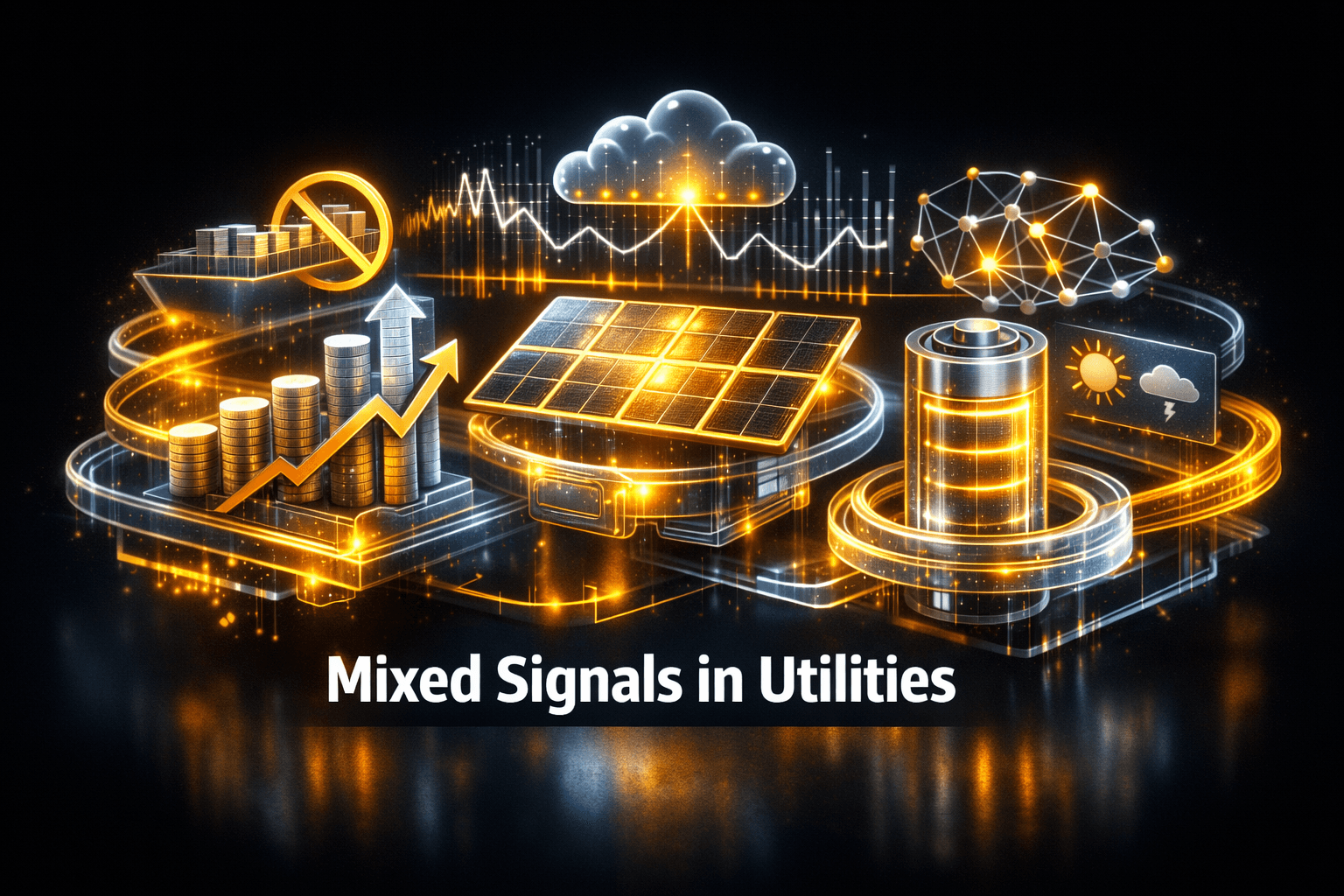
Utilities investors faced a day of mixed signals on Aug 3, as near-term cost and policy shocks landed alongside clear technological progress that could reshape generation and grid operations over the coming years. You saw immediate implications for project economics, and longer-term implications for capacity and reliability.
Why does this matter to you? Because the balance between rising build costs, tightened equipment imports, and accelerating tech advances will help determine which utility balance sheets and developers handle the energy transition most smoothly.
Market Highlights
Trading reflected the mixed newsflow across the sector during the session. You likely noticed investors parsing policy risk versus innovation upside as the headlines rolled out.
- Dominion Energy, $D, was the most directly named utility in today’s headlines after its offshore wind project saw nearly $300 million in cost increases tied to tariffs, revised PJM network costs, and higher turbine installation estimates.
- VinFast, $VFS, expanded mobility operations with a new e-scooter lineup and 30,000 planned battery-swap hubs in the Philippines, a move that signals growing electrification demand in Southeast Asia.
- Sector-level stories included supply-chain and policy developments around imported inverters and federal water-management proposals affecting the Colorado River basin, both of which carry revenue and operations implications for utilities with hydro and solar portfolios.
Key Developments
Import rules for inverters increase near-term supply risk
The FCC added foreign-produced inverters to its Covered List, an action that immediately blocks imports of new inverter models regardless of origin. Analysts and industry voices flagged this as a risk to procurement timelines for solar projects that depend on proven inverter vendors abroad.
For you, that could mean longer equipment lead times and upward pressure on project costs, especially for developers who haven’t secured domestic alternatives or inventory. How quickly supply chains adapt will determine whether this is a temporary bottleneck or a persistent constraint.
Dominion offshore wind project cost jump highlights political and grid risks
Dominion reported a nearly $300 million increase in its offshore wind project costs, driven by revised PJM-assigned network upgrade fees, tariffs imposed earlier this year, and updated turbine installation projections. The finding underscores how policy and interconnection assignments still materially change project economics.
This development is clear as day for investors watching offshore and large-scale projects. It suggests you should closely monitor tariff developments, PJM cost allocations, and company-level contingency reserves when assessing developer resilience.
Tech and grid innovations offer offsetting upside
On the positive side, several technology developments promise to lower long-run costs and ease integration. Tandem PV acquired nexTC’s thin-film coating tech as it ramps a California demo line, which could accelerate commercial perovskite rollout and lift module efficiency potential.
Researchers at North Carolina State improved day-ahead solar forecasting by up to 13 percent, Ember recommended hybridizing hydro with wind and solar to bypass grid constraints, and POWER Magazine highlighted connector and BESS design advances needed for gigawatt-scale storage. VinFast’s battery-swap network and coverage of emerging superhot geothermal approaches round out a theme of expanding low-carbon options.
What to Watch
Expect the tug-of-war between cost/policy headwinds and technology gains to shape headlines for weeks. Watch these specific catalysts and risks so you can follow developments more closely.
- Regulatory moves and tariffs: Monitor any follow-up on the FCC inverter decision and implementation guidance. Changes in import policy or exemptions would materially affect solar project timelines and margins.
- PJM and interconnection rulings: Updates to network upgrade cost assignments and timelines can swing project economics. Pay attention to PJM filings and Dominion’s project status disclosures.
- Water management and hydro: The federal Colorado River proposal that allocates deeper cuts to Arizona, California and Nevada could change how hydro and water-dependent utilities manage generation and cooling resources. Expect state-level negotiations and potential operational impacts.
- Scale-up signals: Look for commercial milestones from Tandem PV’s demonstration line, adoption rates for improved solar forecasting tools, and procurement notices that reflect domestic inverter sourcing or alternatives.
- Project financing and contingency planning: Watch corporate filings and developer updates for revised cost forecasts, contingency draws, or financing redeterminations tied to the cost increases and tariff environment.
Bottom Line
- Sentiment across the utilities sector is mixed today, with near-term policy and cost headwinds counterbalanced by technology and grid-integration advances.
- Project economics remain sensitive to tariffs and interconnection cost allocations, as the Dominion $300 million cost increase shows.
- Supply-chain policy on inverters raises short-term risk for solar deployments, but domestic alternatives and adaptation could ease pressure over time.
- Innovations in perovskite coatings, forecasting, hybrid hydro, storage connectors, and battery-swap networks point to longer-term resilience and capacity growth.
- Analysts note that you should track regulatory rulings, project-level cost disclosures, and technology commercialization milestones to separate temporary noise from structural change.
FAQ Section
Q: How will inverter import restrictions affect solar project timelines? A: Restrictions can lengthen lead times and push up short-term costs if developers must source alternative models or wait for domestic supply, analysts say. Monitor procurement and contract updates.
Q: Does Dominion’s cost increase mean offshore wind is uninvestable? A: No, cost increases change project economics and financing terms, but they don’t eliminate the sector’s potential. You should watch company disclosures and any shifts in subsidies or interconnection cost allocations.
Q: Are the recent technology advances likely to reduce utility risk? A: Yes, improvements in forecasting, perovskite manufacturing steps, hybrid hydro strategies, and storage component design all lower operational and integration risk over time, but commercialization timing remains a key variable.