The Big Picture
Today’s Utilities tape was led by tangible project wins and technology deployments that underline the sector’s shift to cleaner, more resilient infrastructure. A headline PPA and compact but resilient storage projects showed how large-scale and distributed solutions are moving in parallel.
That momentum matters because it points to sustained demand for renewables, storage, and grid upgrades, even as policy and legal disputes inject uncertainty. If you follow utilities or clean-energy plays, you’ll want to watch how these project pipelines and regulatory fights evolve into revenue and permitting outcomes.
Market Highlights
Stocks and projects moved on operational and policy headlines rather than a single market catalyst. Trading was mixed across the sector as investors parsed long-term opportunity against short-term regulatory risk.
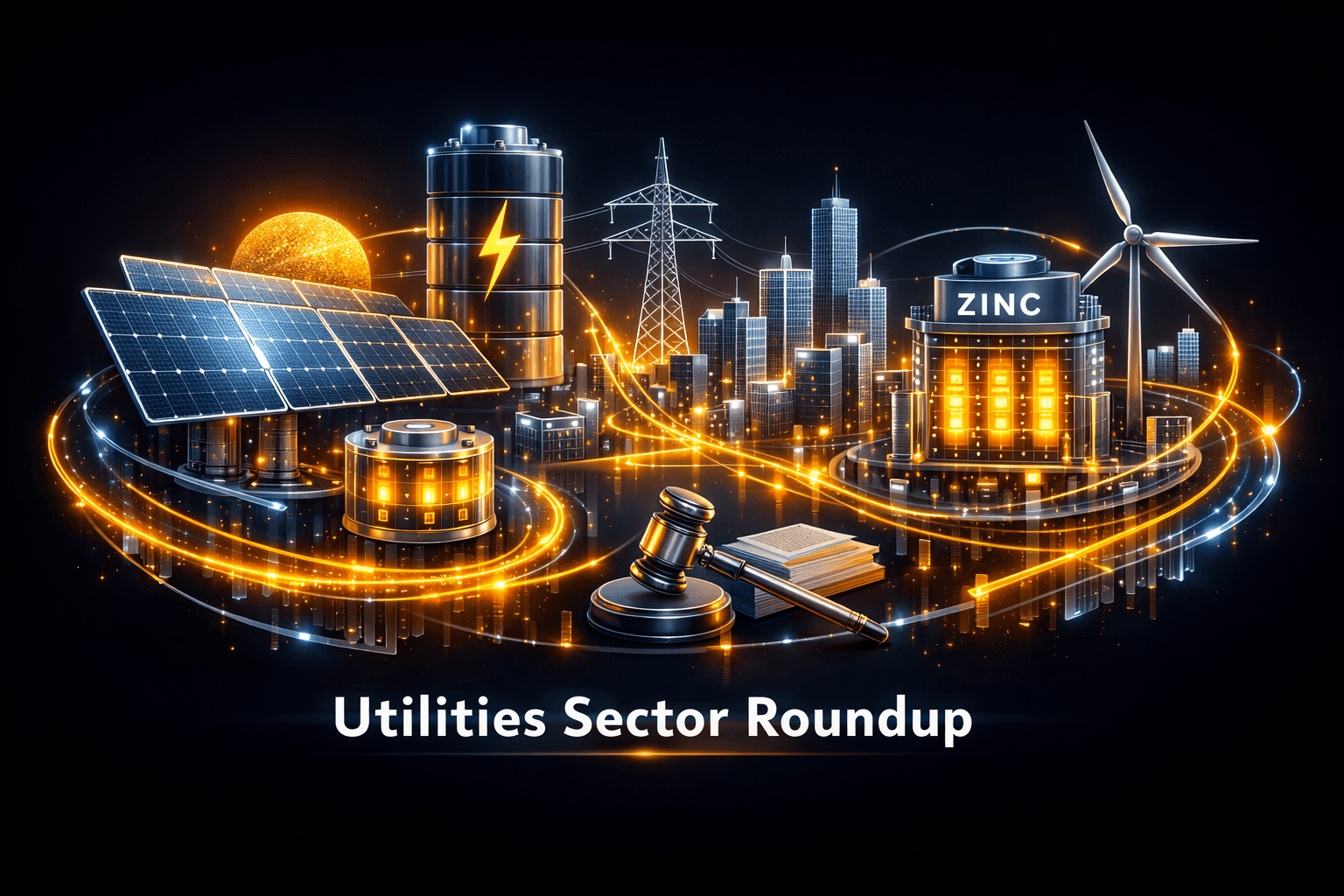
- Tesla, $TSLA, signed its largest PPA to date for Project Sterling, a 509-MW solar plus 1.4-GWh storage development in Arizona. The deal cements offtake demand for large hybrid projects with commercial operation targeted for 2028.
- Lincoln Electric System energized a 3-MW / 12-MWh zinc-based battery to support a 30-MW microgrid serving Nebraska’s state Capitol complex and critical infrastructure, highlighting non-lithium storage options.
- Policy headlines weighed in: the White House expanded a voluntary pledge with 23 governors and 187 companies to shield consumers from AI-driven bill spikes, while New York’s data center pause revived renewable procurement and cooling-related regulatory scrutiny.
- Legal and safety items included an admission that $7.6 billion in canceled clean energy grants were tied to politics and a civil suit alleging serious injury after 24 solar panels fell during unloading involving Canadian Solar, $CSIQ.
Key Developments
Large-scale solar + storage deal underscores corporate offtake demand
Tesla’s PPA with ContourGlobal for Project Sterling, which comprises 509 MW of solar capacity and 1.4 GWh of storage, is notable for its scale and timing. Construction began in 2025 to meet subsidy deadlines and commercial operation is aimed at 2028.
For you as an investor, the PPA shows continued corporate appetite for firmed renewables and confirms that developers and integrators can secure long-term contracts for massive hybrid projects. Analysts note these deals help underpin project financing and long-range revenue visibility.
Distributed resilience: Nebraska microgrid and non-lithium storage progress
Lincoln Electric System brought a 3-MW / 12-MWh zinc battery online inside a broader 30-MW microgrid footprint. The deployment supports state government facilities and other critical loads, demonstrating options beyond lithium for longer-duration or safety-sensitive sites.
That’s a practical development you should track because it suggests utilities and municipalities are diversifying their storage technology mix. Data suggests non-lithium chemistries can be competitive where safety, recyclability, or raw-material exposure matters.
Policy push and consumer protections around AI data centers
The White House expanded a voluntary pledge that includes 23 governors and 187 companies to limit electricity bill impacts from rapid AI data center growth. This comes amid state-level pauses and proposed mandates, such as New York’s potential requirement that large data centers get at least one third of power from renewables by 2030.
These moves present a dual message for you. On one hand, voluntary and regulatory approaches aim to protect consumers and accelerate renewables procurement. On the other hand, they could constrain data center growth patterns and shift demand timing, which will ripple through utility load forecasts and rate cases.
What to Watch
Expect project pipelines and permitting timelines to be the next battleground. Large PPAs and storage builds will need financing and interconnection approvals, so keep an eye on queue progress and interconnection reform discussions.
Policy risks deserve attention as well. Court disclosures that $7.6 billion in grants were canceled for political reasons raise questions about future federal support flows. Will Congress or courts respond, and will grants get restored or reallocated?
Finally, operational safety and supply-chain scrutiny are increasing. The Canadian Solar-related lawsuit and community-level calls for affordability solutions in California highlight reputational and implementation risks you should monitor. How will manufacturers and project developers tighten safety and contracting practices?
Bottom Line
- Large-scale offtake deals like the 509-MW / 1.4-GWh PPA show continued demand for firmed renewables, supporting long-term growth in project pipelines.
- Grid resilience is advancing at multiple scales, with microgrids and non-lithium storage demonstrating practical, complementary roles.
- Policy interventions aimed at protecting consumers from AI-related bill spikes could channel more renewables procurement, but they also add regulatory complexity to load planning.
- Political and legal headwinds, including admitted grant cancellations and safety litigation, introduce near-term uncertainty you need to factor into outlooks.
- Stay selective and watch project permits, interconnection milestones, and contract backlogs for clearer signals on earnings and capital deployment.
FAQ Section
Q: How will large PPAs affect utility earnings? A: Large PPAs can support project financing and stable revenue for developers and energy service providers, while utilities may see shifting demand patterns and new contract structures that affect long-term load shapes.
Q: Are non-lithium batteries a real alternative? A: Yes, deployments like the zinc-based 3-MW / 12-MWh system show non-lithium chemistries can be viable for specific resilience and safety use cases, and they help diversify supply-chain risk.
Q: What immediate risks should you monitor? A: Track regulatory actions on data centers, progress on interconnection and permitting, and legal developments tied to federal funding or project safety, because those can change near-term cash flows and timelines.