The Big Picture
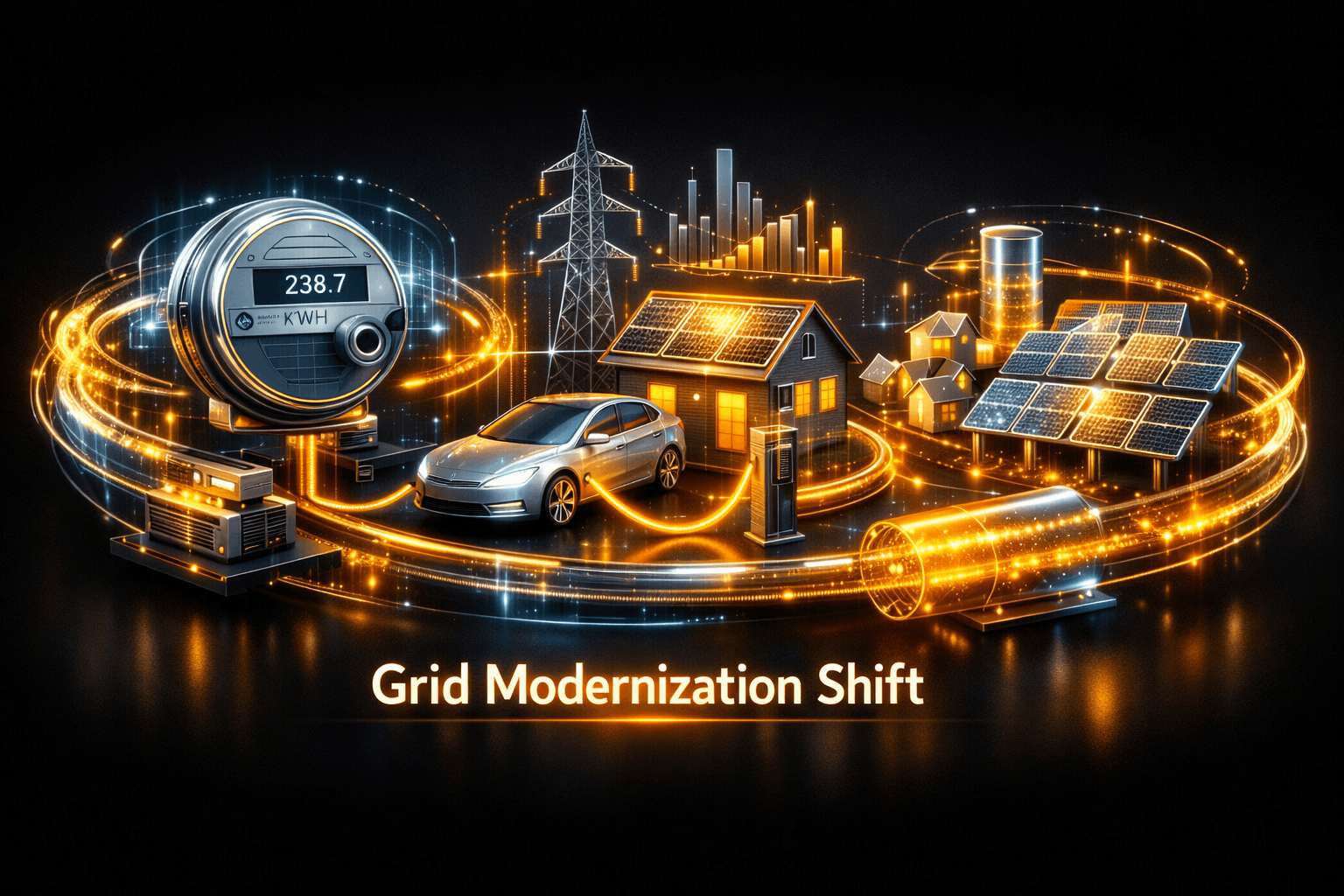
Today’s most consequential development is the accelerating push to modernize grid hardware and software, led by the arrival of AMI 2.0 smart meters that add edge computing to the meter. That upgrade, paired with pilots for vehicle-to-grid programs and fresh community solar deals, points to rising capital spending and new flexibility services that could reshape utility economics.
If you own utilities or follow the sector, you’ll want to track how these technology shifts change cost structures, customer programs, and regulatory wins. These are not small maintenance items, they’re strategic upgrades that may open new revenue paths while also creating near-term procurement and deployment choices.
Market Highlights
- Smart meter evolution: Utility Dive reports the first-generation smart meters are aging and AMI 2.0 devices with edge computing are becoming available, forcing utilities to make major equipment decisions.
- V2G pilot announced: Eversource $ES and National Grid $NGG are partnering with EnergyHub, Sunrun $RUN, and The Mobility House to test residential vehicle-to-grid services in Massachusetts, targeting incentives for EV drivers and grid reliability benefits.
- Community solar deal: Altus Power announced development of a 32 MW portfolio in Virginia through a partnership with New Leaf Energy to serve Appalachian Power program customers, expanding distributed clean capacity.
- Procurement focus: Utility Dive highlights smarter procurement strategies as a lever to reduce electrification costs and strengthen program delivery.
- Political risk note: A political dispute over cross-border wildfire smoke adds a reminder that climate and policy headlines can affect regulatory focus and public sentiment.
Key Developments
AMI 2.0: meters with smarts
Utility Dive’s deep dive shows the first-generation advanced metering infrastructure is nearing retirement and new AMI 2.0 meters add on-device processing. These meters can run analytics, support edge controls, and reduce some backend telemetry costs, which could lower operating expenses over time while increasing upfront capital needs.
For investors, that means utilities will face a cadence of replacement capex and procurement choices. You should ask, how quickly will utilities move, and which vendors will capture market share?
V2G pilot in Massachusetts
Eversource $ES and National Grid $NGG teamed with EnergyHub, Sunrun $RUN, and The Mobility House to test vehicle-to-grid programs for residential EVs. The pilot aims to pay customers for energy and grid services while improving reliability and affordability during peak demand or stress events.
Vehicle-to-grid is gaining traction as a distributed resource, and successful pilots could create new customer-facing tariffs and utility partnerships. Are utilities ready to integrate bi-directional charging at scale, and will regulatory frameworks keep pace?
Community solar and procurement strategy
Altus Power’s agreement to develop five community solar projects totaling 32 MW in Virginia shows continued demand for third-party owned distributed solar in utility programs. At the same time, a Utility Dive piece on procurement underscores that smarter purchasing practices can cut electrification costs and accelerate deployment.
Together these stories signal a push to couple project development with procurement discipline. That combo can speed deployment and protect margins, which matters if you’re tracking growth-oriented utilities and project developers.
What to Watch
Monitor utility filings and capital plans for AMI 2.0 deployments and vendor selections. Those regulatory submissions will tell you the scale and timing of meter replacement programs and related rate impacts.
Watch pilot progress and enrollment numbers for the Massachusetts V2G program, plus any tariff proposals that would allow earnings from vehicle exports. Pilot results can lead to expanded programs and new non-wires alternatives.
Track the Altus Power portfolio and similar community solar announcements for signs of increased third-party participation in utility programs. You’ll want to see interconnection timelines and offtake arrangements.
Keep an eye on procurement innovations and supply chain signals that could reduce project costs. Finally, follow climate and political headlines, including cross-border wildfire smoke rhetoric, since those stories can influence regulatory priorities and public sentiment quickly.
Bottom Line
- AMI 2.0 is a multi-year upgrade cycle that will drive capital spending and could cut operating costs long term, analysts note.
- V2G pilots by major utilities show grid services and customer incentives are moving from concept to test, which could create new revenue streams for service providers.
- Community solar deals continue to expand distributed capacity and participation in utility-led programs, with procurement strategy playing a key role in cost control.
- Policy and weather headlines remain a wildcard, and you should watch regulatory filings and pilot results for clearer signals on earnings impact.
FAQ Section
Q: What is AMI 2.0 and why does it matter to utilities? A: AMI 2.0 refers to next-generation smart meters with edge computing that can run analytics locally, enabling faster grid responses and potentially lower long-term operating costs while requiring near-term capital investment.
Q: How could vehicle-to-grid programs affect utility economics? A: V2G can add distributed capacity and grid services, creating new program revenues and reliability options, but widespread adoption depends on tariffs, standards, and customer incentives.
Q: Should I expect immediate earnings changes from these developments? A: Most impacts are multi-year, with near-term increases in capital spending and procurement activity that could affect rates and margins over time, according to industry reporting.