The Big Picture
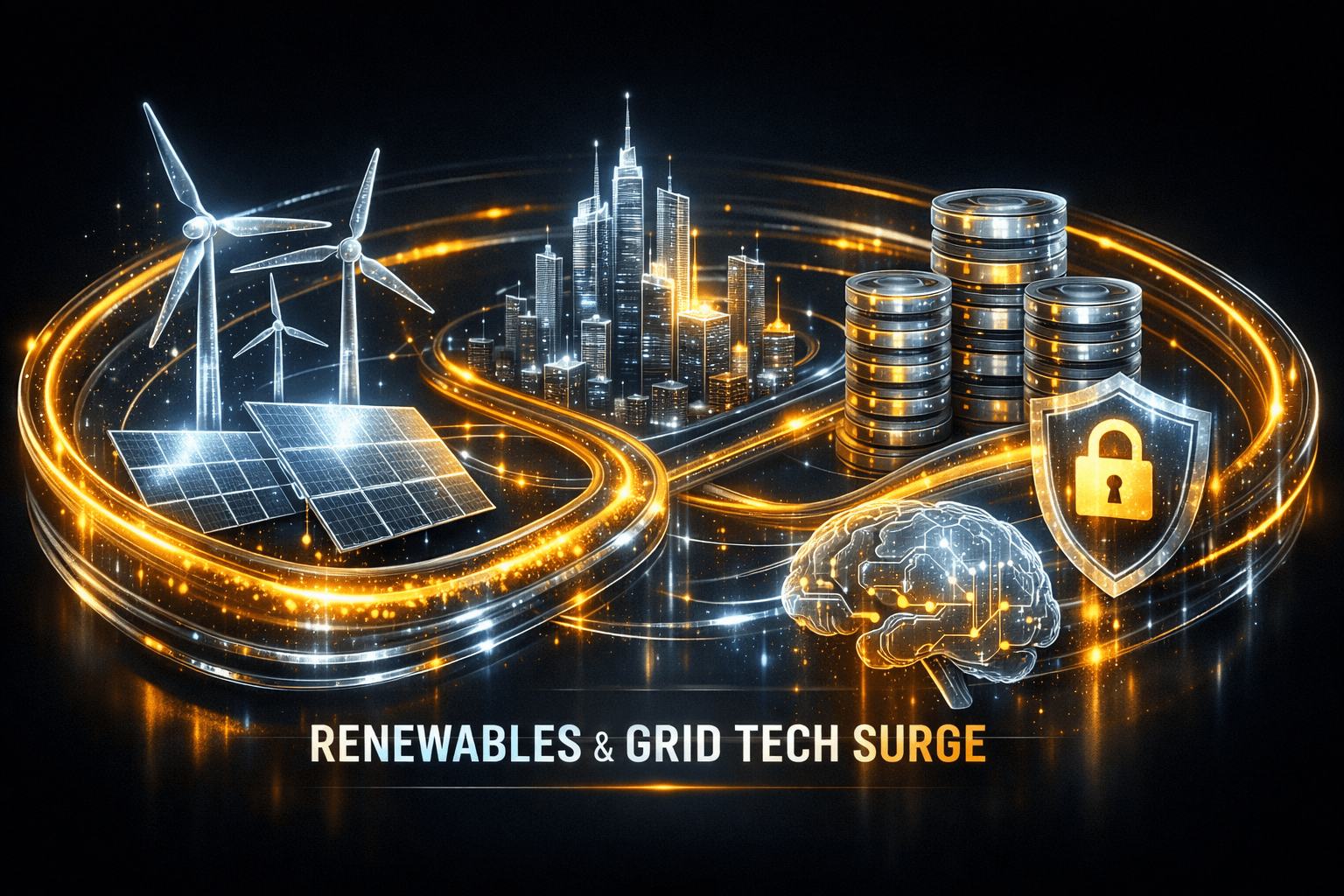
Renewables and grid technologies are moving from theory into scale, and that shift matters for utilities and the investors who follow them. Overnight reports showed that distributed wind and solar remain resilient in climate stresses, Europe can unlock 25 GW without new transmission, and U.S. inverter manufacturing is expanding fast while industry groups push cybersecurity upgrades.
What does that mean for you as a utility investor? The sector is increasingly defined by integration, resilience and new revenue pathways tied to services and hardware, not just commodity generation. That change creates both upside potential and new execution risks.
Market Highlights
Quick facts and figures to start your trading day.
- Resilience metric: ASEAN wind and solar generation variation from normal is forecast to be under 1% by 2030, according to CleanTechnica, highlighting distributed renewables' stability in extreme warming scenarios.
- Capacity upside: Europe could add roughly 25 GW of wind and solar at existing hydropower sites across seven countries, Ember and CleanTechnica report, reducing the need for new grid connections.
- Manufacturing surge: SEIA says U.S. inverter manufacturing has almost tripled since 2024, effectively a near 200% increase, and the U.S. is now tied as the second largest inverter manufacturer globally.
- Corporate and product moves: SolarEdge ($SEDG) participated in a donated 60-kW system estimated to save Project Worthmore more than $350,000 over 20 years; Ford ($F) and Global Power Products launched a vehicle-to-home backup solution, and ARRAY Technologies ($ARRY) unveiled a 60° stow-angle variant of its DuraTrack tracker.
Key Developments
Renewable resilience and capacity gains
Two studies grabbed attention overnight. CleanTechnica flagged that, even under extreme warming, ASEAN's wind and solar output will vary less than 1% from normal in 2030, underscoring how distributed renewables can hold up during climate shocks. In Europe, Ember finds roughly 25 GW of wind and solar could be added at existing hydropower connection points, avoiding lengthy grid expansions.
For investors, these findings reinforce the utility sector's shift toward distributed and hybrid projects that reduce transmission bottlenecks and raise utilization of existing assets. How will legacy utilities adapt their planning and capex to capture this low-cost capacity?
Cybersecurity and domestic supply chain momentum
The Solar Energy Industries Association released a report framing cybersecurity priorities alongside policies to grow domestic solar and storage manufacturing. SEIA notes the U.S. is now tied as the world's second largest inverter manufacturer, a striking supply-chain development after nearly tripling capacity since 2024.
Stronger domestic manufacturing reduces exposure to overseas shortages, while the cybersecurity focus signals more regulatory and procurement scrutiny. That could lift suppliers with compliant, U.S.-based production and affect procurement timelines for utilities and project developers.
Grid innovation: AI, V2H, donated systems and advanced trackers
The DOE’s Genesis Mission, unveiled July 22, reframes AI not just as a load but as a grid optimization tool, pointing to new research linking data-center demand with flexible grid solutions. At the same time Ford and Global Power Products launched a vehicle-to-home backup option, supported by GenerLink approvals from more than 800 utilities, offering lower-cost resilience than standby generators.
Product innovation continued at the component level: ARRAY’s new 60° DuraTrack variant adds a higher stow angle for extreme weather response, which could lower curtailment and insurance exposure on high-wind sites. Donated community systems like the 60-kW Project Worthmore installation, backed by $SEDG and partners, show social impact and operational savings can align.
What to Watch
Keep an eye on near-term catalysts and risks that will shape the sector's next moves. You’ll want to monitor regulatory signals around interconnection reform and cybersecurity standards, as those will directly affect project timelines and vendor selection.
Upcoming items: SEIA follow-ups and implementation guidance, DOE research outputs from the Genesis Mission, and state-level decisions on new gas plant proposals such as those testing Wisconsin's review process. Also watch commercial adoption of vehicle-to-home systems and tracker deployments, which could shift O&M and capital planning.
Risk checklist: interconnection backlogs, evolving cybersecurity requirements, and potential policy pushes to change utility returns or cost recovery. What will matter to your holdings is execution against these transitions, and how quickly utilities sign long-term contracts or retrofit systems to new standards.
Bottom Line
- Distributed renewables look increasingly resilient, with ASEAN variation under 1% by 2030, which supports more decentralized project economics.
- Europe may unlock ~25 GW of clean capacity using existing hydropower connections, reducing near-term transmission needs.
- U.S. inverter manufacturing has surged, nearly tripling since 2024, while SEIA pushes cybersecurity priorities that will shape procurement and compliance timelines.
- Grid and product innovations from the DOE Genesis Mission, Ford’s V2H solution, ARRAY’s tracker update and community solar donations show a broad tech ecosystem maturing.
- Stay selective and watch interconnection, cybersecurity rules and state review processes, since those factors will determine which projects move forward and when.
FAQ Section
Q: How will increased inverter manufacturing affect utility project costs? A: Greater domestic inverter capacity can ease supply bottlenecks and shorten lead times, which may lower procurement risk and stabilize equipment costs for new solar and storage projects.
Q: Will vehicle-to-home solutions replace standby generators for utilities? A: V2H offers a lower-cost, flexible backup option for many customers, but adoption depends on regulatory approvals, utility interconnection policies and the availability of approved devices in local markets.
Q: What should you watch on the regulatory front this week? A: Monitor SEIA guidance on cybersecurity, state responses to gas plant proposals such as in Wisconsin, and any interconnection reform announcements that could affect project queue dynamics.