The Big Picture
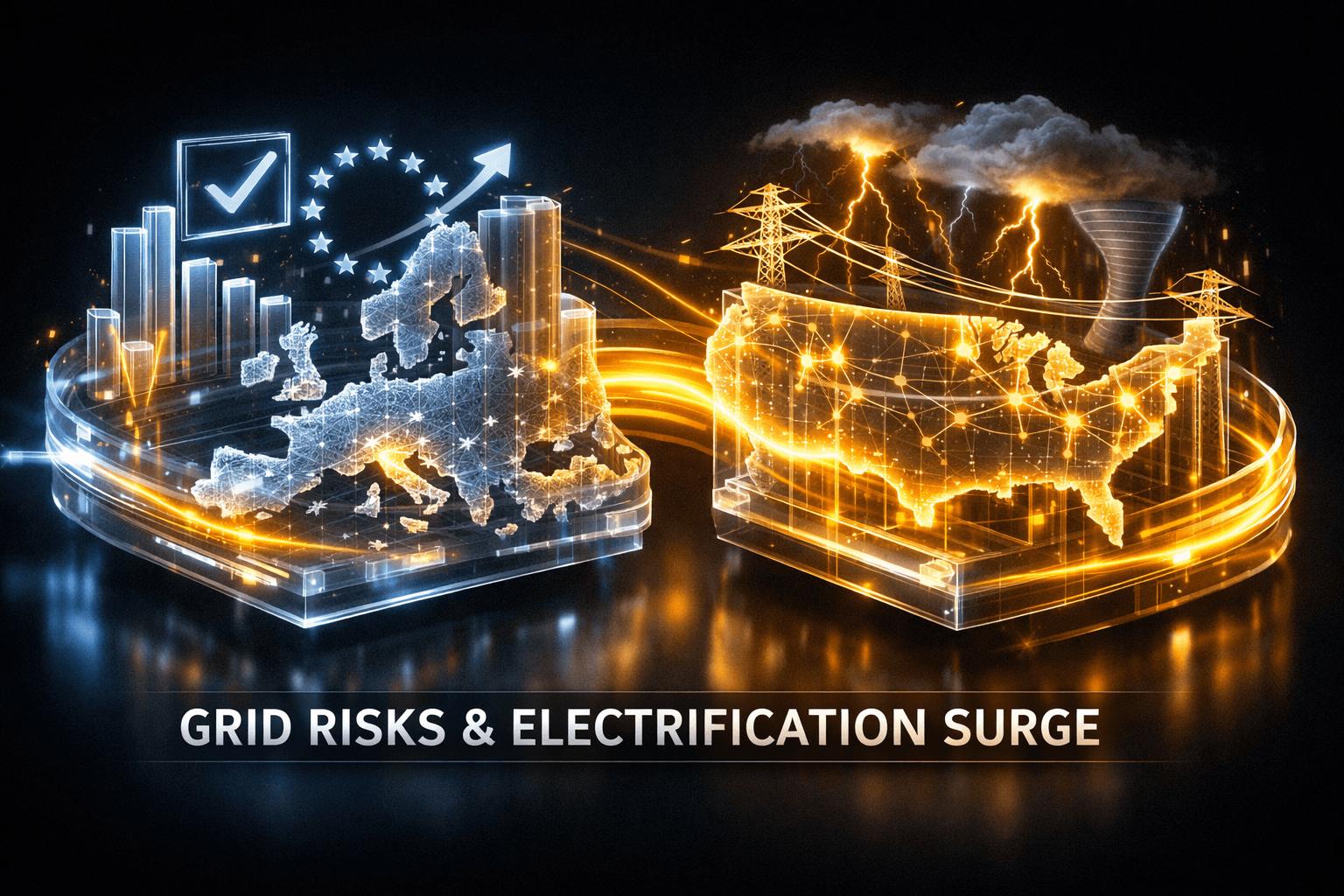
Overnight headlines left utilities investors facing a mix of opportunity and risk. New polling and industry showcases reinforce long-term electrification trends, but near-term pressures from fuel policy shifts, water scarcity, and wildfire risk are forcing planners to change how they design and operate the grid.
That matters for your portfolio because utilities are at the center of the energy transition and also the first line of defense against climate-driven disruptions. Today you’ll want to weigh modernization and resilience investments against policy and physical risks that could affect costs and capital plans.
Market Highlights
Here are the quick facts and names to watch as U.S. markets trade today. These items reflect sector themes rather than specific company guidance.
- Electrification sentiment is rising in Europe, according to new YouGov polling commissioned by E3G, T&E and the Electrification Alliance, with 64% of respondents backing reduced fossil fuel imports.
- Grid modernization and automation vendors are drawing attention after commentary and op-eds highlighted layered automation and scalable upgrades as keys to resilience; suppliers such as S&C Electric are referenced in the coverage.
- Policy and supply choices are in focus in the U.S., where federal support for coal modernization was announced, a development investors will weigh alongside renewable and storage buildouts.
- Operational risk stories are prominent: grid operators are redesigning for extreme heat, cooperatives are acting on rising wildfire risk, and the Bureau of Reclamation may impose a new Colorado River plan if states don’t reach agreement.
- Notable tickers to watch today for sentiment and sector flow include utility leaders like $NEE, $DUK, and regional operators such as $PNW, plus the utilities ETF $XLU, which often leads sector momentum.
Key Developments
Europe’s Public Backing for Electrification
A multi-country YouGov poll shows broad public support for reducing fossil fuel imports and investing in electrification. The result crosses political lines, suggesting policymakers in Europe may face public pressure to push cleaner electricity, EV infrastructure, and related grid upgrades.
For you, that means demand projections for electricity and storage remain structurally supportive, even if policy paths vary by market.
Grid Design Is Shifting: Heat, Wildfire, Water
Operational literature and operator commentary are shifting extreme heat from a tail risk to a baseline design parameter. Planners are revising rules for capacity, cooling, and dispatch to handle hotter summers and drought conditions.
Meanwhile, rising wildfire risk has electric cooperatives taking mitigation steps and asking Congress for support. And the looming possibility of a federally imposed Colorado River plan raises water availability questions for hydro and thermal generators. What does that mean for reliability and costs? Expect more capital diverted to resilience and contingency planning.
Technology and Market Signals: Automation, Wave Energy, Compliance
Industry pieces emphasize layered automation across distribution and end-to-end systems as a path to grid-wide resilience. Vendors and integrators are likely to see increased procurement interest from utilities and co-ops focused on reliability.
There was also a spotlight on alternative generation like wave energy, showcased alongside AI infrastructure talks, highlighting new supply diversification options. At the same time, regulators and industry groups are pressing owners of inverter-based resources to meet updated NERC compliance categories, a near-term spending driver for operators of solar, storage, and hybrids.
What to Watch
Expect the next few weeks to bring a mix of policy, climate, and corporate catalysts that could move utility names and sector ETFs. Here are the key items to monitor so you can follow developments closely.
- Policy moves: Watch federal announcements and state-level decisions tied to coal support and clean energy incentives. Funding shifts could change project economics and permitting timelines.
- Grid and weather risks: Track heat wave forecasts, wildfire activity, and Colorado River negotiation updates. These factors can prompt emergency procurement, load management orders, or new resilience spending.
- Procurement and compliance deadlines: Keep an eye on NERC Category 2 guidance and procurement cycles for automation and inverter upgrades. Compliance spending can lift equipment suppliers and integrators.
- Electrification demand signals: Monitor EV adoption data and automaker moves that affect charging load forecasts. Lower EV targets or policy rollbacks in key markets could change capacity needs, while stronger adoption supports utility revenue growth potential.
- Company-specific updates: Look for quarterly updates, capital-spending plans, and integrated resource plans from major utilities such as $NEE and $DUK to see how they’re allocating capital between resilience, renewables, and thermal assets.
Bottom Line
- Electrification momentum is intact in policy and public sentiment, especially in Europe, which supports long-term demand for clean power and grid investment.
- Physical risks from heat, wildfire, and water scarcity are driving near-term resilience spending and creating operational uncertainty for some assets.
- Federal funding for coal modernization adds policy complexity and may shift incremental capital into thermal projects in the near term.
- Automation, inverter compliance, and new generation technologies like wave power represent actionable areas to watch for vendor and utility activity.
- Be selective and follow company disclosures and local policy moves, since outcomes will vary by region and resource mix.
FAQ
Q: How will electrification polls in Europe affect U.S. utilities? A: Public support in Europe signals global momentum for electrification and may influence investor sentiment, technology demand, and multinational utility planning, even if U.S. policy differs.
Q: Should you expect higher utility spending because of extreme heat and wildfires? A: Data suggests planners are treating these events as recurring conditions, which points to sustained or increased spending on resilience, automation, and wildfire mitigation.
Q: Will federal coal funding change the energy transition timeline? A: The funding adds a near-term policy variable, but broader market and regulatory trends continue to favor renewables and storage in many regions. Analysts note the net impact will depend on project scale and permitting.