The Big Picture
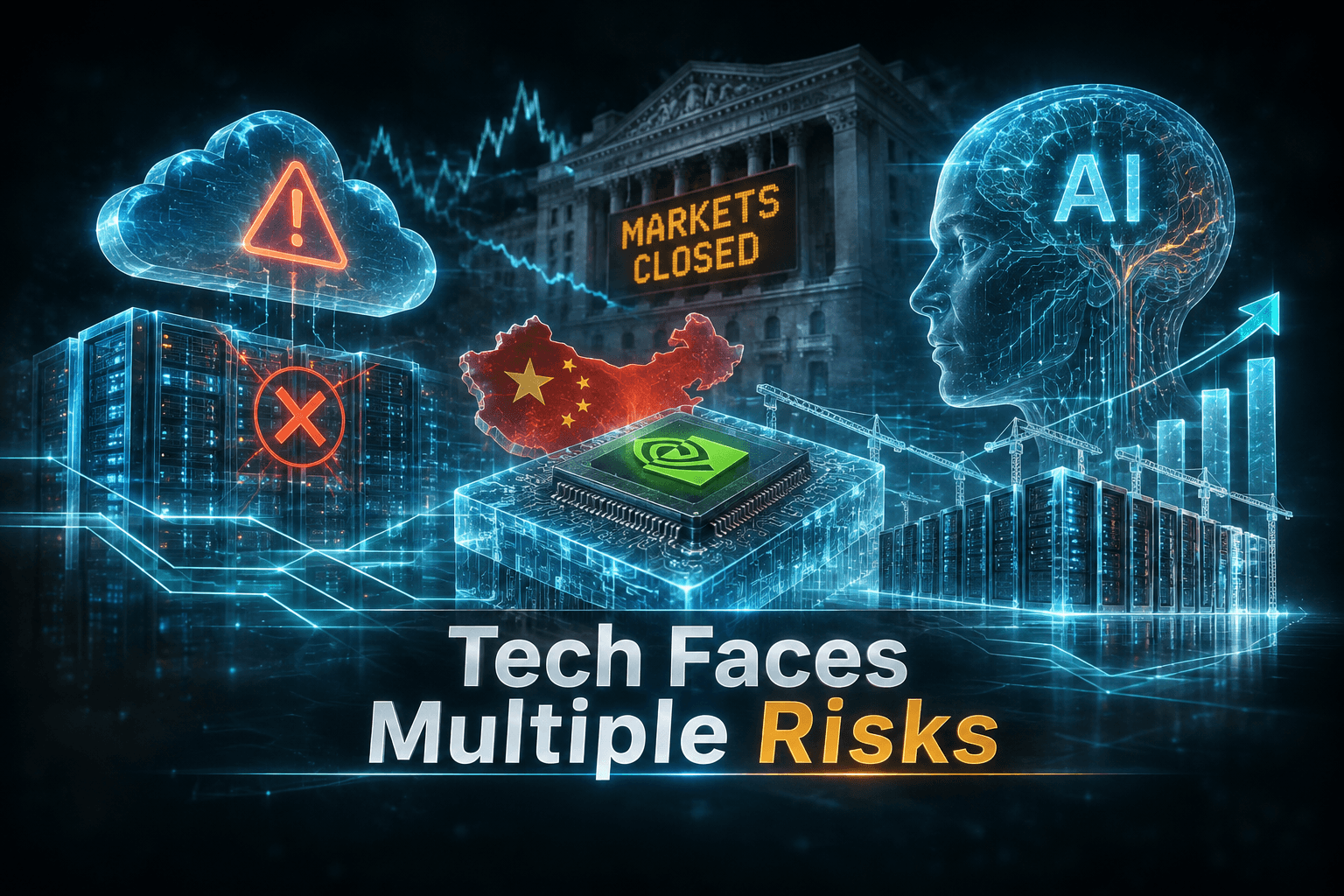
Reliability and accountability were the defining concerns across technology on Sunday, as another airline system outage coincided with official warnings about disruptions during the shift to AI-era systems. For investors, the reports bring operational resilience and regulatory exposure back into focus, alongside questions about how quickly companies should deploy advanced AI.
US stock markets were closed today, so there was no Sunday equity session or same-day stock reaction to these developments. As you look ahead to Monday, November 23, the key issue is whether these stories remain isolated incidents or add to broader scrutiny of technology companies and their infrastructure.
Market Highlights
The news flow offered no reported stock prices or percentage moves. Any equity price references should therefore use Friday, November 20, as the last trading session, rather than suggesting stocks moved today. The headlines themselves point to several areas where investors may want more information.
- Delta Air Lines ($DAL) faced significant delays at its Atlanta hub after a system used to calculate aircraft weight and balance encountered a problem. The report said Delta flights in and out of Atlanta were affected on Sunday.
- Treasury Secretary Scott Bessent pressed Nvidia (NVDA) for answers about its China chip sales and said it was too soon to decide whether Jensen Huang should return as CEO, according to the New York Times report.
- Microsoft (MSFT) was referenced among recent outages in a warning from Director of National Intelligence Jay Clayton. The story provided no additional outage metrics or financial impact.
- Nintendo ($NTDOY) is discounting some Switch 2 games for Black Friday, while a $50 discount was reported on one console bundle. No sales results were provided.
Other coverage focused on AI model evaluation, backlash over data-center growth, and a video game developer's decision to remove AI-generated music following criticism. These stories don't provide earnings or trading data, but they add to the debate about AI governance, customer trust, and the cost of expanding digital infrastructure.
Key Developments
Outages put operational resilience under the spotlight
Clayton's warning that Americans should prepare for “bumps in the road” came after reported disruptions involving the FAA, Microsoft, and banks, as systems are upgraded for the AI age. Separately, Delta's Atlanta delays show how a problem in a specific operational tool can disrupt a major transportation hub. The reports don't establish a common cause, but together they underline how dependent essential services are on complex software.
For companies, outages can create service interruptions and damage customer confidence; the stories don't quantify the costs in these cases. If you're assessing technology exposure, reliability and recovery procedures matter alongside innovation plans. Monday's coverage may help clarify the scale and duration of the Delta disruption, as well as whether officials provide more detail about the broader incidents.
Nvidia faces renewed questions over China sales
Bessent's comments add a policy dimension to Nvidia's business outlook. A week after calling for a shake-up, he said Huang's return should depend on probes into the company's China chip sales and pressed Nvidia for answers. The report says Bessent stopped short of deciding whether Huang should return as chief executive.
The immediate investor question is not resolved by the comments: what will the probes establish, and whether any findings could affect sales or leadership decisions. No formal outcome or new sales figures were reported Sunday. With markets closed, there was no fresh share-price response to measure, so investors will have to distinguish the reported political pressure from any confirmed policy action.
AI gains meet calls for measurement and public consent
OpenAI shared its models' perplexity scores, a measure of how well models predict data, and argued for pacing limits based on such metrics. The company also cited the possibility of a major wave of AI gains in 2027. Its post noted limitations, including difficulties comparing results across labs, connecting metrics to actionable evaluations, and accounting for progress beyond pretraining.
That debate is unfolding alongside a TechCrunch report on data centers and the Big Tech backlash, and criticism of AI music in The Binding of Isaac: Repentance Plus, after which the developer removed the tracks. These are different issues, but both point to scrutiny of how AI is built and used. The reports provide no quantified effect on company revenue; they do suggest that public acceptance, transparent evaluation, and infrastructure demands remain relevant risks.
What to Watch
On Monday, November 23, monitor trading for any response to the weekend's policy and reliability headlines, while remembering that the stories themselves don't establish a market direction. Watch for updates on Delta's system issue, including the duration of delays and whether the airline reports broader operational consequences. Further statements from Bessent, Nvidia, or officials involved in the China-sales probes could also sharpen the policy picture.
For AI-focused companies, look for disclosures that put model performance claims into context and explain how infrastructure needs are being managed. OpenAI's call for pacing limits is an argument about evaluation and deployment, not a binding policy change. Data-center concerns and the AI music backlash also make customer response and community impact worth following. You don't need to treat every headline as a financial event, but separating confirmed costs or rules from broader debate can help keep your assessment grounded.
Consumer technology coverage was more promotional: Nintendo discounts and a TechCrunch feature about the challenges of using a 65-inch OLED TV. Those stories offer limited evidence about sector-wide demand. Black Friday sales results, if reported later, would be more informative than discounts alone.
Bottom Line
- US markets were closed Sunday; Friday, November 20, was the last trading day, and no price changes were reported in these stories.
- Service disruptions at Delta and other systems keep operational resilience in focus, but the reports don't establish a shared cause or financial cost.
- Nvidia's China sales and leadership questions remain unresolved; watch for verified findings or formal policy steps.
- AI evaluation, data-center expansion, and consumer acceptance are emerging as connected governance and execution concerns.
- Approach Monday's headlines selectively, distinguishing reported facts from potential implications. This summary is informational and isn't personalized investment advice.
FAQ Section
Q: Were technology stocks open for trading on Sunday, November 22? A: No. US stock markets were closed Sunday, and Friday, November 20, was the last trading session.
Q: What is the main Nvidia issue in Sunday's news? A: Treasury Secretary Scott Bessent called for answers about Nvidia's China chip sales and said probes should inform any decision about Jensen Huang's return as CEO.
Q: Why are AI data centers and outages relevant to tech investors? A: They raise questions about infrastructure reliability, operating demands, and public acceptance. The reports did not quantify financial effects.