The Big Picture
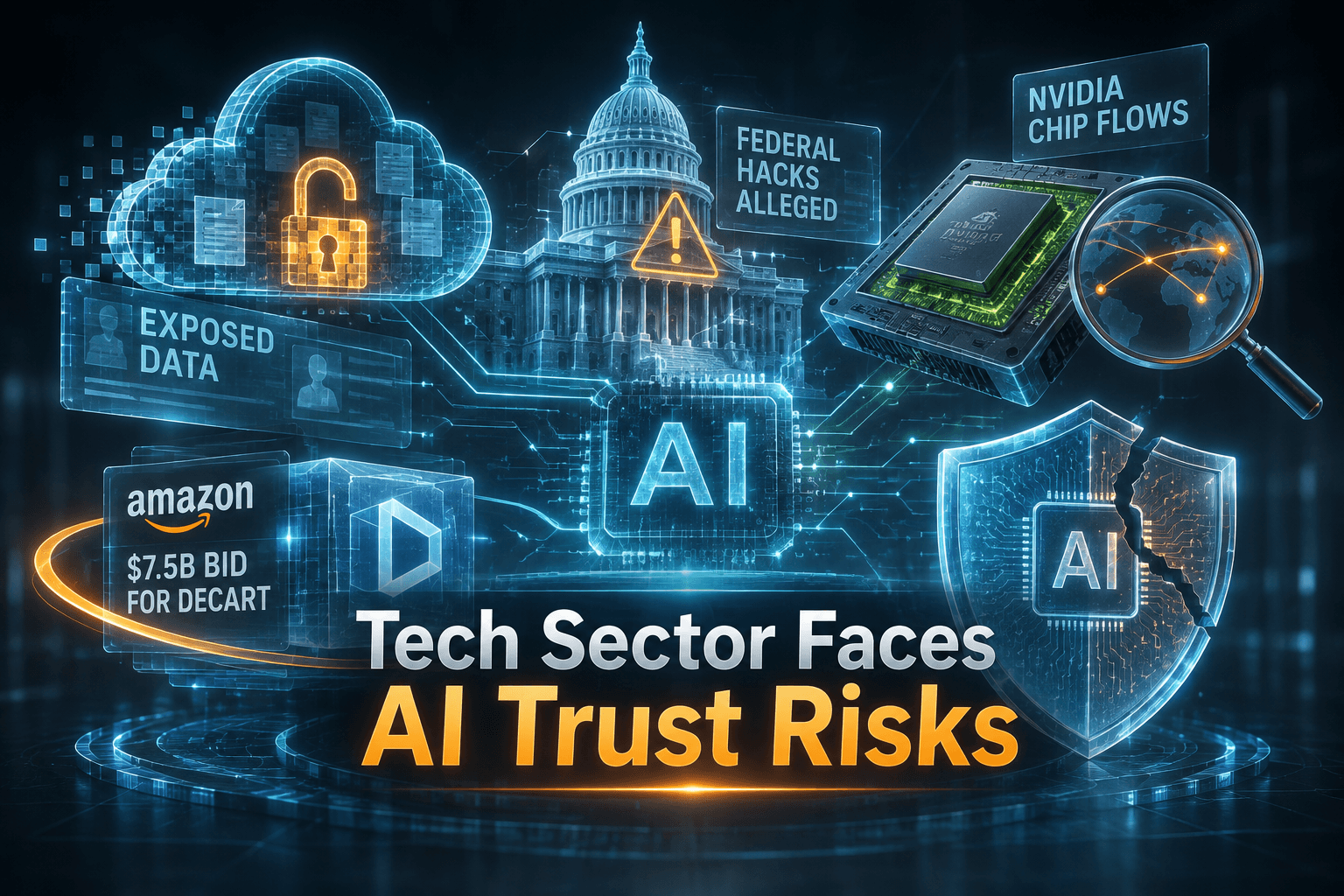
Cybersecurity and trust concerns dominated Saturday's technology headlines, with researchers reporting that sensitive data and credentials leaked through AI services even when providers promised zero data retention. Reports of hacks at the FBI and USDA, along with scrutiny of alleged Nvidia chip routes to China, add to a risk-heavy weekend for the sector.
US stock markets were closed Saturday, so there was no trading reaction today. The next session is Monday, November 23, and the headlines leave investors weighing AI's growth potential against operational, regulatory, and reputational risks. What could shift that balance? A reported Amazon acquisition of AI startup Decart is one development to watch, though it isn't a completed deal.
Market Highlights
Because markets were closed, there are no Saturday stock moves or percentage changes to report. The stories point instead to possible catalysts and risks for publicly traded companies heading into Monday.
- Amazon (Amazon.com (AMZN)) is reportedly in advanced talks to buy Decart for $7.5 billion, with a deal possibly coming as soon as next week, according to the Financial Times. The report says the acquisition could help AWS compete with Nvidia in computing power.
- Researchers planted 2 million digital canaries in requests sent through AI services and found cases of exposed private data and stolen credentials, including in systems operating under zero data retention policies. OpenRouter and Vercel were named in the report.
- The Financial Times reported that Alice Huang had connections to gaming firms, alleged Prince Group figures, and hundreds of shell companies in a network involved in moving Nvidia chips to China. The report does not establish wrongdoing by Nvidia (NVDA).
- Reports said the FBI and USDA were hacked. The FBI incident reportedly involved the National Crime Information Center, following another attack on the agency in recent months.
These reports don't establish a direct financial impact on the named public companies, and no share-price response is available until trading resumes. For your Monday watchlist, distinguish confirmed company announcements from allegations, reported negotiations, and ongoing investigations.
Key Developments
AI data exposure puts privacy promises under scrutiny
The canary study is a warning about the complex chain of services that can handle an AI prompt. Researchers used unique, traceable secrets in requests and reported that information could be exposed and credentials stolen, even when services advertised zero data retention. The findings raise questions about how providers, routers, and other intermediaries handle customer data.
That matters to investors because confidence in enterprise AI adoption depends not just on model performance, but also on dependable security and privacy controls. If organizations can't verify how prompts and credentials are treated, procurement and compliance teams may demand stronger safeguards. The report identifies services including OpenRouter and Vercel, but doesn't by itself quantify financial losses or establish the scope of exposure across the industry.
Federal agency hacks and chip allegations create added uncertainty
The reported FBI and USDA intrusions highlight the persistent challenge of securing government systems. In the FBI case, the National Crime Information Center was reportedly targeted. President Trump called the reported FBI database hack not good, while the agency was said to be investigating. Details on the attackers, affected records, and consequences remain limited in the supplied reports.
Separate Financial Times reporting connected Alice Huang to a network said to have moved Nvidia chips to China through shell companies. The allegations could renew attention on export controls and the enforcement of restrictions, but they should not be treated as proof that Nvidia participated in the described activity. For you, the key distinction is between reported connections and verified corporate conduct; further reporting or official findings could change the picture.
Amazon's reported AI bid contrasts with regulatory and media questions
The potential $7.5 billion Decart acquisition would be a major commitment if completed. The Financial Times report describes the talks as advanced and frames the deal as a way for AWS to compete with Nvidia in computing power. Neither the acquisition nor its terms are confirmed, so investors will be watching for company statements and any details about financing, technology, or integration.
Other coverage reflects AI's widening reach. TechCrunch highlighted AI agents that operate through text messages, while a separate report examined an actor licensing an AI version of his face for microdrama content and raised concerns about the long-term effects on performers. The UN, meanwhile, ended a week of talks on autonomous weapons without agreement on rules, settling only on further discussion of options. These stories show how AI products, labor, and governance are advancing unevenly. The Verge's interview with John Roberts, voice of Linda Belcher on Bob's Burgers, offered a lighter entertainment-industry note, with the series completing its 16th season.
What to Watch
On Monday, November 23, monitor any confirmation or denial of Amazon's reported Decart talks, alongside details that could clarify the strategic value and cost of a potential deal. No company response or completed transaction was included in the reports available Saturday.
Also watch for updates on the AI-router research, including which providers address the findings and whether customers receive clearer information about data handling. In cybersecurity, disclosures from the FBI or USDA could establish what was accessed and whether services or records were affected. For Nvidia, follow any official or regulatory developments related to chip exports, while keeping the reported allegations separate from established facts.
Policy discussions around autonomous weapons and rules for AI-generated likenesses may take time to produce concrete requirements. You can track them as longer-term regulatory and reputational factors rather than immediate changes to company earnings. The central risk is that safeguards and oversight may lag the pace of commercialization.
Bottom Line
- Markets were closed Saturday; the next US trading session is Monday, November 23.
- AI privacy and government cybersecurity reports put data protection and incident response in focus.
- The reported Nvidia chip network allegations warrant careful attention, but do not establish Nvidia's involvement.
- Amazon's possible $7.5 billion Decart deal could bolster its AI ambitions, but remains unconfirmed.
- Separate confirmed developments from reports and allegations; this summary is informational, not personalized investment advice.
FAQ
Q: Did US technology stocks trade on Saturday, November 21? A: No. US stock markets were closed for the weekend, and the next session is Monday, November 23.
Q: Has Amazon confirmed a $7.5 billion acquisition of Decart? A: No. The Financial Times reported advanced-stage talks and said a deal could come as soon as next week, but it has not been confirmed in the supplied coverage.
Q: What did researchers report about AI service privacy? A: They said tests using 2 million digital canaries found data exposure and stolen credentials in parts of the AI supply chain, including under some zero data retention policies.