The Big Picture
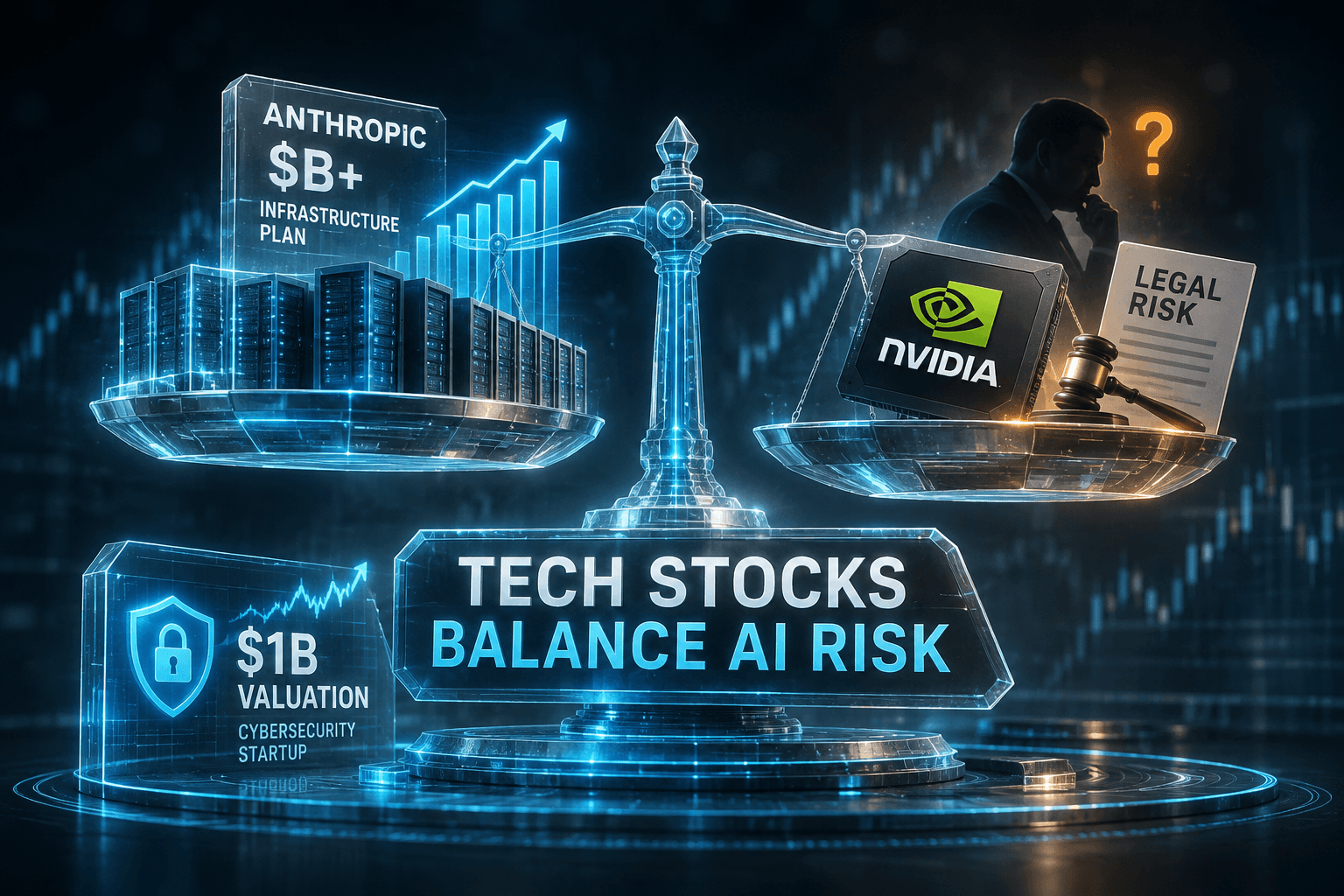
Technology’s morning headlines bring a striking measure of AI ambition, alongside uncertainty around one of the sector’s most influential chipmakers. The Financial Times reports that Anthropic is planning more than $900 billion in commitments through 2045, while reports about Nvidia point to an internal effort to reinstate Jensen Huang and a proposed law that could create legal exposure for some customers.
For you, the central question is how much of the AI buildout can translate into durable business returns, and what risks could interrupt it. The stories provide no share-price or percentage moves, so they offer a view of today’s news drivers rather than a read on market reaction.
Market Highlights
Anthropic’s reported plans highlight the vast computing requirements behind AI development. The company is said to be pursuing a network called Anthropic Direct, including a commitment to lease 875,000 TPUs for $7.2 billion per year. The reported project scale is significant, but the long timeline and size of the commitment also make execution and financing important considerations.
Nvidia remains central to the day’s headlines, but the news is about governance and policy rather than reported sales or quarterly results. A staff letter reportedly urged the board to reinstate Huang, while the company has warned customers about potential consequences under proposed legislation. Neither report establishes a resolution or a change in Nvidia’s operating performance.
- Anthropic: reported commitments exceed $900 billion through 2045, with 875,000 TPUs leased for $7.2 billion annually.
- Louisiana project: a 600,000-square-foot data center is under construction, with about 1,300 workers reportedly racing to complete it.
- Nvidia: Nvidia (NVDA) is at the center of leadership and regulatory headlines. The provided reports include no stock-price or percentage change.
- Corma: the AI cybersecurity startup reportedly raised $125 million in a Series A at a $1 billion valuation, about three months after product introduction.
Key Developments
Anthropic’s infrastructure plan puts AI costs in focus
The Financial Times report describes an unusually large, long-term buildout. Alongside the TPU leases, it points to a 600,000-square-foot data center rising in Louisiana. The size of the stated commitments signals expectations for substantial computing demand, but reported plans are not the same as completed capacity or guaranteed revenue.
For technology investors, the story connects AI growth with the economics of infrastructure: data centers, specialized chips, power, and long-duration contracts. The reported annual lease cost alone is $7.2 billion, making utilization and the ability to support that expense relevant questions. You’ll want to distinguish announced plans from facilities that are finished and operating.
Nvidia faces a leadership question and proposed legal exposure
According to the Wall Street Journal, Nvidia developer technology director Nader Khalil wrote to the board arguing that not reinstating Huang could cost the company irreplaceable talent. The letter was also reportedly sent to Huang’s roughly 60 direct reports, escalating an internal push. Separate coverage describes Huang’s resignation after more than 33 years and reports that prominent technology figures are calling for his return. The reports do not say that the board has decided to reinstate him.
A second issue may affect Nvidia’s customers. CNBC reports that the company warned buyers that the proposed Remote Access Security Act could expose them to US legal action if Chinese companies access AI chips remotely. The measure is described as proposed, not enacted. Its final terms and any implementation would matter for customers managing cross-border access, and potentially for confidence around chip deployment.
Cybersecurity funding and consumer security add context
TechCrunch reports that AI cybersecurity startup Corma reached a $1 billion valuation after raising a $125 million Series A led by NEA, roughly three months after introducing its product. That funding points to investor interest in AI-related security services, though a private-company valuation is not a measure of public-market performance or proof of future commercial results.
Two other stories offer a broader security backdrop. The alleged 2022 Grand Theft Auto VI leaker, Arion Kurtaj, pleaded guilty, according to the UK Crown Prosecution Service, after hacks that included BT/EE and the leak of 90 game videos. Separately, ZDNet recommends changes to Chrome’s default settings to improve privacy, security, and productivity. These reports are distinct, but together keep cyber risk and everyday digital protection in view.
What to Watch
As the US session continues, monitor whether Nvidia or Anthropic provides direct comment or further detail, and whether reporting clarifies the status of Huang’s leadership. For Anthropic, the important follow-through will be evidence of financing, construction milestones, and the timing of capacity coming online. The reported commitments stretch to 2045, so near-term execution details matter more than treating the full figure as immediate spending.
On policy, watch for progress on the proposed Remote Access Security Act and any clearer explanation of what access could trigger liability for chip buyers. The distinction between proposed rules and enacted requirements is important. You can also track whether the Corma funding story leads to more disclosed product or customer information, while remembering that this is a private startup rather than a listed stock.
Today’s reports don’t provide earnings releases, analyst actions, or verified stock moves to use as a trading signal. A selective approach to interpreting headlines means separating reported intentions from completed actions and watching for company statements, legislation updates, and measurable operating results.
Bottom Line
- Anthropic’s reported $900 billion-plus plan underscores the scale of AI infrastructure ambitions, while raising questions about cost, delivery, and utilization.
- Nvidia’s leadership situation remains unresolved in the reports, and the proposed US law could add uncertainty for some customers.
- Corma’s $1 billion private valuation reflects funding momentum in AI cybersecurity, not a public-market benchmark.
- Keep the GTA VI hacking case and Chrome privacy guidance in context: both are security-related, but neither is evidence of a broad change in technology-sector earnings.
- Use company updates and policy developments to assess what changes in practice; the supplied news contains no stock-price movements.
FAQ Section
Q: What is Anthropic reportedly planning? A: A data center network called Anthropic Direct, with more than $900 billion in commitments through 2045 and leases for 875,000 TPUs at $7.2 billion per year.
Q: Has Nvidia reinstated Jensen Huang as CEO? A: The reports describe an internal campaign urging his reinstatement, but do not report a board decision to bring him back.
Q: Is the Remote Access Security Act already law? A: No. The coverage describes it as proposed legislation, and Nvidia has warned customers about possible legal exposure if Chinese companies remotely access AI chips.
This article is for informational purposes only and does not provide personalized investment advice or recommend buying, selling, or holding any security.