The Big Picture
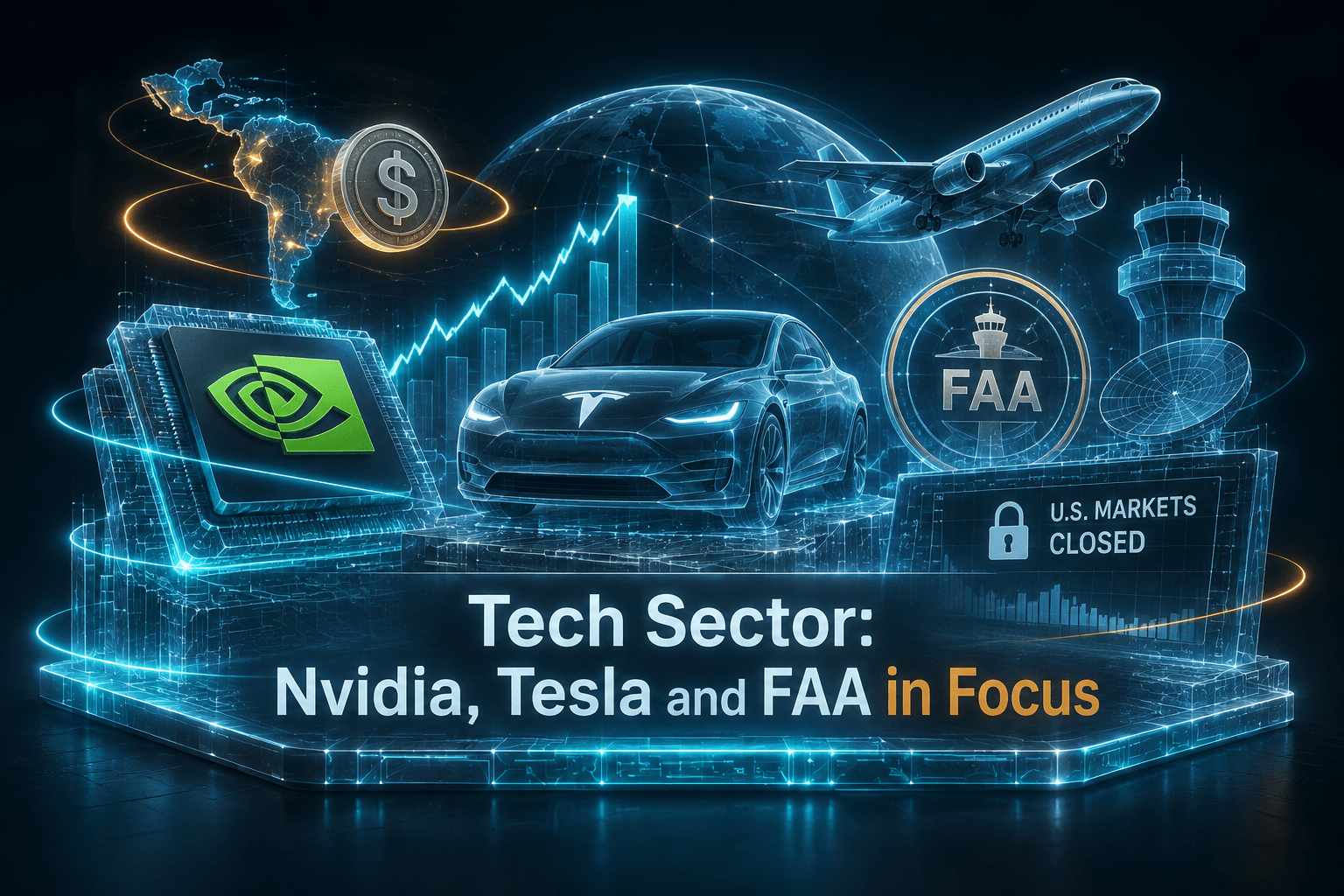
Technology’s Saturday headlines offered no single market-moving theme, but they did spotlight a common investor concern: whether companies and critical systems can turn innovation into dependable products and operations. Stablecoins are gaining practical use in Latin America, while Tesla’s Cybercab pre-orders and a planned Netflix adaptation of Magic: The Gathering put fresh attention on consumer-facing technology and intellectual property.
At the same time, calls for Nvidia to revisit its leadership and questions about the FAA’s technology infrastructure underscore governance and reliability risks. U.S. stock markets were closed Saturday, November 14, so there was no trading reaction to these reports; you’ll have Monday, November 16, as the next regular session to assess any response.
Market Highlights
The news was mainly about products, operations and corporate leadership, rather than earnings or new financial guidance. The reports provided no share-price changes or percentage moves, so there are no verified stock performance figures to cite heading into the long weekend.
- Nvidia: Investors with about $2.13 billion in combined company holdings urged the board to consider the company’s future leadership. A separate petition calling for Jensen Huang’s return reportedly surpassed 100,000 signatures.
- Tesla: The company opened Cybercab pre-orders for personal use, with geographic restrictions and a $299 monthly fee. Elon Musk reportedly described the fee as too high.
- Stablecoins: USD-pegged tokens are taking a growing share of Latin American crypto activity, serving as both a store of value and a cross-border payment method.
- FAA: Officials attributed Friday’s nationwide ground stop to work replacing copper wire with fiber at a remote facility, and said there was no evidence of an AI-related cause.
For listed companies, relevant tickers include Nvidia (NVDA), Tesla (TSLA), Netflix (NFLX) and Apple (AAPL). The headlines don’t establish any immediate revenue or earnings impact for those businesses, so the distinction between attention and measurable financial results matters.
Key Developments
Nvidia leadership debate puts governance in view
Two major Nvidia shareholders, Altimeter’s Brad Gerstner and Atreides’s Gavin Baker, have urged the board to consider its options for the company’s future leadership, according to CNBC. Their firms reportedly own $2.13 billion in Nvidia. Separately, Business Insider reported that a petition seeking Huang’s return as CEO had more than 100,000 signatures, including names such as Elon Musk, Tim Sweeney and Garry Tan; organizers said more than 5,000 Nvidia employees signed.
The reports do not describe a board decision or an announced leadership change. For shareholders, the immediate issue is how this public campaign may affect perceptions of governance, continuity and board oversight. Petition signatures and investor letters can attract attention, but they aren’t, by themselves, evidence that a company’s plans or operating performance have changed.
Payments adoption grows as transportation systems face scrutiny
Bloomberg’s reporting describes USD-pegged stablecoins gaining ground in Latin America as a way to preserve value and make cross-border payments. Their usefulness to people who may not know how blockchain works suggests that the appeal can be practical rather than purely speculative. The story points to potential demand for accessible digital payment services, while leaving open questions about regulation, consumer protections and how adoption develops.
In a separate infrastructure story, Transportation Secretary Sean Duffy said Friday’s FAA ground stop was linked to routine work replacing outdated copper wire with fiber at a remote facility. The administration said there was no evidence of an AI connection. What does the incident mean for investors? It highlights the operational importance of technology upgrades: even maintenance work can have broad consequences when it affects critical systems, and officials’ explanation does not alone resolve questions about resilience or execution.
Consumer launches and software maintenance bring different tests
Tesla’s Cybercab pre-orders introduce a personal-use option with geographic restrictions and a $299 monthly charge. Musk’s reported comment that the fee is too high adds a pricing question to the launch. Prospective customers may weigh the cost and access limits, while investors will need reported evidence of demand and the terms of the offering before judging its business significance.
Netflix says an animated Magic: The Gathering series, titled Planeswalker, is planned for 2027. The project revisits an adaptation first teased in 2019, so the new announcement renews attention on the franchise’s potential reach beyond games. Elsewhere, TechCrunch offered setup tips for Apple’s iPhone Duo, and ZDNet reported that AI-generated bug reports are adding pressure to Linux maintainers, some of whom are leaving while others see possible benefits. These stories illustrate the split between consumer-product engagement and the human review work needed to maintain software.
What to Watch
On Monday, November 16, watch for any market response to Nvidia’s governance headlines, while keeping in mind that no board action was reported. For Tesla, subsequent details about Cybercab eligibility, geographic limits, the subscription price and customer interest will help clarify whether pre-orders translate into meaningful demand. The announced Netflix series is scheduled for 2027, making execution and further production updates longer-term considerations.
For technology investors, the FAA incident also puts infrastructure reliability and modernization back on the agenda. Follow-up information on the disruption and the safeguards around upgrades could matter beyond aviation. Stablecoin adoption is another area to monitor, particularly for regulatory developments and evidence that payment use is expanding. You can distinguish reported adoption or product announcements from financial results, which these stories did not provide.
Bottom Line
- U.S. equities were closed Saturday; the next trading session is Monday, November 16.
- Nvidia faces public leadership pressure, but no board decision or leadership change was reported.
- Stablecoin use in Latin America signals practical payment demand, alongside unresolved regulatory and consumer-protection questions.
- Tesla’s $299 monthly Cybercab fee and geographic restrictions leave affordability and uptake as key questions.
- The FAA ground stop and Linux maintenance strain underline reliability and human oversight risks in technology systems.
FAQ Section
Q: Did U.S. technology stocks trade on November 14? A: No. It was Saturday, so U.S. stock markets were closed; the next session is Monday, November 16.
Q: Has Nvidia announced a CEO change? A: No change was reported. Shareholders urged the board to consider leadership options, and a separate petition called for Jensen Huang’s return.
Q: What caused Friday’s FAA ground stop, according to officials? A: Officials linked it to work replacing copper wire with fiber at a remote FAA facility and said there was no evidence of an AI-related cause.
This article is for informational purposes only and is not personalized investment advice.