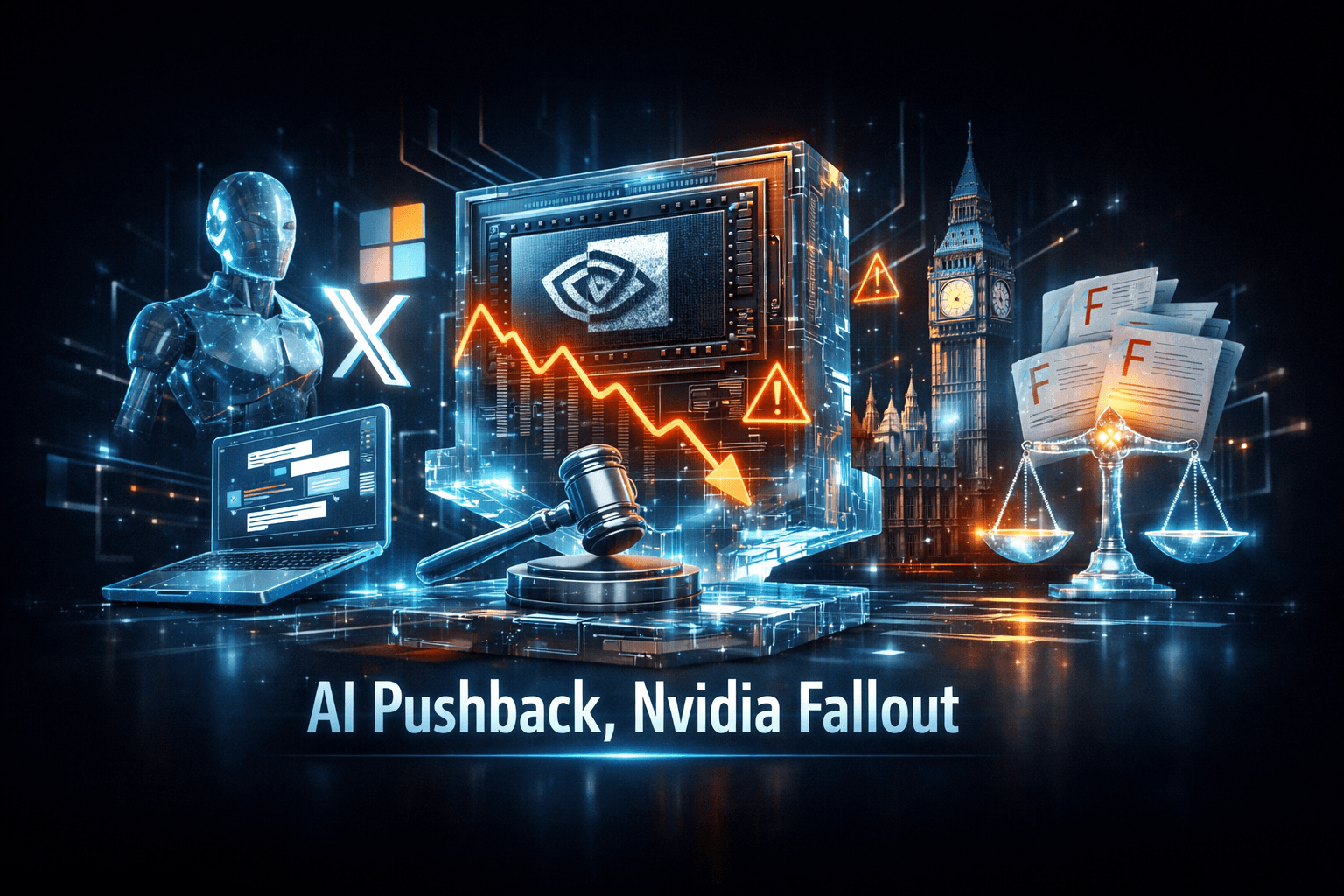
The Big Picture
Today’s technology tape reads like a split screen: fresh consumer and platform features are rolling out even as governance and policy questions cast a shadow over AI-heavy names. You’ll see product momentum in gaming and social platforms, but the sector is also wrestling with credibility and oversight debates that could shape regulation and investor sentiment.
Why should you care? These headlines affect different parts of the market in different ways, so your exposure to cloud, semiconductors, software, or consumer hardware will determine which news matters most to you.
Market Highlights
Here are the top overnight and pre-market developments to watch as US markets open:
- Apple product teardown: iFixit gives the new MacBook Pro with PROLED XDR a 5/10 repairability score, one point higher than the M5 MacBook Pro, and notes Touch ID works with a new logic board and the backlit logo uses four LEDs.
- Regulatory shift in education: England’s Office for Students recommends a return to AI-free assessments including written exams, citing difficulty grading coursework when AI tools are in use.
- Nvidia governance spotlight: reporting says corporate governance experts are intensely focused on recent developments at Nvidia (NVDA), creating headline risk for the chip sector.
- Platform and gaming moves: X launches a clipping feature to boost influencer engagement, and Microsoft rolls out Automatic Super Resolution, its DLSS competitor, for the Xbox Ally X and Ally X20 as well as select Windows Copilot Plus PCs.
Key Developments
Nvidia governance drama
Multiple reports note an unfolding governance situation at $NVDA that has corporate governance experts "reaching for the popcorn." The exact details continue to develop, but the coverage signals elevated scrutiny and possible leadership turmoil. For you, that means $NVDA may be subject to headline-driven volatility, and related semiconductor and AI supply-chain names could track that mood.
AI pushback and academic policy
England’s higher education regulator told institutions that AI has made grading coursework close to impossible and urged a return to AI-free assessments like traditional written exams. That’s a concrete policy response to student use of AI tools, and it suggests regulators are moving from guidance toward prescriptive actions in domains where AI use complicates measurement.
What does this mean more broadly? If education becomes a testing ground for tighter AI controls, similar approaches could be proposed in other sectors where automated outputs are hard to audit. You should think about how such policy shifts could change demand or compliance costs for AI service providers.
Product and platform wins: Microsoft, X, Apple
Microsoft’s Automatic Super Resolution, a DLSS competitor, is now available on the Xbox Ally X and Ally X20 and on select Windows Copilot Plus PCs. That’s a strategic move for Microsoft (MSFT) because it gives the company a competitive imaging and performance tool across consoles and PCs, potentially improving gaming and cloud streaming economics.
X’s native clipping feature aims to accelerate short-form sharing and influencer engagement, a small but practical change that can increase time spent on the platform and content virality. Meanwhile, Apple’s MacBook Pro teardown shows the company continues to push premium display and hardware engineering, though repairability remains middling at a 5 out of 10 score.
What to Watch
Expect market sensitivity to corporate governance and policy updates today and in the coming days. Will more details on the $NVDA situation emerge, and how will market participants price that risk?
Watch for the following catalysts and risk factors that could move tech names you own or follow:
- Updates and official statements from $NVDA, including any board or executive communications. Those could quickly alter sentiment.
- Policy signals from other regulators, especially in education and public sector procurement. A shift toward AI-free assessment models could ripple to vendors that sell AI tools to institutions.
- Product rollout details and adoption metrics for Microsoft’s Auto SR, particularly developer and gamer feedback, which could influence $MSFT gaming revenue narratives.
- Engagement metrics and monetization signals from X after its clipping feature launch; early adoption by creators will matter for platform monetization hopes.
- Supply chain and repairability commentary around Apple’s new MacBook Pro. The 5/10 teardown score and parts notes may factor into second-order service and aftermarket narratives.
How should you parse this? Be selective. Your time horizon and exposure determine whether short-term headline risk or long-term product cycles matter most to you.
Bottom Line
- Sentiment is mixed: product and platform innovation is alive, but governance and policy questions are creating outsized headline risk.
- $NVDA remains the largest single focus for governance-driven volatility in the sector today.
- $MSFT’s Auto SR rollout is a tactical win for gaming and upscaling competition, and it could affect adoption curves for PC and console technologies.
- Regulatory moves in education show real pushback against unfettered AI use, suggesting more targeted policy actions may follow.
- Watch early user metrics for X’s clipping feature and supply or repairability commentary for Apple products for second-order impacts.
FAQ Section
Q: How will the Nvidia governance news affect the wider chip sector? A: Heading-line governance issues at $NVDA can create contagion in sentiment across chip names, but fundamentals like AI demand and capacity utilization still matter for earnings and long-term growth.
Q: Does the UK regulator’s guidance mean education companies will lose AI business? A: Not necessarily. The guidance targets assessment methods, not wholesale bans on AI tools. Vendors providing verifiable, auditable AI may still find demand.
Q: Will Microsoft’s Auto SR reduce Nvidia’s dominance in upscaling tech? A: Auto SR adds a competitive option, especially on Xbox and Windows hardware. It could blunt exclusive advantages in some gaming scenarios, but ecosystem adoption and developer support will determine how much market share shifts.
Analysts note that this mix of product progress and governance scrutiny favors a selective approach to tech exposure today. Data suggests headlines will drive short-term moves, while adoption curves and regulatory outcomes will shape the longer term.