The Big Picture
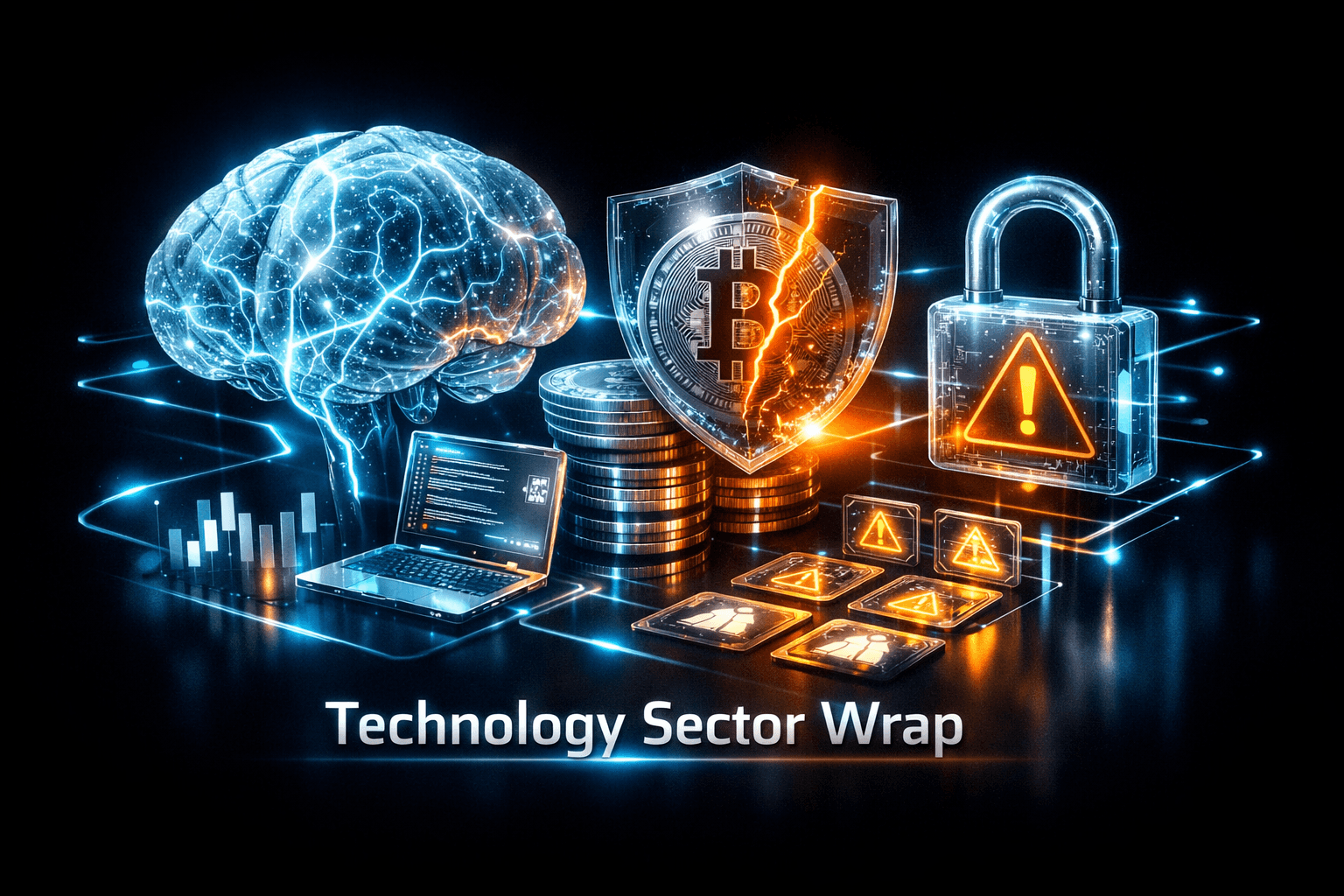
The biggest theme in tech over the long weekend is a collision of promise and risk, as a breakthrough in AI theory sits alongside a high‑profile crypto security crisis. You should care because both stories reshape near term risk profiles and longer term opportunity sets across chips, cloud, and crypto infrastructure.
Markets were closed on Saturday. The last trading day was Friday, November 6 and the next session is Monday, November 9. News published today may influence sentiment heading into that session, so keep an eye on follow up headlines and official filings.
Market Highlights
Here are the quick facts retail investors will want to track as you prepare for Monday.
- AI theory shock: The New York Times reported that Russell Impagliazzo called OpenAI's reported disproof of the Exponential Time Hypothesis shocking, a development that analysts say could accelerate chip design and algorithmic advances, with implications for Nvidia (NVDA) and other chip makers.
- Binance turmoil: Binance announced CFO Kaiser Ng is leaving and named Justin Yek as successor after the recent $6.3 billion hack. That event has heightened regulatory and counterparty risk across crypto markets and related infrastructure.
- Consumer and hardware news: Amazon.com (AMZN) rolled out a redesigned basic Kindle that reviewers say makes the entry model more compelling. Costco members are seeing discounts on a remastered Zelda title, a small positive for Costco Wholesale (COST) and console sales ahead of the holidays.
- Security alert: Alpine Linux and OpenSSH published a critical patch described as urgent. Enterprises and cloud providers will need to prioritize updates to avoid exposure.
Key Developments
OpenAI breakthrough and downstream effects
Reports that OpenAI has disproved the Exponential Time Hypothesis have reverberated through the tech community. Researchers say the finding, if validated, could one day speed chip design and make certain classes of problems far easier to solve, which would be a big tailwind for compute demand.
For you as an investor, that means market interest in companies tied to AI infrastructure is likely to remain elevated. Analysts note $NVDA is already positioned to benefit from rising accelerator demand, but validation and commercial timelines will be important to watch.
Binance CFO exit after a $6.3B hack
Binance announced that CFO Kaiser Ng will depart to pursue a new venture and that Justin Yek will step in with a six month transition plan. The timing follows the massive $6.3 billion theft that has drawn regulatory scrutiny and customer concerns.
The implications are clear, you should expect continued volatility in crypto markets and increased focus from regulators and institutional partners. Exchanges and custody providers will face questions about governance and risk controls, and related public companies and tokens may see sentiment pressure until clarity returns.
SpaceX Starbase supercomputer plans and political headwinds
Public records reportedly show SpaceX building a Starbase supercomputer in Texas, a sign that the company is pushing further into AI and high performance computing. Local politics may complicate expansion, as reports note Texas gubernatorial election results could delay some data center plans.
That contrast shows how nonmarket factors influence infrastructure rollouts. If SpaceX accelerates in states with favorable policy, companies that provide data center components and services could benefit over the medium term.
What to Watch
Looking forward, there are several catalysts and risk factors that could move sentiment when markets reopen on Monday. How you position depends on the time horizon and your risk tolerance.
- Follow up on the OpenAI result. Look for peer review, academic commentary, and vendor roadmaps. Will $NVDA and other chip makers provide guidance updates linked to faster algorithmic improvements?
- Monitor Binance and crypto flows. Watch trading volumes and stablecoin moves. Regulators may issue statements or open new inquiries, which could affect liquidity and counterparty risk for firms exposed to crypto.
- Security patching progress. The Alpine Linux and OpenSSH flaw is rated critical. If major cloud providers report breaches or delayed patching, enterprise technology stocks could face short term pressure. Are your cloud vendors and service providers patching quickly?
- Retail and device demand. $AMZN's new Kindle is a reminder that product refreshes can lift hardware attach rates and services revenue. Keep an eye on holiday promotions and inventory signals.
- Political and permitting risks for data centers. Local elections and permitting delays can change expansion timelines for large data center and supercomputing projects, which affects component suppliers and regional utilities.
Bottom Line
- News is mixed, combining a potentially transformative AI theoretical result with an acute crypto security crisis, so sentiment is balanced rather than one sided.
- Expect continued attention on $NVDA and other AI infrastructure plays if the OpenAI report is validated, but timelines matter more than headlines.
- Crypto-related volatility and governance questions around Binance are a near term risk for tokens and firms with crypto exposure.
- Security patches for Alpine Linux and OpenSSH are urgent, and delayed remediation could create downside risk for enterprise tech names.
- Consumer device refreshes such as $AMZN's Kindle and holiday game discounts provide small but tangible demand signals into year end.
FAQ
Q: How should I interpret the OpenAI theory report for chip stocks? A: Analysts say it's an important research milestone that could increase long term compute demand, but commercial impact will depend on validation and software toolchains.
Q: Will Binance's CFO departure affect crypto markets immediately? A: The CFO change follows a large hack and adds to regulatory and governance scrutiny, which typically increases near term volatility, especially for exchange linked tokens.
Q: Do I need to worry about the Alpine Linux OpenSSH patch? A: Yes, it's described as critical. Enterprises and hosting providers should prioritize the update because unpatched systems can be exposed to severe exploits.