The Big Picture
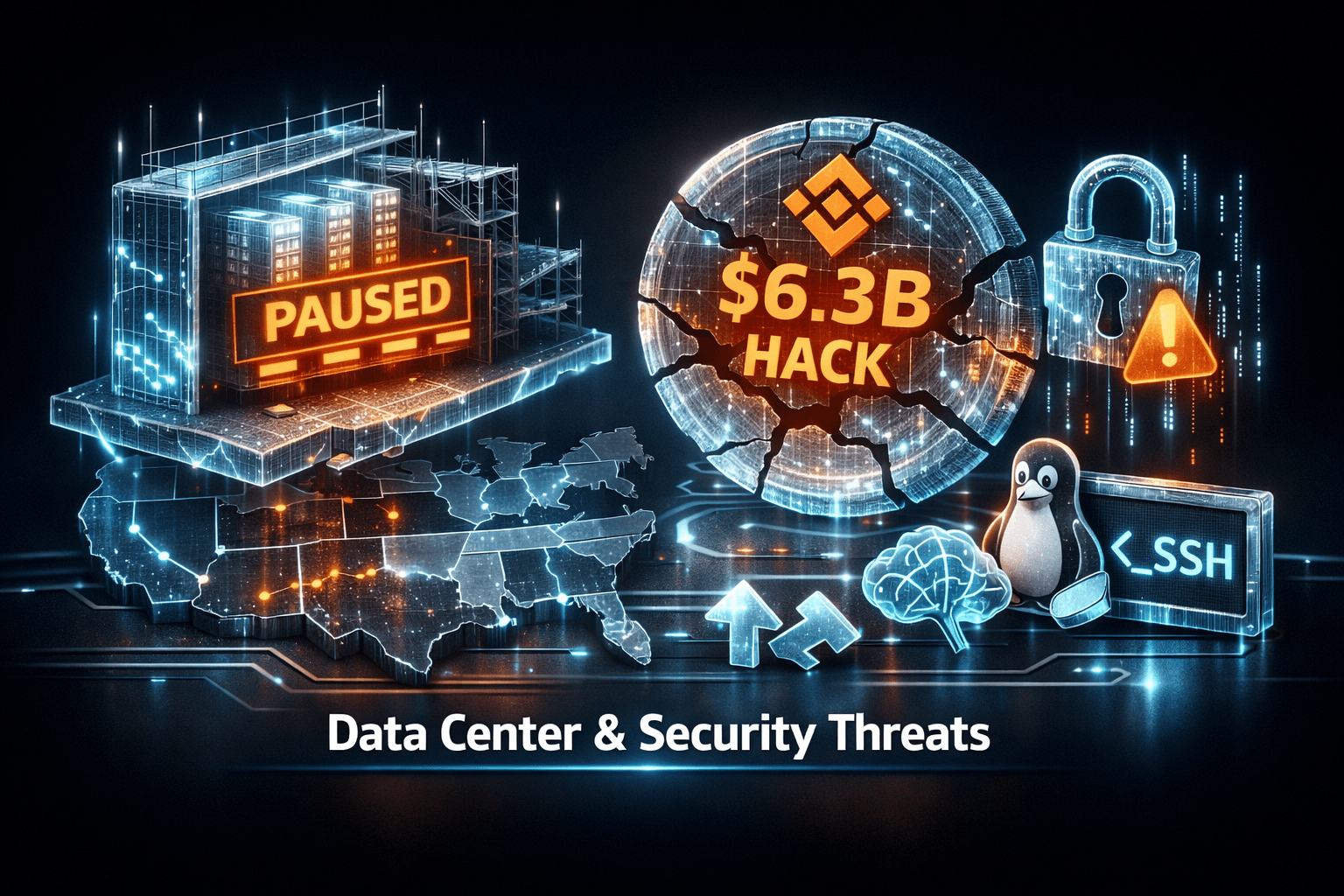
Overnight headlines put the spotlight on infrastructure and security risks across the technology sector, with potential implications for cloud, crypto and AI infrastructure names. New data show about 40 percent of planned data center capacity is in states where governors have signaled construction pauses, and a $6.3 billion Binance hack plus a new Linux SSH vulnerability have heightened investor caution.
There are silver linings for parts of the market. Big-ticket M&A in cybersecurity and consumer-facing AI product plans suggest selective momentum. But for you and other retail investors, risk management is the order of the day as markets open on Friday.
Market Highlights
Here are the quick takeaways that could move sector flows this morning.
- Tesla (TSLA): Elon Musk says Cybertruck production at the Texas Gigafactory will be wound down around mid-2027 to make room for increased Cybercab robotaxi output.
- Data center capacity: Cleanview estimates roughly 40% of planned U.S. data center capacity sits in states where newly elected governors have pledged to pause or halt construction.
- Crypto security: Hackers stole about $6.3 billion from Binance, with approximately $2.5 billion taken in a single Ethereum transaction, according to Blockaid analysis.
- Palo Alto Networks (PANW): Palo Alto Networks is reportedly in talks to buy AI agent security startup Clutch for about $500 million, up from a prior valuation near $85 million.
- Other movers: At least 10 local governments have moved to drop Flock surveillance cameras, and OpenAI said it will stop using NDAs with public officials on data center projects after voter pushback.
Key Developments
Tesla shifts production, eyes robotaxi scale
Elon Musk said Tesla will wind down Cybertruck production at the Texas Gigafactory in mid-2027 to free space for Cybercab robotaxi production. That signals a strategic pivot from a high-profile consumer product toward long-term fleet ambitions, which could reshape capital allocation and factory utilization for $TSLA.
What should you make of this? It raises questions about near-term revenue mix and margins for pickup production, and it deserves watching as Tesla retools capacity toward a product that has a much longer commercialization timeline.
Data center pause and community pushback
Bloomberg and Cleanview reporting shows about 40 percent of planned data center capacity falls in states where governors-elect promised construction pauses. OpenAI followed up with a policy move, saying it will stop using nondisclosure agreements with public officials on local data center projects.
That combination is significant for cloud and chip names who rely on continued buildouts. It could delay capacity expansion and shift negotiations to a more public, and sometimes political, process. Who benefits and who loses may depend on how quickly permitting resumes and how companies adapt communications with communities.
Security shocks: crypto heist, vulnerabilities, and M&A
Security headlines dominated the overnight cycle. Blockaid reported that Binance hackers moved roughly $2.5 billion in one Ethereum transaction as part of a $6.3 billion theft. At the same time a fresh Linux SSH vulnerability dubbed Meet sshole allows attackers to log into some devices without a password, affecting Alpine and potentially other distributions.
These incidents are a wake-up call for you if you own names tied to crypto, cloud security or network infrastructure. On the corporate response front, Palo Alto Networks is in talks to acquire Clutch for about $500 million, a sign that established security vendors are doubling down on AI agent protection as threats evolve.
What to Watch
Look for how markets price in policy and security developments over the next days. Will data center permitting become a multi-state drag on infrastructure capex and related stocks like Equinix (EQIX) and Digital Realty Trust (DLR)? You'll want to follow local permitting news and corporate statements carefully.
Keep an eye on after-hours and today's intraday reaction in $TSLA, $PANW and major cloud names. Also watch for any regulatory follow-ups to the Binance theft that could affect crypto-related equities or ETFs. How will companies respond operationally to the SSH vulnerability and other breaches? That response will matter for sentiment.
Finally, monitor upcoming catalysts: corporate earnings that include capital expenditure guidance, any emergency security advisories or patches, and statements from governors or state regulators that clarify data center moratoria timelines.
Bottom Line
- Policy and permitting risk is now a material factor for data center expansion, with roughly 40 percent of planned capacity in states pausing builds.
- Large-scale crypto thefts and new systemic security flaws raise sectorwide trust and risk premiums in the near term.
- Corporate strategy shifts, like $TSLA moving capacity toward robotaxis, create winners and losers depending on timelines for commercialization.
- M&A in cybersecurity, such as $PANW's talks to buy Clutch, indicates established vendors are investing to close security gaps.
- For you, selectivity and attention to policy and security updates are essential. Analysts note that near-term volatility may persist until clarity on permitting and remediation arrives.
FAQ Section
Q: How will data center pauses affect cloud and chip companies? A: Delays in permitting can slow revenue-linked capacity builds and push out capital spending, which may pressure shares of data center operators and infrastructure suppliers until projects restart.
Q: Does the Binance hack mean crypto tokens are unsafe? A: The hack highlights platform and wallet risks. It does not speak to all tokens, but it does raise counterparty and custody concerns that analysts say will affect market sentiment.
Q: Should I be worried about the new SSH vulnerability? A: You should watch vendor advisories and apply patches if you manage systems. Security teams are likely to prioritize fixes and mitigations, and public reporting will determine how widespread the impact is.