The Big Picture
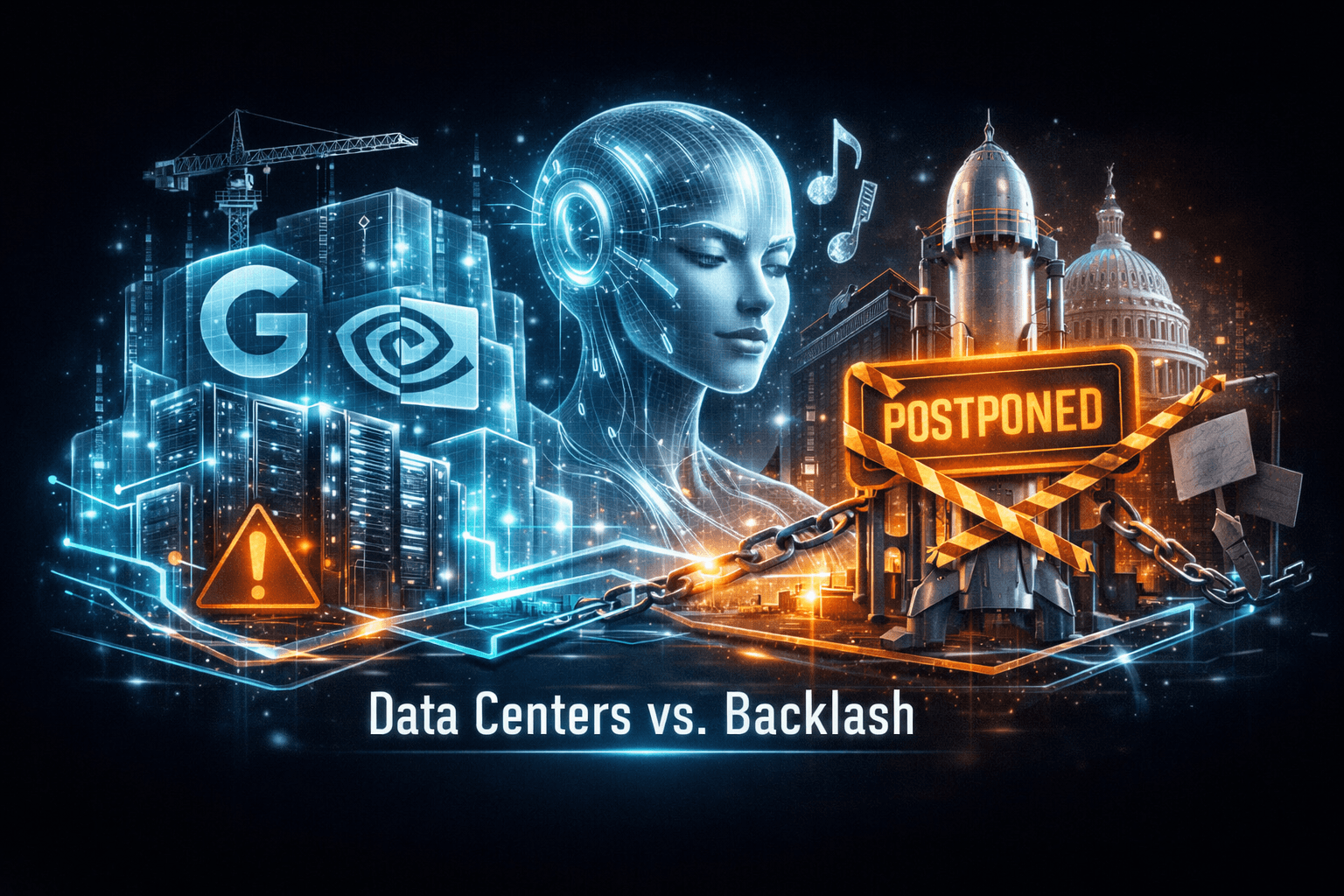
Today’s biggest theme in tech was a tug of war between heavy-duty infrastructure spending and rising political and operational constraints. Alphabet’s $17 billion Wyoming proposal and Nvidia’s search for fast data-center capacity signaled continued capital intensity for AI, while Meta warned that election-driven opposition could complicate new builds.
If you follow cloud and AI infrastructure, today mattered because it shows where dollars and limits are colliding. You’ll want to pay attention to how companies pivot from greenfield projects to scaling existing assets, and what that means for supply chains and regional politics.
Market Highlights
Key headlines and takeaways you can scan quickly.
- Google / Alphabet, Alphabet (GOOGL): Announced a formal $17 billion plan to build its first Wyoming data center and to cover the power costs for the site, plus a Community Council to address local concerns.
- Nvidia, Nvidia (NVDA): Reported approaches to Apollo about retrofitting 130+ Brightspeed buildings into small data centers, a sign Nvidia is looking to speed deployment of chip capacity close to users.
- Meta, Meta Platforms (META): Rolled out Muse AI voice and expressive avatar video-chat features in the US, while company leaders warned recent election results will make ground-up data-center projects harder in some regions.
- Blue Origin: Delayed the next New Glenn launch until January 2027 after a May launchpad explosion caused damage, an operational setback for its space ambitions.
- Samsung: The Galaxy Z Fold 8 is on sale for $1,599.99, a $300 markdown ahead of Black Friday, a consumer-facing pricing move amid a competitive handset market.
- OpenAI: Released a new cybersecurity model as labs face scrutiny for protecting critical infrastructure.
Key Developments
Data-center capex meets community resistance
Alphabet’s $17 billion Wyoming project puts a dollar figure behind the scramble to house AI workloads. Google says it will pay for the site’s power usage and create a Community Council to negotiate growth concerns, which suggests companies are learning they need stronger local buy-in.
Meta’s executives echoed that point at the WSJ Tech conference, saying new site approvals will be tougher post-midterms, but that expanding existing campuses may be easier. So what’s the takeaway for you? Expect more emphasis on expanding current campuses and retrofitting existing buildings rather than launching many new greenfield sites.
Nvidia’s pragmatic push for capacity
Sources say $NVDA talked to Apollo about converting more than 130 Brightspeed telecom buildings into small data centers. That’s a quick-to-deploy strategy and it tells you Nvidia is looking to get chips powered and online faster, rather than waiting for long-lead construction projects.
For investors, this indicates momentum in demand for AI compute and more inventive infrastructure strategies. It’s also an example of companies going after underused real estate to accelerate capacity, which could compress timelines for AI services.
AI product rollouts and cybersecurity focus
Meta launched Muse voice mode and animated avatar video chat for US users and previewed a wearable to bring Muse to life. These consumer-facing upgrades show Meta is pushing AI into everyday interactions, expanding its addressable market for engagement products.
At the same time, OpenAI released a cybersecurity model, reflecting growing concern about AI’s role in digital safety. That’s timely given regulators and enterprise customers are increasingly scrutinizing model governance and resilience.
What to Watch
Keep an eye on regulatory, political, and execution signals that will shape the next quarter.
- Local permitting and community opposition: Will Community Councils and engagement programs actually speed approvals, or will they be noisy stopgaps? You should watch city council votes and state-level energy policy debates closely.
- Data-center deployment timelines: Nvidia’s retrofit approach and Meta’s emphasis on expansions could shift capex patterns. Track announcements about conversions of telecom buildings and timelines for chip racks going live.
- Earnings and guidance: Upcoming quarterly reports from major cloud and AI players may update capital plans or show revised margins tied to infrastructure costs.
- Cybersecurity stance: OpenAI’s model release and enterprise security demand could influence cloud spend and vendor selection for regulated customers.
- Operational risks: Blue Origin’s launch delay is a reminder that hardware and launch operations carry long lead times and safety-related pauses that can affect partnerships and revenues.
Bottom Line
- Big infrastructure dollars are still flowing, but political pushback is forcing companies to change tactics and emphasize expansions and retrofits.
- Short-term moves like Nvidia pursuing telecom building retrofits show a demand-driven race to get AI chips into service faster.
- Consumer AI features from Meta and new cybersecurity tools from OpenAI keep product innovation alive even as infrastructure debates play out.
- Operational setbacks such as Blue Origin’s delayed launch highlight execution risks in hardware-heavy segments.
- Analysts note the sector shows mixed signals today, so you're likely to see selective opportunities rather than a broad one-way trade.
FAQ Section
Q: Will Google’s $17 billion Wyoming plan speed AI adoption? A: The scale of Google’s spend signals long-term commitment to AI infrastructure, but timelines depend on permitting and grid agreements.
Q: Could Nvidia’s retrofit plan be replicated elsewhere? A: Yes, converting telecom or legacy buildings is a repeatable, faster route to capacity, but availability and power access vary by region.
Q: Should product launches like Meta’s Muse voice worry regulators? A: New features increase regulatory and safety scrutiny, and companies are already facing questions about governance and user protections.