The Big Picture
Over the long weekend, multiple outlets painted a worrying picture for the physical backbone of AI growth, as financing and execution troubles surfaced across the data center pipeline. You should pay attention, because these developments affect more than just builders; they touch chip demand, cloud providers, and credit exposed to the sector.
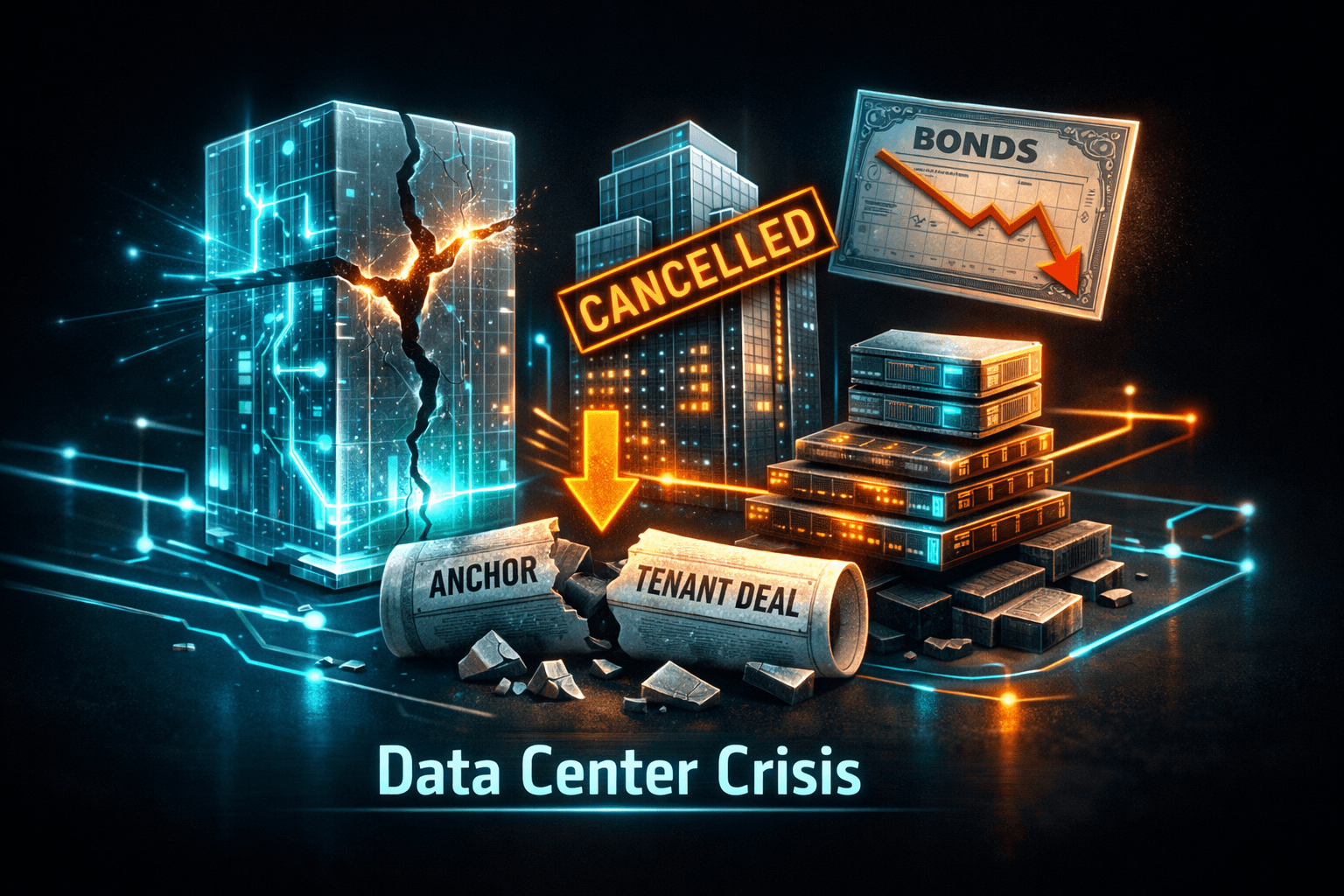
The most impactful developments include at least 47 large U.S. data center projects delayed, withdrawn, or blocked in 2026, mounting debt stress with a CoreWeave bond yield topping 15 percent, and Microsoft pulling the plug on a major Nscale tenancy that included plans to rent 23,000 Nvidia AI chips. These items raise fresh questions about the pace and cost of AI infrastructure build-out.
Market Highlights
Markets were closed on Sunday, October 18. The summaries below reflect reporting and market-relevant figures published over the weekend and should be read as you position for the next session, after the Friday, October 16 close.
- Data center pipeline: Regulators and developers flagged 47 plus large U.S. projects delayed, withdrawn, or blocked in 2026; Bernstein estimates only about 35 percent of the planned U.S. pipeline is credible.
- Debt stress: CoreWeave bond yields topped 15 percent, while some Oracle-related debt is trading near 80 to 90 cents on the dollar, and insuring SoftBank exposure has become pricier according to reporting.
- Anchor tenant fallout: $MSFT canceled its deal with Nscale to rent 23,000 Nvidia chips at a stalled Essex, UK data center, a move that threatens a multibillion-dollar listing for the developer.
- Policy and platform moves: $META removed language that had raised web-scraping and AI training concerns, and TikTok permanently banned a promotional account tied to an upcoming ‘Musk’ documentary.
- AI company dynamics: Anthropic says its workforce skews older and more senior, with more time spent in meetings, reflecting a shift in company maturity and costs.
- Consumer and adjacent tech: Plug-in balcony solar became legal in 10 U.S. states and Mercedes introduced a 1,150hp electric AMG SUV, showing continued consumer tech innovation outside core AI headlines.
Key Developments
Data center financing and project setbacks
Financial Times reporting via RegLayer shows 47 plus large U.S. data center projects were delayed, withdrawn, or blocked in 2026, while Bernstein estimates only roughly 35 percent of planned projects are credible. That combination throws cold water on assumptions about rapid, frictionless capacity expansion and suggests supply-side constraints may be more idiosyncratic than previously thought.
For you as an investor, that matters because slower or more expensive build-outs can change demand timing for $NVDA and other chip suppliers, cloud operators, and REITs that bank on steady leasing. Who ends up bearing cost overruns and higher financing margins will determine winners and losers.
Credit stress around AI infrastructure players
The New York Times and other outlets reported rising credit concerns, with CoreWeave bond yields topping 15 percent and some Oracle debt trading around 80 to 90 cents on the dollar. Insuring SoftBank-linked exposure has also become pricier.
Tightening credit conditions increase project risk and raise the cost of capital for less-established operators. If you own securities of companies tied to the build-out, monitor leverage and debt maturities closely because they can amplify equity volatility.
Microsoft walks away from Nscale tenancy
James Titcomb at The Telegraph reported $MSFT canceled a deal for Nscale to host 23,000 Nvidia AI chips at a planned Essex data center after repeated delays. Losing an anchor tenant of that size undermines the developer’s near-term revenue and calls into question planned listings and financing deals.
This episode highlights counterparty risk for smaller operators relying on big-tech leases to underwrite projects. It also shows how execution hiccups can have ripple effects across suppliers, lenders, and equity markets.
What to Watch
Expect a busy week for follow-up reporting and investor disclosures. Which companies report more detail on project timelines and financing? How will lenders and insurers price risk for AI-related infrastructure going forward?
- Credit signals: Watch bond yields, credit-default swap levels, and debt trading levels for CoreWeave-linked paper and other industry names. Rising yields are an early warning sign.
- Corporate filings and conference calls: Look for updated guidance and disclosures from $MSFT, $ORCL, $META, and any REITs or private operators that disclose exposure to delayed projects.
- Regulatory and permitting news: Local permitting outcomes and appeals for data center projects will affect capacity timing and siting strategy.
- AI capex cadence: Monitor capital equipment orders and shipping notices from $NVDA and other chip vendors for signs of slowing or reshuffling of deployments.
- Policy and platform risk: Changes to $META terms and content moderation moves by platforms like TikTok can influence downstream data access for models. How will developers adapt?
What questions should you be asking about your own exposure? Are companies transparent about funding plans and backup tenants? And how resilient is their balance sheet if a major anchor tenant walks?
Bottom Line
- Data center execution and credit are the dominant near-term risks for AI infrastructure, with 47 plus projects flagged and only about 35 percent of the pipeline deemed credible.
- Debt market signals, including CoreWeave yields above 15 percent and Oracle-related debt trading below par, suggest lenders and insurers are repricing risk.
- $MSFT’s cancellation of the Nscale tenancy is a high-profile example of tenant pullouts amplifying project and listing risk.
- Policy moves by $META and content moderation actions by platforms like TikTok add separate, but related, data-access and distribution risks for AI developers.
- Watch credit markets, corporate disclosures, and permit outcomes closely heading into the next trading session, and be selective about names with sizable project leverage or opaque funding sources.
FAQ Section
Q: How do data center delays affect chip makers like $NVDA? A: Slower or canceled builds can delay demand for GPUs and other AI accelerators, changing the timing of orders and potentially compressing near-term revenue growth for suppliers.
Q: Should I worry about bond yields above 15 percent for a company like CoreWeave? A: Extremely high yields reflect heightened credit risk; analysts note these yields increase refinancing costs and can limit growth if access to cheap capital dries up.
Q: Will platform policy changes at $META or TikTok impact AI training data? A: Policy wording and moderation choices can influence web crawling and data availability, and companies are watching changes closely because they affect training pipelines and downstream model performance.