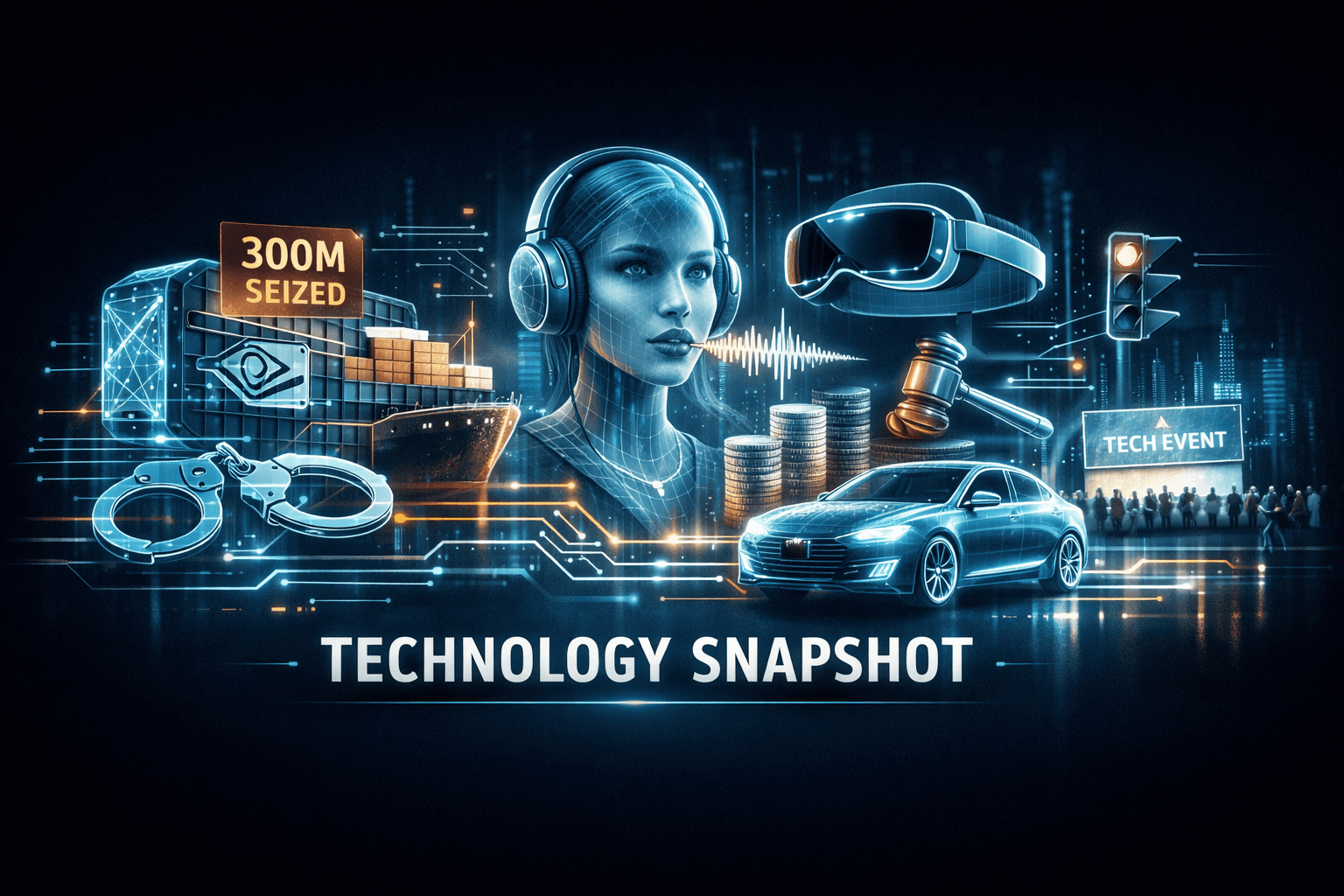
The Big Picture
A major law-enforcement development stole the overnight spotlight: U.S. prosecutors arrested a California man accused of smuggling more than $300 million worth of restricted Nvidia AI chips to China via Malaysia and Singapore. That case reinforces export-control scrutiny at the center of the AI hardware market.
At the same time, product moves kept the agenda busy, with Suno adding spoken voice generation, new analysis of Meta's Muse monetization strategy, and a report that Apple is developing a non‑video smart home camera. You have to balance enforcement risk and product-led growth when you consider tech sector exposure today.
Market Highlights
Overnight developments set a mixed tone across hardware, AI services, and regulation. Below are the fastest facts to scan this morning.
- Nvidia, $NVDA: A criminal case alleges smuggling of more than $300 million in restricted Nvidia AI chips, drawing attention to export controls and supply-chain risk.
- Apple, $AAPL: Reports that Apple is developing a smart home camera that doesn’t record video kept the company in product-news headlines as it expands its home ecosystem efforts.
- Meta, $META: Analysis suggests Meta may avoid ads for Muse early on and pursue trust building and merchant transaction fees as alternative monetization paths.
- Oracle, $ORCL: A profile of Larry Ellison highlighted his influence across data centers, media, and politics, noting his roughly $200 billion net worth and strategic reach.
- Autonomous vehicles: New California rules will penalize robotaxi operators that block first responders, increasing regulatory compliance costs for operators like Waymo and Cruise.
Key Developments
Nvidia chip-smuggling arrest and export-control spotlight
Federal prosecutors arrested a California man accused of moving more than $300 million of restricted Nvidia chips to China through intermediaries in Malaysia and Singapore. The case underlines persistent enforcement risk for high-performance chips and firms in the AI supply chain.
For you, that means policymakers and prosecutors will remain a headline risk for companies reliant on advanced GPUs, and analysts note potential operational and compliance costs may rise over time.
AI product moves: Suno launches speech, Meta weighs non-ad pathways
Suno expanded beyond music generation, rolling out a public beta that creates spoken voices to pair with music and voiceovers. The feature broadens Suno’s addressable use cases in content creation and could pressure incumbents to accelerate voice tooling.
At the same time, MBI Deep Dives argues Meta may not need ads to monetize Muse, at least early on, choosing trust building and later merchant transaction fees as possible routes. Can Muse earn user trust without ad-based incentives? Analysts say monetization paths will shape platform economics and developer uptake.
Regulation, events, and influence: robotaxi fines, TechCrunch Disrupt, and Ellison
California approved new rules that can fine robotaxi operators if vehicles block first responders. The regulation adds another compliance layer for fleets deployed in dense urban environments and could translate into operational limits or extra insurance costs.
Looking ahead, TechCrunch Disrupt 2026 centers on building enduring AI-era companies, which matters if you follow startup funding and enterprise adoption cycles. Meanwhile, a Vanity Fair profile on Larry Ellison showed Oracle’s reach into data centers, content, and politics, reminding you that large software incumbents keep strategic influence over infrastructure choices.
What to Watch
Today and near term, focus on three clusters of catalysts and risk factors that could move sector sentiment and prices.
- Enforcement and export-control developments: Watch for comments from the Department of Justice or Commerce related to the Nvidia chip case. Any widening probes or sanctions could pressure $NVDA suppliers and customers.
- Regulatory rollouts for autonomy: Monitor California agencies and operator responses to the robotaxi fines rule. Implementation details, compliance timelines, and possible litigation will matter for names tied to autonomous services, such as Waymo and Cruise.
- Product launches and monetization signals: Keep an eye on announcements from Apple, Meta, and AI startups at TechCrunch Disrupt. Apple’s smart-home hardware approach and Meta’s Muse strategy both influence platform economics and developer adoption.
Risks to monitor include supply-chain disruptions, rising compliance costs, and shifting monetization that could compress near-term revenue even as platforms lay groundwork for long-term growth. How you parse these signals depends on your time horizon and risk tolerance.
Bottom Line
- Neutral near-term tone: enforcement and regulation are offsetting product and platform innovation, so the sector looks like a mixed bag for now.
- Export-control enforcement is a real force, and the $300 million Nvidia case raises the bar on compliance expectations for hardware suppliers.
- AI and voice tools are expanding, with Suno’s speech beta and platform strategies from Meta and Apple shaping future revenue models.
- Autonomy regulation in California increases operational risk for robotaxi operators and could push costs higher for fleet deployments.
- Watch TechCrunch Disrupt and agency guidance for the clearest near-term signals on product traction and regulatory direction.
FAQ Section
Q: How could the Nvidia chip-smuggling arrest affect chipmakers and suppliers? A: Prosecutors note the case highlights enforcement of export controls, which can lead to tighter compliance, potential delays in cross-border shipments, and higher due-diligence costs for suppliers.
Q: Will Meta really avoid ads for Muse? A: Analysts say Meta may deprioritize ads initially to build user trust, while exploring merchant transaction fees or other non-ad revenue; timing and execution will determine the financial impact.
Q: What should I watch about the new robotaxi fines rule? A: Track implementation guidance from California regulators, operator compliance plans, and any lawsuits or appeals, since those factors will shape operational cost and deployment pace.