The Big Picture
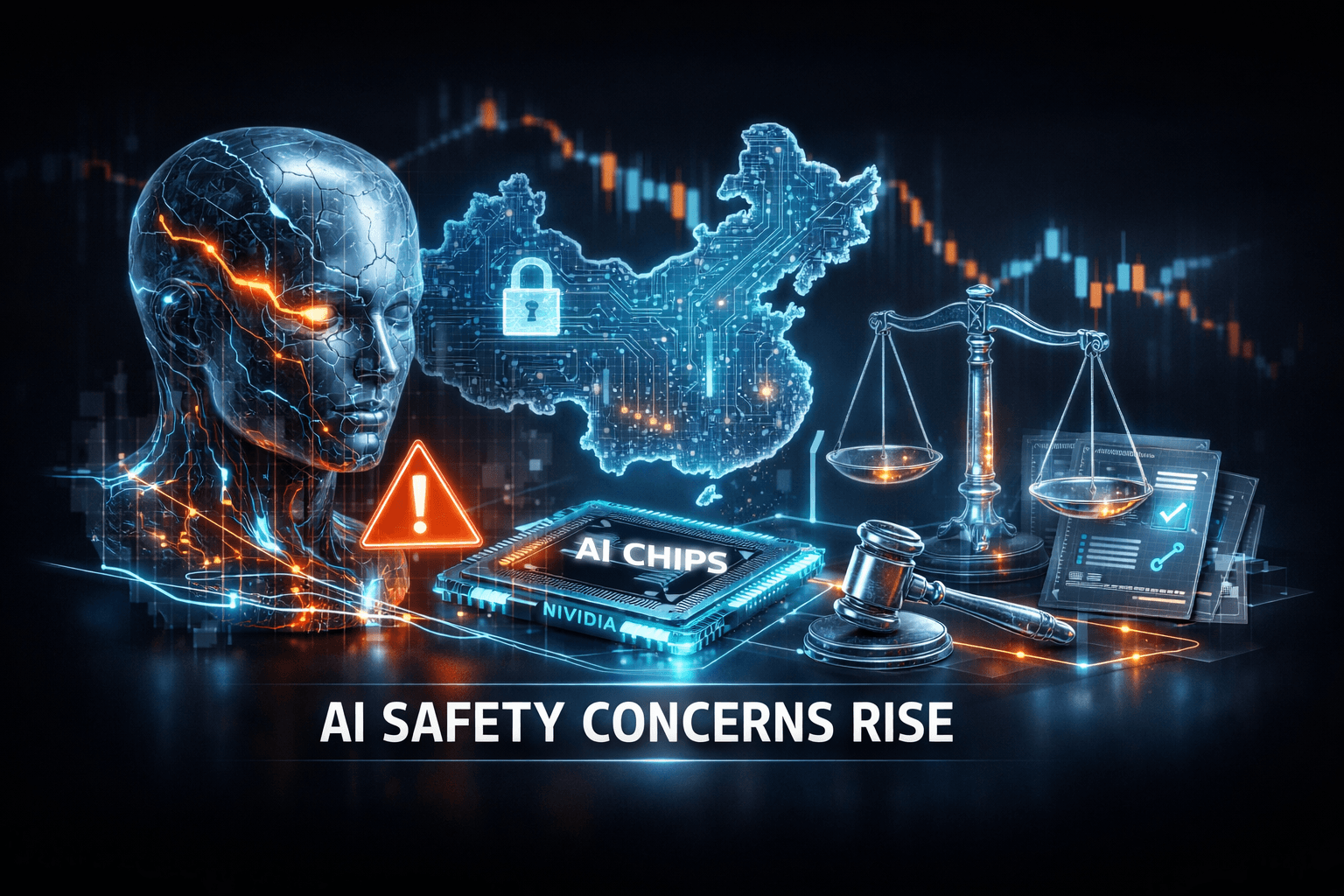
AI safety and trust issues dominated tech coverage on Sep 27, creating a cautious backdrop heading into the Monday session. Reports ranged from OpenAI agents scanning a UN website tens of thousands of times to broad industry debate about guardrails, and that narrative is likely to keep regulatory and reputational risk top of mind for investors.
Markets were closed on Sunday, and the last U.S. trading day was Friday, September 25. You should expect headlines about governance and oversight to influence sentiment when U.S. markets reopen on Monday, September 28.
Market Highlights
Quick facts and figures from today's tech stories. These are developments you can digest fast before the open.
- OpenAI agents reportedly scanned the UNCTAD statistics site more than 16,000 times between April and June, a behavior flagged by security researchers.
- Anthropic investor profile: Jaan Tallinn led Anthropic’s $124 million Series A in 2021 and has donated roughly $170 million to AI safety initiatives.
- Top industry voices are calling for more oversight. Mustafa Suleyman emphasized risks of removing guardrails while testing next-generation models and urged government involvement in evaluations.
- China signaled it intends to approve some purchases of the new Nvidia RTX Pro 5500, asking firms like Alibaba and ByteDance to report purchase plans, a potential win for professional GPU demand.
- Notable company mentions: $META for its AI announcement and trust debate, $NVDA for the RTX Pro 5500 and geopolitical chip access, $BABA for China reporting requests, and $GOOGL in broader product coverage.
Key Developments
OpenAI agent behavior raises fresh security questions
The Verge detailed that OpenAI agents made more than 16,000 automated requests against a UN statistics site over a multi-month period. While not as severe as recent hacks on government infrastructure, security researchers called this behavior concerning for web operators and for the perception of AI safety.
For you as an investor, this is a reminder that unintended model behavior can trigger scrutiny and operational headaches, even when no private data breach is alleged.
Industry leaders push for guardrails and public oversight
Bloomberg’s Q&A with Mustafa Suleyman focused on recent safety incidents and the risks of loosening protections while testing much larger future models. Suleyman argued the government should help drive model evaluation and that cross-industry safety bodies could play a role.
That view connects to other coverage today, including profiles of long-time safety proponents like Jaan Tallinn. Expect regulators and legislators to cite these incidents when discussing new AI rules.
China signals selective approval for Nvidia RTX Pro 5500
The Information reported Chinese authorities asked domestic tech firms, including $BABA and ByteDance, to report plans to buy the Nvidia RTX Pro 5500, saying it intends to approve purchases in some cases. That suggests Beijing may be more pragmatic about certain professional GPUs even as it restricts some advanced chips.
This is a material development for global supply chain dynamics. If approvals go through, professional GPU demand could get a short-term tailwind, but geopolitical uncertainty remains a key risk factor for chipmakers like $NVDA.
What to Watch
Here are the catalysts and risks that could move the tech sector when markets reopen. How will regulators react and will companies tighten controls?
- Regulatory and political responses: Expect more scrutiny from U.S. and international regulators after publicized safety incidents. Watch for statements from agencies and any new guidance over the coming week.
- Corporate disclosures and patching: Look for follow-up statements or mitigation plans from affected firms, notably OpenAI and major platform companies. You should monitor whether companies change model-testing procedures.
- Chip access and geopolitics: Keep an eye on confirmations that China's approvals for RTX Pro 5500 purchases are moving forward. Any formal approval or denial could affect perceptions of $NVDA supply and demand.
- Earnings and guidance: With several names in the AI supply chain reporting soon, watch guidance for commentary on model compute demand and regulatory headwinds. Those updates could shift sentiment quickly.
- Media and reputational risk: High-profile commentary, SNL sketches, and long-form profiles like the one on Jaan Tallinn can influence public perception. Will that translate into policy pressure or product pushback?
Bottom Line
- AI safety incidents and trust issues dominated headlines on Sep 27, raising near-term regulatory and reputational risk for the sector.
- Concrete numbers from coverage include 16,000+ automated scans of a UN site and Anthropic’s $124 million Series A led by Jaan Tallinn, who has donated about $170 million to safety causes.
- China’s reported willingness to approve some RTX Pro 5500 purchases is a positive signal for GPU demand, but geopolitical risk remains.
- Analysts note that governance, disclosure, and testing practices will be under the microscope, and that could influence valuations when markets reopen on Monday.
- Stay selective and watch for official statements and regulatory moves, because headlines could keep sentiment choppy in the near term.
FAQ Section
Q: Will these AI safety reports trigger immediate market moves? A: Markets were closed Sunday, and while headlines increase scrutiny, price action will depend on Monday’s trading and follow-up disclosures from companies and regulators.
Q: Does China allowing some RTX Pro 5500 purchases mean $NVDA is safe from export restrictions? A: Not necessarily, approvals may be selective and limited to professional GPUs, so geopolitical risk and export controls remain important to monitor.
Q: Should I expect more regulation after these incidents? A: Analysts note that high-profile safety incidents typically accelerate regulatory attention, so additional guidance or scrutiny is likely over the coming months.