The Big Picture
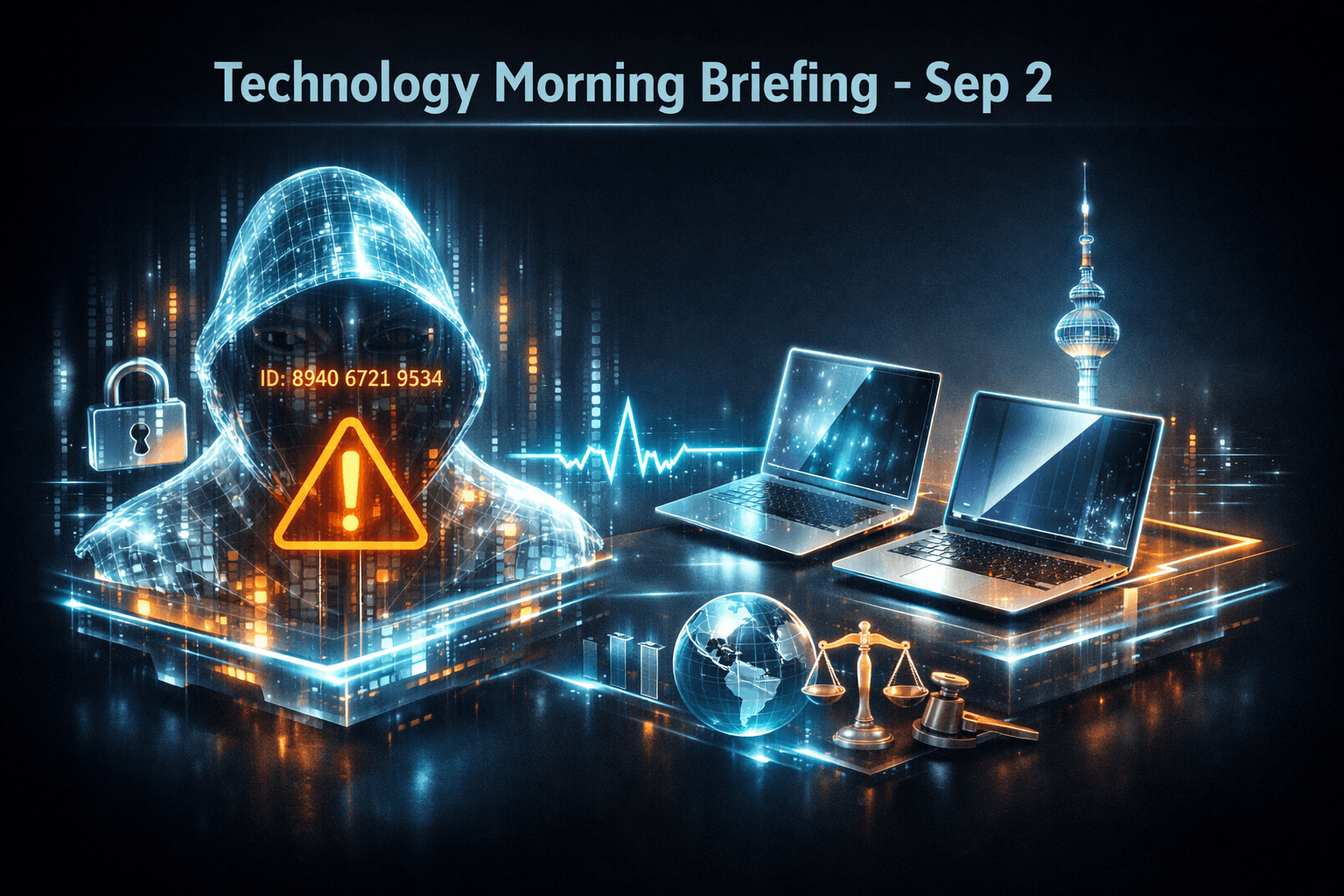
The biggest overnight development for technology investors is a major identity-theft service called Nexus that claims to hold scans of more than 153 million drivers licenses, and is now the subject of an FBI investigation. That security shock sits alongside a wave of new hardware revealed ahead of IFA, and a set of corporate and geopolitical moves that could shape chip spending and consumer platforms.
Why does that matter to you right now? Security incidents can trigger regulatory scrutiny and boost demand for cybersecurity services, while fresh laptop designs and streaming expansion affect sales cycles for hardware makers and platform owners. You should be ready to parse both immediate risk signals and longer term product momentum today.
Market Highlights
Quick facts and overnight headlines to watch during the day session.
- Nexus identity service, FBI probe: the dark web service claims digital scans from more than 153 million U.S. and Canadian drivers licenses, raising consumer-privacy and regulatory risk.
- Laptop push at IFA: $DELL unveiled the student-focused Dell 14S with Intel Wildcat Lake processors, starting configurations at 8GB RAM and 256GB storage. Acer announced the Swift Blade 14 weighing about 1.76 pounds or 799 grams and as thin as 0.51 inches, plus a Project DualPlay Mini gaming handheld concept.
- Corporate moves and expansions: Kioxia’s Kitakami expansion is being framed as a test case for Japan’s $640 billion AI and chips plan, while Larry Page’s flying car company Pivotal lost its CEO and replaced him with an interim aviation executive.
- Streaming and platform updates: Reliance’s JioHotstar will take its entertainment-focused streaming service to UK, Canada, and Singapore without sports. Apple followed Google’s mapping change and renamed Lake Ontario to Lake America per a recent U.S. executive order.
Key Developments
FBI probes Nexus, a massive ID-theft service
The FBI is investigating Nexus after reports that the service is selling scans of more than 153 million drivers licenses from U.S. and Canadian residents. The story was first detailed by Krebs on Security and amplified across the tech press.
Implication for investors, including you: data like this can accelerate demand for identity protection and enterprise security services, while increasing regulatory and litigation risk for platforms that host personal data. Could cybersecurity names see renewed buying interest as a result?
PC makers chase portability and education demand at IFA
Dell launched the Dell 14S aimed at students, with Intel Wildcat Lake chips and base configs starting at 8GB of RAM and a 256GB SSD. Acer answered with the Swift Blade 14, which weighs about 1.76 pounds and emphasizes extreme lightness, and introduced Project DualPlay Mini, a gaming handheld with a keyboard concept.
Those product moves show continued competition on design and battery life. For consumers and schools you may know, price and availability will determine whether these devices chip away at premium alternatives from $AAPL and others.
Expansion, leadership churn and geopolitics
Kioxia’s expansion in Kitakami is being framed as a small success and a reality check for Japan’s $640 billion push into chips and AI. The project helped stabilize a local labor market but also highlights how hard it is to scale industrial policy quickly.
Separately, Pivotal’s CEO departure raises operational questions for an ambitious flying car play. Reliance’s JioHotstar expanding without sports underlines a content-first global strategy and shifts competition in streaming, while Apple adopting the Lake America mapping label shows how tech platforms can be pulled into political decisions.
What to Watch
Here are the catalysts and risks to track through the trading day and this week. Ask yourself how each item affects your exposure across hardware, software, and services.
- Regulatory and criminal developments around Nexus, including any announcements from the FBI or DOJ. Expect near-term headlines that could move cybersecurity and identity protection stocks.
- IFA follow-ups and pricing details for the Dell 14S and Acer Swift Blade 14. Launch pricing and volume guidance will determine whether these models dent demand for premium laptops from $AAPL later in the year.
- Kioxia and Japan chip-policy updates. Look for further government statements or private investment plans that could influence supply chain spending and localized incentives.
- Pivotal leadership transition and any operational updates. Watch earnings or funding signals from adjacent advanced-air mobility players for a read on investor appetite.
- Platform and content moves from Reliance and Apple. How global launches and map changes affect user trust and regulatory exposure is a story to follow.
Bottom Line
- Security shock and product momentum are both driving headlines; treat today as a day for selective positioning rather than broad bets.
- The Nexus FBI probe is a potential canary in the coal mine for consumer-data regulation and could prompt defensive flows into cybersecurity services.
- Laptop and hardware announcements at IFA keep competition with $AAPL alive, but pricing and distribution will decide market impact.
- Government-led chip investment stories like Kioxia highlight structural spending but also the limits of policy to deliver short-term growth.
- Keep an eye on headlines, not just price moves. News flow today can change sentiment fast for specific names.
FAQ Section
Q: How big is the Nexus identity theft claim and why should you care? A: Nexus claims more than 153 million drivers license scans. You should care because that scale raises regulatory and consumer-response risks that can impact platforms, payments, and security providers.
Q: Will the new Dell and Acer laptops hurt Apple sales? A: It depends on pricing and availability. The Dell 14S targets students while Acer emphasizes ultra-light design. If prices are competitive you may see share shifts in education and mainstream segments, but high-end buyers often remain with $AAPL.
Q: What does Kioxia’s expansion say about Japan’s chip strategy? A: Kioxia shows localized gains from targeted investment but also reveals the difficulty of rapidly scaling a domestic semiconductor industry. Expect gradual results, not instant transformation.