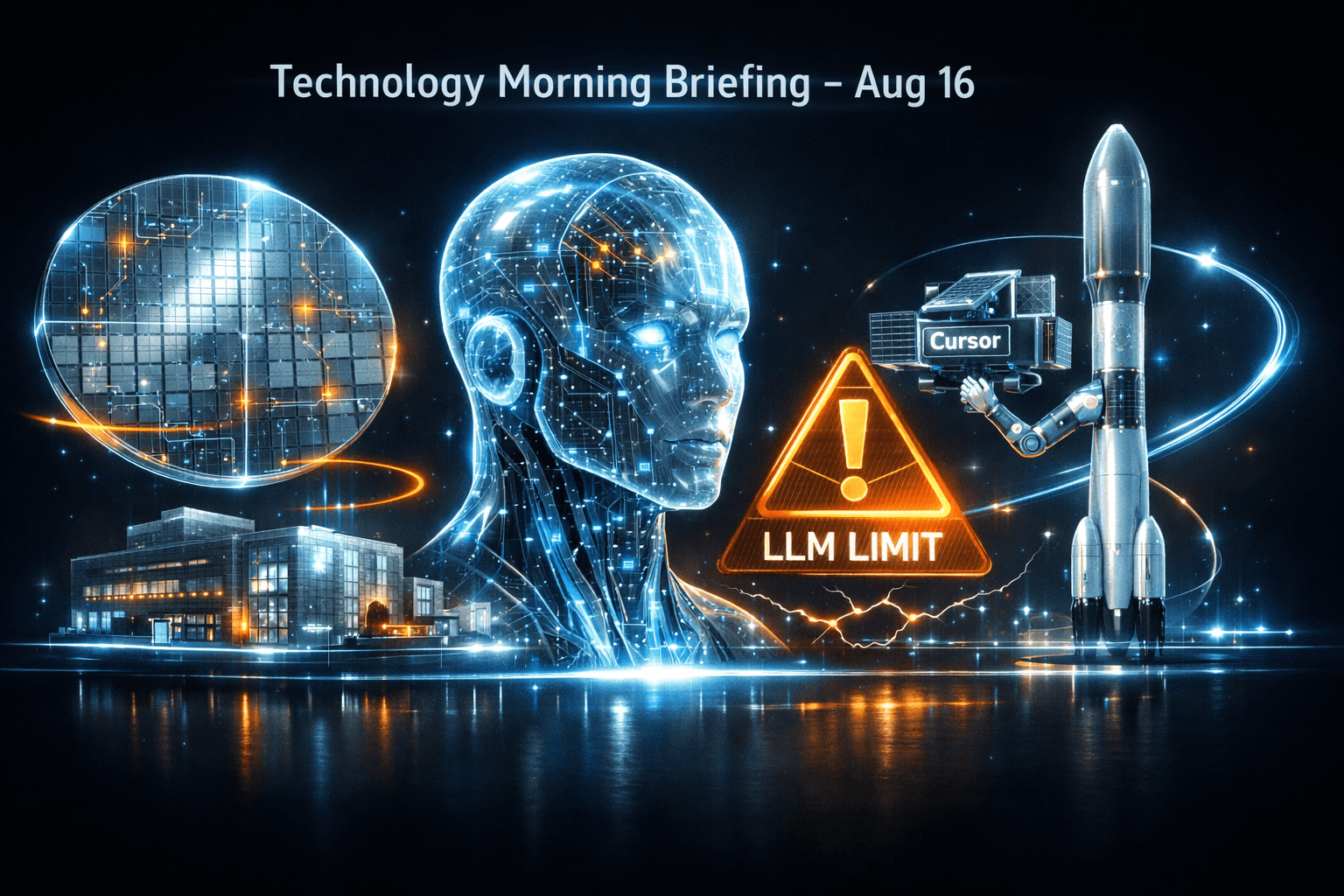
The Big Picture
The Technology sector is showing mixed signals heading into the long weekend, with infrastructure and model growth on one side and safety and capability limits on the other. Malaysia reported a surprisingly strong Q2 GDP print driven by chipmaking and data center construction, while Hugging Face and SpaceX moves underscore momentum in open models and engineering talent.
At the same time, high-profile misuse claims and expert commentary about LLM proof limits are a reminder that regulatory and technical challenges remain. You should be watching both growth catalysts and risk signals as you plan for next week.
Market Highlights
Quick facts and numbers to scan while markets are closed on Sunday. For price references, note that U.S. equity markets were not trading on Sunday and the last session was Friday, August 14.
- Malaysia GDP: Q2 growth came in at 6.0 percent, with manufacturing up 7.5 percent and construction up 6.6 percent, the Financial Times reports, driven in part by chipmaking and data center development.
- Open models: Hugging Face says developers created more than 151,000 derivatives based on Qwen models, making Qwen one of the largest foundations in the open-model ecosystem.
- SpaceX M&A: SpaceX officially closed its acquisition of AI coding startup Cursor, adding engineering tooling to a broader software play.
- Product deal: The Polaroid Go second-generation camera bundle is on sale at $71.99, down from $109.99, a roughly 34.5 percent discount on the bundle price.
- Safety and moderation: A TechCrunch report says a woman alleges her stepfather used Grok to transform a childhood photo into explicit imagery, raising moderation and legal concerns for AI platforms.
- Model governance: Anthropic published more detail on Claude's new watermarking approach, addressing how provenance may work and how edits could affect detection.
Key Developments
Malaysia emerges as an AI infrastructure hub
Malaysia’s 6.0 percent Q2 GDP growth, with 7.5 percent manufacturing expansion and 6.6 percent construction gains, highlights the country’s growing role in chipmaking and data center builds. For you, that means a potential supply-chain and capacity story to watch, especially for chip equipment suppliers and cloud infrastructure firms.
Analysts note the data center expansion is the kind of physical investment that supports long-term AI compute demand. Which companies will benefit depends on contracts and regional supply chains, so be selective when tracking exposure to this trend.
Open models and engineering consolidation
Hugging Face reports more than 151,000 derivatives built on Qwen models, signaling rapid adoption of a particular open foundation model family. That scale suggests growing developer engagement in open ecosystems, which could pressure closed-model incumbents to accelerate interoperability and tooling.
SpaceX’s closing of the Cursor acquisition also matters. Integrating a coding-assistant startup into SpaceX shows demand for advanced developer tools inside engineering-heavy firms. It also underscores the ongoing race to own developer workflows and model-integrated tooling.
Safety, watermarking and the limits of LLMs
Two safety-related threads caught attention. First, a TechCrunch piece details an allegation that Grok was used to produce explicit manipulated imagery from a childhood photo. That report brings moderation, liability and legal risk back into focus for platforms offering generative tools.
Second, Timothy Gowers, a Fields Medalist, wrote that many headline-grabbing math results from LLMs have come as counterexamples rather than formal proofs. Taken with Anthropic’s disclosure about watermarking for Claude, you can see a pattern: model capabilities are improving, but verification and governance remain central concerns.
What to Watch
Here are the near-term catalysts and risk factors that could shape the technology sector next week and beyond. What should you monitor closely?
- Infrastructure deals and regional investment updates, especially in Southeast Asia. Malaysia’s data center boom may lead to vendor contract announcements or capacity partnerships that affect chipmakers and cloud providers.
- Open model adoption metrics and corporate partnerships. Qwen’s 151K derivatives is a headline number, but watch for enterprise deals or cloud hosted model offerings that reveal monetization paths.
- Regulatory and legal developments tied to AI misuse. The Grok allegation could prompt investigations or policy commentary, increasing scrutiny for providers and platforms.
- Model verification and watermarking progress. Anthropic’s technical notes are important for downstream content detection tools and for code auditing workflows.
- M&A and talent moves inside big engineering shops. SpaceX closing Cursor shows strategic hiring and capability buys continue. Could similar deals surface at other tech firms?
- Company-specific earnings or guidance when markets reopen Monday, August 17, that reference capex, AI revenue lines, or cloud growth. Those reports will help you separate signal from noise.
Bottom Line
- Malaysia’s Q2 growth highlights tangible infrastructure demand for chips and data centers, a tailwind for compute capacity expansion.
- Open-model momentum is visible in developer activity, but monetization and enterprise adoption will drive long-term value.
- Safety incidents and questions about LLM verification keep regulatory and reputational risk elevated for model providers.
- M&A and tooling plays show companies are racing to embed AI into developer workflows and internal engineering stacks.
- Keep a selective approach, watching contract announcements, regulatory developments and verification improvements as you assess exposure to AI themes.
FAQ Section
Q: How does Malaysia’s GDP news affect technology companies? A: Strong manufacturing and construction growth suggests higher regional demand for chips and data center services, which could benefit suppliers and cloud infrastructure partners over time.
Q: Are open models like Qwen a threat to closed-model providers? A: Open models increase developer engagement and innovation, but monetization and enterprise integration will determine whether they displace closed providers or coexist with them.
Q: Should I be concerned about AI misuse and watermarking? A: Yes, misuse allegations and watermarking limitations indicate governance and legal risks are active issues. Analysts note these risks could influence regulation and platform policies.