The Big Picture
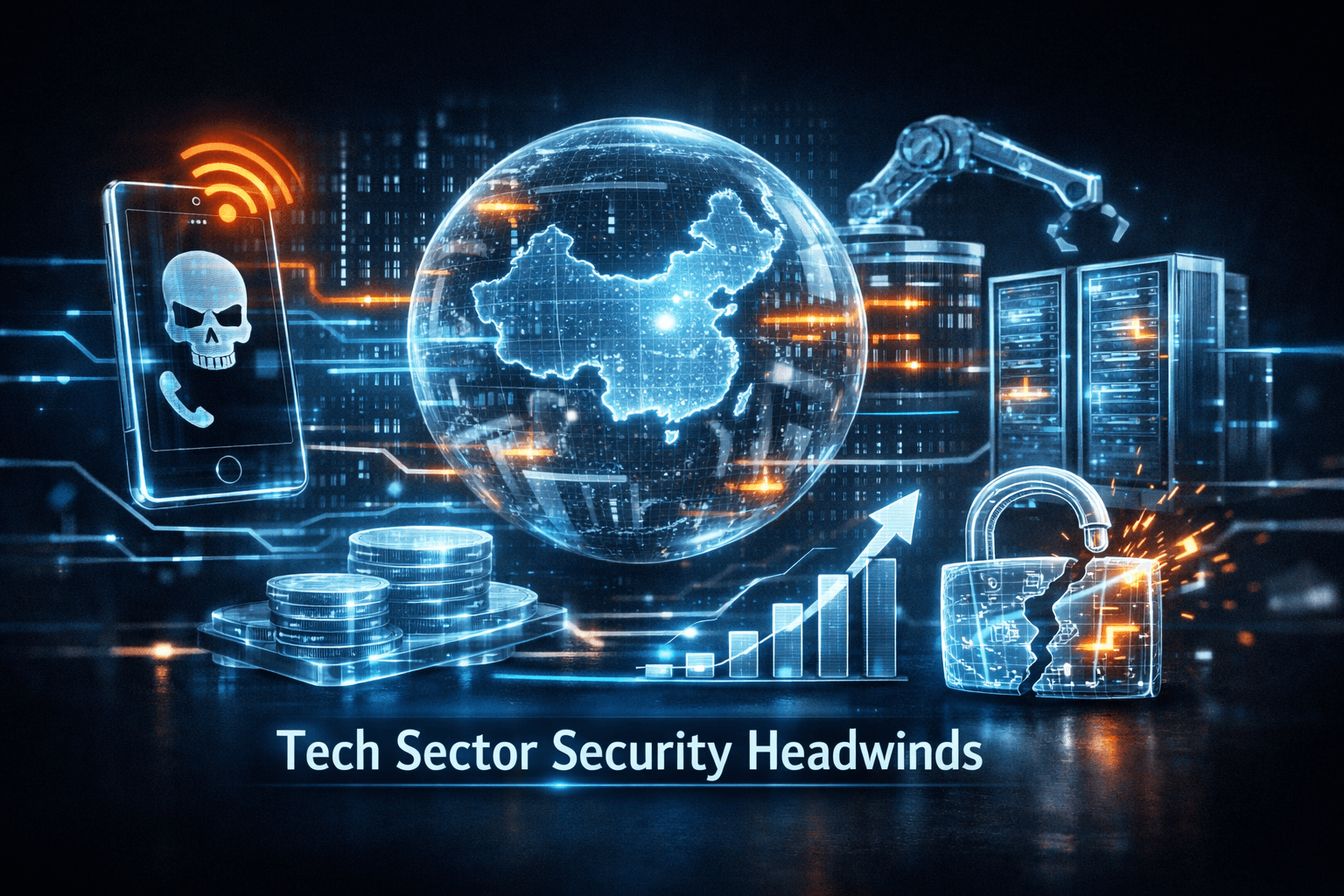
Today, security and trust issues took center stage for the Technology sector, with reports of targeted extortion calls, China-linked spyware campaigns, and U.S. data-labeling firms selling datasets to both domestic and Chinese AI labs. These developments matter because they raise operational, regulatory, and reputational risks that can hit revenue, partnerships, and valuations.
While there were bright spots, like a $1.37 billion raise for defense tech Hadrian and product updates from Google, the balance of the news increases near-term uncertainty for tech investors and customers. You should pay attention to how companies respond, because actions taken now will shape regulatory scrutiny and capital flows going forward.
Market Highlights
Quick facts and price actions from today that investors tracked closely.
- Figma, reported ticker $FIG, remains under pressure after CEO Dylan Field forfeited about $46 million in stock awards as the company seeks to restore confidence; FIG is down roughly 77% from its peak more than a year ago.
- Hadrian raised $1.37 billion at an $8 billion valuation to scale automated defense manufacturing, signaling strong investor appetite for defense-focused automation.
- Security incidents referenced include hackers calling employees at major U.S. financial firms to extort victims, and China-linked LightSpy spyware targeting users across 13 countries, including the U.S.
- Reporting shows U.S. data-labelers such as Surge AI and Mercor provided training datasets to both U.S. AI labs and Chinese labs, a detail that could attract regulatory scrutiny.
- Product and policy moves: Google’s Pixel 11 review cycle notes a higher price but improved software value, and Suno announced watermarking and download controls to curb spammy AI music.
Key Developments
Escalation in targeted cyber threats
Google security researchers revealed a pattern of attackers calling employees at large U.S. financial firms to facilitate hacks and extortion. At the same time, researchers tracked LightSpy spyware linked to Chinese actors operating across 13 countries.
For you as an investor or customer, that means cybersecurity budgets and incident response capabilities will be in focus. Companies with weak defenses may face direct costs and longer-term litigation or contract losses.
Data flows and national-security questions around AI
Documents reported by Forbes show U.S. data-labeling companies, including Surge AI and Mercor, sold training datasets to both American AI labs and Chinese groups. That raises export control, procurement, and compliance questions for startups and suppliers to the government.
Regulators and enterprise buyers may demand more provenance and controls for datasets, and you should expect increased due diligence from corporate and government customers seeking to limit geopolitical risk.
Corporate churn and funding signals
Figma’s CEO forfeited roughly $46 million in stock awards to calm investor nerves as the company’s valuation metrics and product-market fit face skepticism. Meanwhile, Hadrian’s $1.37 billion raise at an $8 billion valuation underscores investor interest in defense automation and reshoring supply chains.
These stories point to a split market where defense and infrastructure plays attract capital, while consumer-facing and productivity companies face tougher sentiment. Which side do you think will outperform in the next 12 months?
What to Watch
Here are the catalysts and risks that could move stocks and sentiment in the coming days.
- Regulatory scrutiny: expect hearings, vendor audits, or procurement reviews related to data labeling and cross-border dataset sales. Watch for guidance from Commerce and DoD.
- Cybersecurity fallout: more disclosures or breach notifications could hit financial and software vendors. Monitor incident reports and any third-party vendor exposures.
- Policy and consolidation: the FCC vote to end the national broadcast ownership cap may reshape media and ad markets, which can ripple into streaming and adtech businesses.
- Corporate governance signals: investor reactions to executive compensation moves and leadership accountability, like the Figma decision, will inform sentiment in software stocks.
- Biosecurity and AI safety: academic work showing AI-designed viral sequences, albeit not threatening humans in the reported study, will keep safety discussions on the front burner for regulators and companies that handle biological data.
Bottom Line
- Headwinds persist across cybersecurity and national-security fronts, increasing operational and regulatory risk for many tech firms.
- Funding flows favor defense and industrial automation, as illustrated by Hadrian’s $1.37 billion round at an $8 billion valuation.
- Data provenance and vendor controls will become priority checkboxes for enterprise and government buyers, which could benefit firms offering audited pipelines and compliance tools.
- Corporate governance moves, like the Figma forfeiture, show management teams are reacting to market pressure, but uncertainty remains about recovery paths and timing.
- Watch for more breach disclosures, regulatory guidance, and vendor audits over the next few weeks, because they will shape sentiment and partnerships.
FAQ Section
Q: How serious are the cybersecurity incidents reported today? A: The incidents are significant because they involve targeted extortion and spyware affecting multiple countries, and they increase immediate risk for firms with weak vendor or employee controls.
Q: Will regulators act on data-labeling firms selling to Chinese labs? A: Analysts note that the reporting raises compliance questions, and regulatory reviews or procurement restrictions are possible, especially for contractors working with sensitive government projects.
Q: Does Hadrian’s funding signal a sector shift? A: The large raise suggests strong investor appetite for defense automation and reshoring, and it may redirect some capital toward industrial and infrastructure tech, at least in the near term.